What are the effects of humidity on injection molded parts?
Hey there! I’m a supplier of injection molded parts, and I’ve seen firsthand how humidity can mess with our products. In this blog, I’m gonna break down the effects of humidity on injection molded parts, why it matters, and what we can do about it. Injection Molded Parts
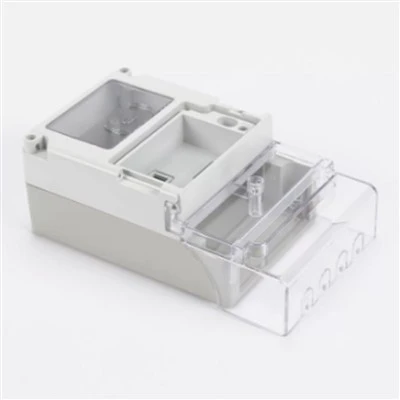
How humidity affects injection molded parts
1. Warping and dimensional changes
Humidity can cause significant issues with the dimensional stability of injection molded parts. When the parts absorb moisture from the humid air, they expand. This is especially true for hygroscopic plastics like nylon and polycarbonate. These plastics have a natural tendency to absorb water, and as the moisture content increases, the polymer chains in the plastic start to swell.
This expansion can lead to warping, which means the parts don’t keep their original shape. For example, a flat panel that’s supposed to be perfectly straight might start to curve. And if the part is part of a larger assembly where precise dimensions are crucial, this warping can cause major problems. The part might not fit properly, leading to assembly errors and a decrease in the overall quality of the final product.
2. Surface defects
Another big problem is surface defects. When there’s high humidity during the molding process, moisture can get trapped in the plastic. As the plastic cools and solidifies, this trapped moisture can create bubbles or voids on the surface of the part. These bubbles not only look bad but can also weaken the part.
In addition, humidity can cause a phenomenon called "splay." Splay looks like a series of silver streaks on the surface of the part. It happens when the moisture in the plastic vaporizes as it’s injected into the mold at high temperatures. The vapor then gets pushed through the molten plastic, leaving these streaks behind. Splay can make the part look unprofessional and can also affect its performance.
3. Mechanical properties
Humidity can also have a negative impact on the mechanical properties of injection molded parts. As mentioned earlier, when plastics absorb moisture, they expand. This expansion can change the internal structure of the plastic, making it weaker. The part might become more brittle and less able to withstand stress.
For example, a part that’s designed to have a certain level of impact resistance might perform poorly in a humid environment. The moisture can cause the plastic to lose its toughness, so when the part is hit or stressed, it’s more likely to crack or break. This is a huge deal, especially in industries where safety and reliability are critical, like automotive or aerospace.
4. Adhesion problems
If you’re using adhesives to bond injection molded parts together, humidity can really mess things up. High humidity can interfere with the bonding process, causing the adhesive to cure incorrectly. This can result in weak bonds that don’t hold up over time.
The moisture in the air can prevent the adhesive from forming a strong chemical bond with the plastic surface. As a result, the parts might come apart easily, leading to product failures. This is a major concern in applications where bonded parts are used, such as in electronic devices or consumer goods.
Why it’s important to control humidity
I know I’ve been going on about the problems humidity can cause, but why is it so important to actually do something about it? Well, for starters, if you’re selling injection molded parts, your customers expect high – quality products. If your parts are warped, have surface defects, or don’t have the right mechanical properties, your customers are not gonna be happy.
In industries like medical devices, automotive, and electronics, where precision and reliability are key, even minor issues caused by humidity can lead to product recalls. A recall can be extremely costly for your business, not just in terms of the cost of replacing the defective parts but also in terms of damage to your reputation.
And let’s not forget about the bottom line. If you’re producing parts that don’t meet the required standards because of humidity issues, you’re wasting materials and time. You’ll end up having to scrap more parts, which means higher production costs. Controlling humidity can help you improve the quality of your products, reduce waste, and increase your profits.
What we can do to mitigate the effects of humidity
1. Drying the plastic resin
One of the most effective ways to deal with humidity is to dry the plastic resin before it’s used in the injection molding process. Most plastics come with a recommended drying temperature and time. For hygroscopic plastics, you need to be extra careful.
We use desiccant dryers in our facility. These dryers use a desiccant material to remove moisture from the air that’s used to dry the resin. By drying the resin properly, we can reduce the amount of moisture that gets into the plastic during molding, which helps prevent warping, surface defects, and other issues.
2. Controlling the molding environment
Another important step is to control the humidity in the molding environment. We have installed dehumidifiers in our production area. These dehumidifiers work by removing moisture from the air, keeping the humidity level at a stable and optimal range.
We also make sure to seal the molding machines as much as possible to prevent humid air from getting in. By creating a controlled environment, we can minimize the chances of moisture affecting the molding process and the quality of the final parts.
3. Post – molding treatment
Sometimes, even with all the precautions, a little bit of humidity can still affect the parts. That’s where post – molding treatment comes in. We can use techniques like annealing to relieve internal stresses in the parts and improve their dimensional stability.
Annealing involves heating the parts to a specific temperature and then slowly cooling them down. This process helps to realign the polymer chains in the plastic, reducing the effects of any moisture that might have been absorbed.
Conclusion
In conclusion, humidity can have a significant impact on injection molded parts. It can cause warping, surface defects, changes in mechanical properties, and adhesion problems. But by taking steps to control humidity, such as drying the resin, controlling the molding environment, and using post – molding treatment, we can minimize these effects and produce high – quality parts.
Plastic Kitchen Items If you’re in the market for injection molded parts and want to ensure that you’re getting products that are not affected by humidity, we’re here to help. We’ve got the experience and the technology to produce top – notch parts that meet your specifications. Whether you need parts for a small – scale project or a large – scale production run, we can handle it. So, if you’re interested, don’t hesitate to reach out and start a conversation about your procurement needs.
References
- "Injection Molding Handbook" by Oleg V. Kazmer
- "Plastics Processing Technology" by Rosato, Rosato, and Schott
Yongkang Shunjiang Plastic Products Co., Ltd.
As one of the most professional injection molded parts manufacturers and suppliers in China, we offer a wide range of products with superior quality. Please feel free to wholesale bulk customized injection molded parts from our factory. Also, pricelist is available.
Address: Kangzhuang Road, Xicheng Subdistrict, Yongkang City, Zhejiang Province, China
E-mail: 15158911623@163.com
WebSite: https://www.shunjiangplas.com/
