Hey there, let’s cut straight to the chase—if you’re in the shipping, construction, or industrial space, you’ve probably heard “break bulk discharge” thrown around, but if you’re not deep in the logistics weeds, it might sound like just another industry buzzword. As a break bulk supplier who’s spent 12 years loading and unloading everything from 50-ton industrial turbines to oversized wind turbine blades that won’t fit in a standard container, let me break this down like I would over a coffee at a port breakroom—no stuffy jargon, just real stuff that matters for anyone moving non-standard cargo. Break Bulk
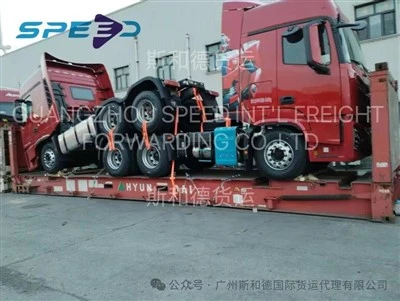
First, let’s start with what makes break bulk different from the shipping most people know. You’ve seen the big, shiny intermodal containers—20ft, 40ft, stackable on ships, easy to load/unload with cranes and forklifts. That’s containerized cargo. But break bulk? That’s the stuff that can’t fit into those boxes—like heavy machinery, steel beams, wind farm components, even prefabricated building sections. None of it comes sealed in a box; it’s loose, on pallets sometimes, but often just sitting on steel crates, flat racks, or even rolled up (think steel coils) right on the ship’s deck or open holds.
So what’s break bulk discharge, exactly? Put simply, it’s the step where we take that loose, non-containerized cargo off the ship when it docks at a port. It’s not just dropping a box off a truck here—this is a whole production. You’ve got cranes with specialized grabs, riggers who’ve been doing this so long they can tell a bad steel cable just by the sound it makes when it hums, and a team that has to check every single piece to make sure it doesn’t scratch a $200k turbine blade or tip over into the water mid-lift.
Wait, let’s clarify: this isn’t just any discharge. It’s specific to break bulk, right? Because container discharge is way more straightforward—forklift drives in, pulls a box off, drops it at the yard. Break bulk discharge is manual, almost every time, because each load is unique. Last year we had a 72-ton generator that needed four separate cranes to lift, plus a custom rig that spread the weight so it didn’t bend the generator’s frame. That’s not a standard box move.
Now, why does this matter so much? If you get discharge wrong, you’re looking at delays that cost thousands a day. A few years back, a buddy of mine at a logistics firm had a load of steel bridge girders get misaligned during discharge—they spent three days repositioning, and the contractor lost a $50k penalty for missing their project deadline. That’s the stuff no one tells you about break bulk: one small mistake, and it hits your bottom line hard.
As a break bulk supplier, I see the discharge process as the make-or-break point of the whole job. I’m not just here to hand over the cargo at the dock; I’m there from the minute the ship radios the port that it’s 48 hours out, coordinating with rigging crews, port authorities, even local weather services to make sure the wind’s not too strong (we had to hold a discharge once because a 25mph gust almost knocked a 30-ton transformer off the crane—no thank you). The goal isn’t just to get the cargo off the ship fast; it’s to get it off in one piece, no damage, no delays.
Let’s run through the process so you get how it works in practice. First, pre-arrival prep: two weeks before the ship docks, I send all the cargo specs to the port—weights, dimensions, any special handling notes (like “this wind blade is sensitive to direct sunlight, keep it covered”). The port’s discharge team uses that to book the right gear: heavy-lift cranes, flatbed trucks for oversize loads, maybe even a barge if the port’s too small for big ships.
Then, once the ship is tied up at the berth, the riggers hook each piece to the crane. This is where experience beats everything. A new rigger might just wrap a chain around a steel coil, but we always use a nylon sling—so it doesn’t scratch the coil’s surface, which is critical if it’s going to a car manufacturer who needs it unmarked. That’s the stuff that’s not in the manuals; it’s what you learn after 10 years of messing up once or twice.
Next, the lift: the crane slowly swings the cargo from the ship’s hold to the dock. During discharge, every move is coordinated via radio—crane operator, rigger, port supervisor, and my on-site rep all chatting back and forth. No one’s working solo here. We also have spotters watching for overhead power lines, other cargo moving nearby, even boats in the water below (we don’t want a falling steel beam taking out a fishing boat—obviously).
Once it’s on the dock, we move it to a secure yard, usually within 24 hours. But wait—if the cargo is super sensitive, like a nuclear component or a piece of art, we’ll have a dedicated team that follows it every step, with temperature monitors or security guards. That’s the customized part of break bulk discharge that suppliers like me offer—we don’t do one-size-fits-all.
Why do companies use break bulk instead of trying to cram stuff into containers? Simple: sometimes it’s impossible. A standard 20ft container maxes out at about 30 tons. That turbine I mentioned earlier? It was 72 tons—you can’t stuff that in a box. Even stuff that technically fits doesn’t make sense: a 100ft steel beam would need a high cube container, but the excess length sticks out, and it’s more likely to get damaged moving it. Break bulk is for when you need to move big, heavy, or fragile stuff that containers just can’t handle.
But break bulk discharge has its own headaches. For one, ports usually charge more per square foot or per ton for break bulk cargo than containers. Also, it takes longer—you can unload a whole ship of containers in a day, but a break bulk ship with 50 pieces might take three to five days. That’s why communication is key: as a supplier, I update my clients every 12 hours on discharge progress, so they can adjust their own timelines for unloading at their warehouse or construction site.
I also want to address a common misconception: break bulk discharge isn’t just for huge industrial jobs. Last year, a small construction company hired us to move prefabricated roof trusses for a local school. Those trusses were too long for containers, so we shipped them break bulk, and discharge was just as important—if one truss got bent, it wouldn’t fit on the roof. We used a special cradle to hold each truss during the lift, and it went off without a hitch. That’s break bulk for you—we do big and small.
Now, if you’re here because you need to move something that’s not a standard container, let’s be real: you’re probably stressed. You’ve got a tight deadline, or you’re worried about damaging expensive cargo, or you have no idea how to even start coordinating with a port. As a break bulk supplier, that’s where I come in. I don’t just handle the discharge part; I walk you through the whole process from start to finish—what permits you need, what gear to book, how to avoid delays.
I’ve worked with everyone from small business owners moving a single piece of machinery to big energy companies shipping wind farm components across the Atlantic. No job is too big or too small, and I know every port in North America, Europe, and Southeast Asia that handles break bulk cargo. If you’re tired of getting runaround from big shipping companies that treat non-containerized cargo like an afterthought, hit me up to talk shop. We can work out a plan that fits your timeline and budget, no hidden fees, no confusing jargon.
Wait, one last thing to wrap this up: break bulk discharge isn’t just a logistical step. It’s the point where all the planning you did for months actually pays off. You could spend six weeks arranging the shipment, but if the discharge is messy, you’re back to square one. That’s why I take so much pride in this work—every time we get a piece of cargo off the ship in one piece, on time, that’s a win for both my team and the client.

So if you’re in the market for a break bulk supplier who actually knows what they’re doing, don’t hesitate to reach out for a quote or to just chat through your needs. No sales pitch, no pressure—just someone who’s been doing this long enough to give you straight advice.
Oog Operations References
International Chamber of Shipping. (2022). Break Bulk Cargo Operations: A Guide for Global Shipping.
National Industrial Transportation Association. (2021). Heavy Lift and Break Bulk Discharge Best Practices.
American Association of Port Authorities. (2023). Port Handling Procedures for Non-Containerized Cargo.
International Association of Drilling Contractors. (2022). Break Bulk Cargo Handling for Energy Sector Projects.
Speed Supply Chain (Guangzhou) Co., Limited
Speed Supply Chain (Guangzhou) Co., Limited is a licensed NVOCC and first-level freight forwarder in China. With a professional team, we deliver reliable, efficient and cost-effective break bulk service for global customers. If you have any enquiry about quotation, please feel free to email us.
Address: Room 2001-2002, Dongzhao Building, No. 515 Dongfeng Middle Road, Yuexiu District, Guangzhou, Guangdong, China
E-mail: mika.li@speedsucc.com
WebSite: https://www.speedsupplychain.com/
