If you’ve ever held a tiny, precise component in the palm of your hand—say, the spindle of a mini quadcopter, a medical device like a blood glucose monitor, or the rotating mechanism of a high-end camera lens—you might’ve wondered about the small details that keep those parts working smoothly. As a miniature bearings supplier who’s spent 12 years troubleshooting, testing, and refining these tiny components, one of the most common questions I get from engineers, product designers, and even small-batch hobbyists is this: “Do miniature bearings come with pre-lubrication?” Miniature Bearings
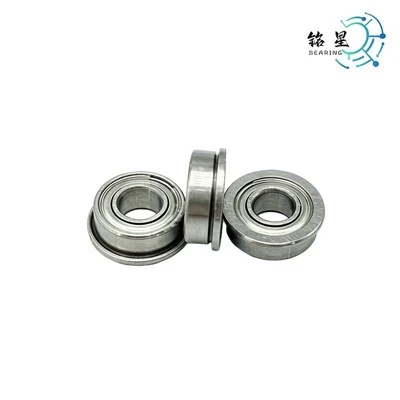
It’s a question that sounds simple at first, but it’s layered with context, industry standards, and the specific needs of the tiny applications these bearings serve. Pre-lubrication isn’t just a “nice extra” for miniature bearings—it’s often the difference between a product that lasts 10,000 cycles and one that fails in 1,000, or between a medical device that meets ISO 13485 requirements and one that doesn’t. Let’s break this down, because the answer isn’t a straight “yes” or “no”—it’s more nuanced than that.
First, let’s define what we mean by “miniature bearings” here. For our industry, that’s any bearing with an inner diameter under 10 millimeters—way smaller than a standard industrial bearing you’d find on a conveyor belt. They’re used in extreme environments: inside implantable pacemakers (some are less than 3mm in diameter), in drones that spin at 50,000 RPM, in surgical tools that withstand sterilization cycles, and in consumer electronics that get jostled, exposed to temperature swings, or used for years without maintenance. Unlike full-size bearings, which you can access and re-lubricate after installation, most miniature bearings go into applications where human access is impossible, or where adding lubricant later would contaminate the core function. That’s why pre-lubrication is non-negotiable for so many of the parts we ship.
Now, why do miniature bearings need pre-lubrication more than their larger counterparts? Let’s talk about the physics of size. Friction in a bearing comes from two main sources: metal-to-metal contact between rolling elements (balls, cylinders, or needles) and the bearing raceways, and viscous drag from the lubricant itself. For a 60mm bearing, the gap between the balls and the raceway is relatively large—maybe a few micrometers, enough that a small amount of grease can fill it without causing too much drag. But for a 3mm bearing, that gap is measured in nanometers. If you leave a miniature bearing dry, the rolling elements will touch the raceway on startup—there’s no way to avoid it, because there’s no material to fill the microscopic gaps. That contact causes immediate wear, which generates debris, which then accelerates more wear. For a pacemaker bearing, that debris could trigger an immune response in the body; for a drone spindle, it could cause vibration that throws off flight stability.
Wait, but what about applications where you can lubricate after assembly? Rare, but they exist. A small robotic arm component that’s easy to access, or a prototype part for a lab device. In those cases, we might ship bare bearings, but that’s less than 5% of our total order volume. Even then, we always provide detailed instructions on the type and amount of lubricant to use—too much, and the drag will waste energy; too little, and the wear sets in. For 95% of the bearings we produce, pre-lubrication is part of the standard manufacturing process.
What goes into a pre-lubricated miniature bearing, exactly? It’s not just dabbing a little grease on the balls. There are three main types of lubrication we use, depending on the application: grease, oil, and solid lubricants. Let’s go through each, because they’re not interchangeable.
Grease is the most common for miniature bearings. It’s a mix of base oil and a thickener, usually lithium or polyurea, that holds the oil in place. For small bearings, we use low-viscosity base oils—often synthetic PAO (polyalphaolefin) or ester oils—because a high-viscosity oil would create too much drag. The amount of grease is measured in micrograms, not grams. For a 4mm ball bearing, we might use 0.2 to 0.5 micrograms of grease; that’s enough to coat the rolling elements and raceways without filling the entire internal space. Too much grease, and when the bearing starts spinning, the excess will slosh around, generating heat that can cause the grease to break down over time. Too little, and you get that metal-to-metal contact we talked about.
Oil lubrication is less common, but it’s used for applications that run at extremely high speeds—like the spindle of a dental handpiece, which can spin at 500,000 RPM. For those, we might use an oil-impregnated bearing? No, wait, miniature ball bearings—instead, we pre-lubricate with a thin film of oil that’s held in place by capillary action. This reduces drag way more than grease, but the downside is that oil can leak out over time, so these are only used in applications where the bearing is sealed to contain the oil. Implantable medical devices use this type, because the amount of oil is so small (less than 0.1 micrograms) that even if a tiny amount leaks, it’s biocompatible and won’t cause harm.
Solid lubricants are the third type, and they’re a game-changer for extreme environments where liquid lubricants can’t work—like high-temperature applications (above 200°C) or vacuum environments, where oil would outgas and contaminate sensitive parts. We use PTFE (Teflon), molybdenum disulfide, or diamond-like carbon (DLC) coatings for these bearings. For example, a miniature bearing used in a satellite’s solar panel deployment mechanism has to work in the vacuum of space, where there’s no air to carry lubricant. We coat the rolling elements and raceways with a thin layer of solid lubricant before sealing the bearing, so there’s no liquid to outgas. This is another form of pre-lubrication, just in a solid form.
Now, let’s talk about when a manufacturer might skip pre-lubrication. It’s extremely rare, but it does happen. The only time we ever ship bare, unlubricated miniature bearings is when the customer has a specific, documented process for applying lubricant post-assembly, and they can guarantee that the lubricant they use is compatible with their application. For example, a company making custom mechanical watches might want to apply a specific brand of watch oil that’s proven to work with their gears, so they ask for unlubricated bearings. Even then, we require them to tell us the exact type of lubricant they’ll use, because different oils have different chemical compositions that can react with the bearing’s steel or ceramic material. If you put the wrong oil on a bearing, it can eat away at the steel or cause the lubricant to break down prematurely. That’s a mistake we see a lot from first-time buyers of miniature bearings—they grab a generic grease from a hardware store and slather it on, only to have the bearing fail within a few hundred cycles.
Another case where pre-lubrication isn’t standard is for extremely low-load applications, like a decorative rotating knob on a kitchen appliance. Wait, even then, we usually suggest pre-lubrication, because even a small knob can wear out if it’s spun thousands of times a year. But for a very niche, low-demand part, some suppliers might offer unlubricated bearings to cut costs. That’s a red flag for me, because even in low-load applications, a tiny bit of lubrication prevents squeaking and extends the life of the part.
Let’s also clear up a common misconception: some people think that pre-lubricated bearings are “pre-filled” so you don’t have to worry about maintenance. But for miniature bearings, most of them are sealed, right? Wait, yes—almost all pre-lubricated miniature bearings come with a metal or rubber seal on one or both sides to keep the lubricant in and contamination out. The seals are made of a material like NBR (nitrile butadiene rubber) or PTFE, and they’re precision-machined to fit the bearing’s inner diameter so they don’t create too much drag. For a bearing in a camera lens, the seals keep dust and moisture out, so the lubricant stays in place for the entire life of the lens—maybe 10 years or more. That’s why you never have to open a miniature bearing; the pre-lubrication and seals are designed to last the life of the product it’s in.
I remember a specific order a few years back that illustrates why pre-lubrication matters. A startup was developing a portable insulin pump, and they tested three types of miniature bearings: unlubricated, lightly pre-lubricated, and over-greased. The unlubricated bearings failed after 1,200 cycles—metal debris had built up, and the pump’s mechanism jammed. The over-greased ones failed after 8,000 cycles; the excess grease heated up and broke down, causing the same wear. The ones with the precise amount of pre-lubrication we recommended lasted 50,000 cycles, which is more than enough for a pump that’s used 10 times a day for 5 years. That’s the difference pre-lubrication makes.
Now, what should you look for when buying a pre-lubricated miniature bearing? First, ask for the lubricant type and quantity. A reputable supplier will tell you exactly what’s inside the bearing. If they can’t, that’s a red flag—they’re probably using a generic grease that’s not formulated for miniature applications. Second, check if the bearing is sealed. Even if you don’t need seals right now, they’ll protect the lubricant from contamination during manufacturing and shipping. Third, make sure the lubricant is compatible with your application. If it’s a medical device, ask for biocompatible lubricants; if it’s a high-speed drone, ask for low-viscosity grease; if it’s a high-temperature part, ask for solid lubricants.
As a supplier, we don’t just ship bearings—we work with customers to match the right pre-lubrication to their specific needs. A lot of our business comes from small engineering teams that are building a new product and don’t know the first thing about miniature bearing lubrication. They’ll send us a specification sheet saying “inner diameter 5mm, outer diameter 10mm, ball bearing,” and we’ll ask them about the application: speed, load, environment, maintenance requirements. Then we can recommend the right pre-lubrication—no guesswork, just data.
So to circle back to the original question: do miniature bearings come with pre-lubrication? For most applications, yes. It’s a standard part of the manufacturing process that’s critical for performance, lifespan, and reliability. The rare exceptions are when a customer has a specific process for post-assembly lubrication, or when the application is so niche that unlubricated bearings work, which is almost always a bad idea. If you’re shopping for miniature bearings, don’t just ask about size and material—ask about pre-lubrication. It’s one of the most important details you can get right, and it’ll save you from a lot of headaches down the line.

If you’re working on a project and need to make sure you’re getting the right miniature bearings with the perfect pre-lubrication for your needs, reach out to our team to discuss your requirements. We can help you select the right bearing type, lubrication, and seals to fit your application, no matter how small or specialized it is.
Miniature Bearings References:
- American Bearing Manufacturers Association. (2021). Standards for Miniature and Small Bearings.
- ISO 14644-1. (2019). Cleanrooms and Associated Controlled Environments — Part 1: Classification of Air Cleanliness by Concentration of Particulate Matter.
- Sharma, S. K., & Agarwal, S. (2020). Lubrication of Micro Bearings for Precision Applications. Journal of Tribology, 142(8), 081701.
- Medical Device and Manufacturing Association. (2022). Biocompatibility Guidelines for Components in Implantable and Portable Medical Devices.
- NASA. (2018). Lubrication of Rolling Element Bearings for Space Applications.
Taizhou Mingxing Bearing Co., Ltd.
As one of the most experienced miniature bearings manufacturers and suppliers in China, we warmly welcome you to wholesale durable miniature bearings in stock here from our factory. All customized bearings are with high quality and competitive price. For quotation, contact us now.
Address: No.168 Tonghe East Road, Luotuo Subdistrict, Zhenhai District, Ningbo City, Zhejiang Province
E-mail: qpj16888@outlook.com
WebSite: https://www.mingxingbearing.com/
