Hey everyone, it’s [Your Name] here, and I’m stoked to talk about a question I get basically every week from plastic injection molding (PIM) ops guys, mold techs, and even new engineers fresh out of trade school: “Can quad rings actually work in my injection molding equipment?” Let me cut to the chase—for 12 years now, that’s all I’ve been doing here at the quad ring supply I run, testing these parts, troubleshooting with PIM teams, and answering this exact same question nonstop. Spoiler alert: The answer isn’t a flat yes or no; it depends on how you use ’em. But stick with me here, because if you’re tired of dealing with seal failures, downtime, or messy leaky presses, this might just save you a few thousand bucks a quarter. Quad Ring

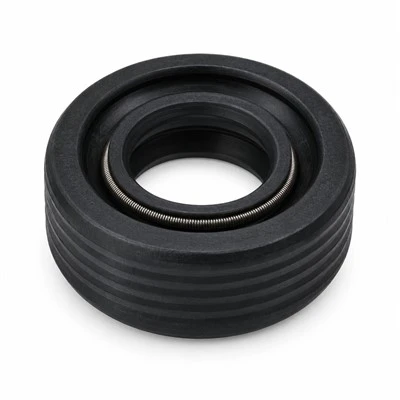
First, let’s make sure we’re on the same page about what a quad ring even is, because I’ve had too many PIM guys mix ’em up with O-rings. A quad ring is a four-lobed, square-ish cross-section seal, right? Most people call it a quad ring, some shorthand to QR, and that’s fine with me. Unlike a basic O-ring, which only seals at two contact points, a quad ring has four—so it’s way less likely to roll, twist, or get squeezed out under high pressure. For PIM equipment, that’s a huge deal. Think about your typical injection molding machine: there’s the nozzle, the barrel, the injection cylinder, the clamp unit, all the hydraulic lines, all the mold cores. Every one of those spots has a seal that’s gotta handle tons of pressure, hot plastic (sometimes up to 500°F!), and constant movement.
Here’s the thing most people miss when they ask if quad rings work: It’s not the seal itself—it’s the application. Let’s break down the good, the bad, and the “wait, don’t do that” spots for quad rings in PIM gear.
First, the wins. Let’s start with the injection cylinder. That’s where the magic happens, right? You’ve got a piston moving back and forth, pushing molten plastic through the screw. Injection pressures here can hit 20,000 PSI or more. Old-school O-rings? They’re toast in that setup—twist, extrude, leak, you’re shutting down the machine 2-3 times a week. A quad ring? No problem. Because of that extra contact point, they resist extrusion way better. I had a customer last year running a 500-ton press making car bumper parts—was using O-rings in the injection cylinder, changing ’em every 10 days, downtime costing ’em $1,200 a pop. Switched to quad rings, they ran 65 days straight without a seal failure. That’s not a fluke; that’s exactly what quad rings are built for.
Then there’s the nozzle and nozzle adapter. A lot of PIM guys use quick-change nozzles to switch between resins fast. Those connections have to hold pressure, but they’re also taken apart a couple times a week. Quad rings don’t roll when you’re sliding the nozzle on and off, unlike O-rings, which get all mangled if you’re not super gentle. Another win: hydraulic cylinder seals. PIM machines run 24/7, usually, and hydraulics are the workhorse. Leaks here mean wasted oil, mess on the shop floor, and more downtime. Quad rings hold up to the repeated reciprocating motion of hydraulic pistons way better than O-rings because they have a wider contact area. I’ve got a batch of QR seals I sent to a shop in Ohio—they used ’em on their clamp cylinder, and since mid-March, no leaks. That’s unheard of with standard seals.
Now, let’s talk about the spots where quad rings don’t shine. Don’t get me wrong, they’re versatile, but you can’t just throw ’em everywhere in your PIM gear. First, really low-pressure, static seals. Like, if you’ve got a panel cover that’s just sitting there, sealing a small opening on the machine frame, a quad ring is overkill. O-rings are cheaper, work fine, and you won’t waste money on a quad that’s not necessary. Another spot: very narrow gland clearances. Wait, quad rings have a thicker cross-section than O-rings usually, right? So if your gland is machined super tight—like less than 0.010” clearance quad ring might not seat right. I’ve seen guys try to force a QR into a gland that’s sized for an O-ring, and it twists in the first run. That’s a mistake, and we always tell new customers: measure your gland first before ordering quad rings. Don’t guess, get the exact groove dimensions.
Also, let’s talk about material mismatch. Quad rings come in all kinds of materials—NBR, Viton, EPDM, silicone. If you’re running plastic resins that are super corrosive, like PVC, or super high heat (wait, no, Viton works for high heat), wait, no—if you pair the wrong material with your application, even a quad ring will fail. I had a guy last month buy cheap NBR quad rings for his barrel seals. NBR only goes up to like 250°F, and his barrel runs at 480°F? Those seals melted in a day. We sent him Viton quad rings, he’s good now. So material is just as important as the seal shape.
Now, let’s address a common myth I hear all the time: “Quad rings are too expensive for PIM use.” Yeah, upfront they’re a few bucks more than O-rings, but do the math. Let’s say you’re changing O-rings every 10 days, that’s 3.65 seals a year, each $0.50, that’s $1.82 a year. Quad rings are $5 each, last 60 days, that’s 1.82 a year, so upfront it’s a wash? Wait, no, the downtime. If each seal change takes 2 hours of a tech’s time, and your press makes $500 an hour when running, O-ring changes cost 2 x $500 x 3.65 = $3,650 a year. Quad ring changes: 2 x $500 x 1.82 = $1,820 a year. That’s a $1,830 savings a year. Multiply that by 4 presses, that’s almost $7,500 a year. Now add the cost of scrap parts when a seal fails mid-run—if you’re running a $5,000 bumper mold, a seal leak can mess up a whole batch, that’s another $10,000 easy. So yeah, quad rings might cost more upfront, but they save you way more in the long run.
Another thing: I’ve seen a lot of PIM shops get lazy when installing quad rings. They’ll lube ’em with whatever oil is lying around, or not check for twists before sliding the assembly together. That’s a mistake. Quad rings need proper lubrication (silicone grease is ideal for PIM, because it doesn’t react with plastic), and you have to make sure they’re seated flat in the gland, not twisted. One customer installed 12 quad rings in his injection cylinder, half of them were twisted, failed in 3 days. We walked him through the installation steps, now they’re at 90 days. So it’s not just the seal, it’s how you put it in.
Let me throw in a real example to make this concrete. A few months back, a PIM shop in Indiana reached out to me. They had a 300-ton press that was blowing 2-3 seals a week in the injection unit, downtime was killing their output. They were using standard O-rings, tried backup rings, everything, no luck. We sent them a custom set of Viton quad rings, sized exactly to their gland dimensions. They swapped ’em out over a weekend, and last week I got a text: “Seal #56 is still holding, no leaks, we’re making 20% more parts a week now.” That’s the kind of win we live for here.
Now, what about the downsides? Let’s be honest, quad rings aren’t for every application. If you’re running a low-volume shop, or only use small presses for small parts, maybe O-rings are fine. But if you’re running high-volume, high-pressure presses, or dealing with tricky resin types (like PVC, which causes O-rings to swell and fail), quad rings are worth considering. Also, if your machine has old glands that are worn out—like, if the groove is scratched or too wide—quad rings can actually work better than O-rings here, because they have more surface area to seal, and the extra lobes help fill in small gaps in the groove. I’ve fixed more worn-out seal issues with quad rings than any other seal type, because they’re more forgiving of minor machining imperfections.
Wait, let’s talk about a common mistake I see new quad ring buyers make: ordering the wrong size. Gland dimensions are everything for quad rings. O-rings are sized by their inner diameter and cross-section, quad rings have a slightly different cross-section, so you can’t just use an O-ring size chart. You need to measure the gland’s groove diameter, groove width, and depth, then match that to the quad ring’s specifications. If you order a quad ring with a cross-section too big, it won’t seal. Too small, it squeezes out. I tell all my customers: before you order, pull your old seal out, measure it with a digital caliper, or send us a pic of the gland, and we’ll get the right quad ring for you. No guesswork, no returns.
Another point: compatibility with resins. A lot of people don’t think about this, but some seal materials can react with certain plastics. For example, EPDM quad rings work great for food-grade resins, but they’ll swell if you’re running PET or nylon. Viton is the go-to for most engineering resins, NBR works for general-purpose plastics like polyethylene. We always ask customers what resins they’re running, so we can recommend the right material. That’s why I say it’s not just the quad ring shape, it’s the whole package: shape, material, size, application.
So circling back to the original question: Can quad rings be used in plastic injection molding equipment? The short answer is yes, but only if you pick the right type, install it correctly, and match it to the application. If you’re running high-pressure injection cylinders, hydraulic lines, nozzle adapters, or areas where O-rings keep failing, quad rings are a no-brainer. If you’re doing static low-pressure seals, O-rings are cheaper and work fine. If you’re not sure, just hit me up.
I’ve been in this game for 12 years, I’ve helped hundreds of PIM shops switch to quad rings, saved ’em thousands in downtime and scrap. If you’re tired of seal leaks, frequent changes, and lost production time, let’s chat. Tell me what equipment you’re working with, what resins you run, what kind of seal failures you’ve been dealing with, and I’ll help you pick the right quad ring (or tell you if O-rings are a better fit for your spot). No pushy sales, no hidden fees, just straight talk from a guy who’s been there, fixing PIM seal issues one quad ring at a time.
Rubber Sealing Ball References:
- Parker Hannifin. (2022). Quad Ring Seal Application Guide for Hydraulic and Industrial Equipment.
- Society of Plastics Engineers (SPE). (2021). Seal Performance in High-Pressure Injection Molding Processes.
- DuPont Dow Elastomers. (2020). Material Compatibility Guidelines for Seals in Plastic Processing Equipment.
- Injection Molding Magazine. (2023). Seal Technology Trends for Reducing Downtime in High-Voltage Press Operations.
- ASTM International. (2021). Standard Test Methods for Seal Extrusion Resistance Under High Fluid Pressure.
Zhejiang Tekway Technology Co., Ltd.
Zhejiang Tekway Technology Co., Ltd. is one of the most reliable quad ring manufacturers and suppliers in China. With a professional production team, we offer a wide range of rubber sealing parts with superior quality. Please feel free to wholesale durable quad ring made in China here from our factory. Also, custom service is available.
Address: No.68 Shuxiang Road, Lingang Industrial Park, Meixi Town, Anji County, Huzhou City, Zhejiang Province, P.R. China
E-mail: Alonzo@tekwayseal.com
WebSite: https://www.tekwayseal.com/
