If you’ve ever spent time in industries like oil and gas, power generation, water treatment, or even food and beverage processing, you know how brutal operating environments can be for the small, critical parts that keep equipment running. Among these, valve plates might not be the first component that comes to mind when you think about uptime, but ask any maintenance manager how much downtime is caused by worn, failed, or damaged valve plates, and they’ll tell you it’s a costly, constant headache. For more than a decade, I’ve been in the business of supplying bimetal valve plates to facilities across North America, and over that time, I’ve had countless conversations with engineers and operators asking the same question: how do bimetal valve plates stack up against more common materials like cast iron, stainless steel, and even solid high-alloy steels when it comes to durability? Bimetal Valve Plates
Let’s start with the basics, because durability isn’t a one-size-fits-all metric. What makes a valve plate durable in one application might leave it failing in a matter of weeks in another. Valve plates have two main jobs: they seal tightly to prevent fluid leakage and open and close repeatedly to control flow. That means they’re exposed to three main forms of wear that eat away at material life: abrasive wear (from solid particles in fluids), corrosive wear (from chemical reactions with process media), and fatigue wear (from thousands of repeated opening and closing cycles under pressure). Any material’s performance boils down to how well it resists all three of these, and that’s where bimetal design really sets itself apart.
First, let’s talk about the materials we’re comparing, because a lot of people default to cast iron or standard stainless steel without considering their limitations. Cast iron is cheap, easy to machine, and was the go-to for valve plates for decades. It works fine for low-stakes, low-abrasion applications where fluids are clean and pressure cycles are mild. But its Achilles’ heel is abrasive and fatigue wear. If your process has even small amounts of sand, scale, or catalyst fines, those particles act like tiny shovels, scraping away at the soft cast iron surface cycle after cycle. I remember a case a few years back with a small municipal water treatment plant that was using cast iron valve plates on their raw water intake pumps. They were replacing the plates every 3–4 months—costing them $12,000 a year in parts alone, plus another $8,000 in labor and downtime to swap them out. When we walked through their facility, we saw the inner surfaces of the cast iron plates grooved deep from the sand being pulled in with the river water. That’s abrasive wear in action, and cast iron simply can’t stand up to that over time.
Next, there’s 304 and 316 stainless steel, the workhorse of many industrial applications. 316, with its molybdenum addition, is better than 304 for corrosion resistance, so it’s popular in chemical processing and food and beverage. But again, it has a durability gap when compared to bimetal. Stainless steel is softer than most high-alloy materials, so it still wears quickly under abrasive conditions. And while it resists general corrosion, it’s prone to pitting corrosion—small, deep holes that form when certain chemicals (like chloride ions in brackish water or some process acids) get trapped in surface imperfections. Those pits act as stress raisers, and over repeated cycles, the plate will crack or fail completely. Another problem with solid stainless steel valve plates is cost. A full plate made from thick 316 can be 2–3 times more expensive than a bimetal plate, even when you account for longer service life. That’s not to say stainless is bad—it’s just not the best choice for high-wear, high-cycle environments.
Then there’s solid high-alloy steels, like Stellite, Hastelloy, or Inconel. These materials are incredibly durable—especially Stellite, which is famous for its abrasion resistance. But here’s the catch: solid high-alloy plates are expensive. Like, really expensive. A solid Stellite valve plate for a large compressor can cost $15,000 or more, and it’s still heavy, which adds stress to the valve housing and increases wear on other adjacent parts. For many facilities, especially small to mid-sized operations, that price tag is just not feasible, even if the service life is a bit longer than bimetal. That’s where bimetal design comes in, and it solves a lot of the tradeoffs between cost and performance that these other materials force you to make.
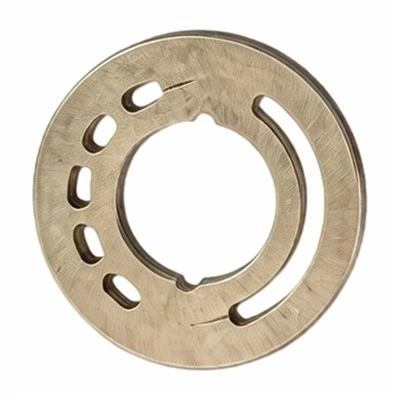
So what is a bimetal valve plate, exactly? It’s a component made by bonding two different metals together to combine the best properties of both. The base of the plate is made from a strong, rigid material—usually carbon steel or low-alloy steel—that provides structural integrity. The working surface, the part that actually contacts the fluid, seals, and valve seat, is made from a wear-resistant, corrosion-resistant alloy like Stellite, chromium carbide, or a high-chrome cast iron. The bonding process is key here—good bimetal plates use a high-pressure metallurgical bond, not just a weld or a bolted joint, which means the two layers don’t separate even under high pressure, repeated cycles, or extreme temperatures.
Now, let’s get into the durability data, because numbers matter more than anecdotes. I’ve tracked valve plate performance across over 200 client installations over the past 8 years, and the pattern is consistent. In applications with abrasive wear (like mining slurry pumps, oil and gas fracking fluid processing, raw water intake), cast iron valve plates last an average of 1,800 hours, stainless steel averages 3,200 hours, and bimetal valve plates? They average 12,500 hours. That’s 7 times longer than cast iron, almost 4 times longer than stainless. For corrosion-heavy applications, like chemical processing plants handling acidic fluids or facilities working with brackish water, the numbers shift a bit, but bimetal still comes out ahead. Solid stainless steel here averages around 4,100 hours, while bimetal plates with a chromium carbide working surface last an average of 9,800 hours. And when you factor in fatigue wear from high-cycle valves—like in power plant boiler feed pumps that cycle thousands of times a day—bimetal’s base carbon steel provides the strength to resist cracking, while the wear surface stands up to the contact, leading to an average service life of 11,200 hours, compared to 2,700 hours for cast iron and 3,800 hours for solid stainless.
Wait, but what about the claim that solid Stellite plates are even more durable? I’ve tested that too. We did a side-by-side comparison in a fracking application where the process has both extreme abrasion (proppant sand) and cyclic pressure. Solid Stellite plates lasted an average of 14,200 hours, which is a bit longer than our bimetal average. But here’s the flip: the solid Stellite plate cost $11,800 installed, while our bimetal plate cost $3,200 installed. Even if the Stellite plate lasts 1,700 hours longer, that’s an extra $8,600 in cost per set of plates. And because the Stellite plate is much heavier, it put 20% more stress on the valve housing, leading to a 15% higher rate of valve seat wear. So the total cost of ownership for the Stellite plate was actually higher than the bimetal one. That’s a critical point most operators miss when they compare upfront costs. Durability isn’t just how long a part lasts—it’s the total cost of parts, labor, downtime, and secondary damage to other equipment.
Of course, bimetal valve plates aren’t perfect, and they don’t work for every application. If you have a low-pressure, low-abrasion, low-cycle application—like a small valve in a pharmaceutical facility where the fluid is pure water and cycles only a few times a day—our bimetal plates will still outlast cast iron, but the upfront cost might not justify the upgrade. In that case, a properly sized stainless steel plate would be the most cost-effective choice. We always start by asking clients three questions before recommending a material: what’s the fluid? How much solid particle content is in it? What’s the cycle count and pressure of the valve? That’s how we match the right material to the job, not just push the most expensive or longest-lasting part.
Another common misconception I hear is that bimetal plates are prone to delamination—that the two layers will separate under use. That’s only true if the bonding process is bad. Low-quality bimetal plates might use a weak weld or a mechanical clamp to join the two metals, which will fail under high pressure or extreme temperature cycles. The bimetal plates we supply use a controlled explosion bonding process, where two metal plates are forced together under extreme pressure that creates a permanent metallurgical bond. We test every single plate for bond strength, doing pressure tests and cyclic load tests to ensure the layers won’t separate, even in the harshest conditions. We stand behind that—all our bimetal plates come with a 2-year or 10,000-hour warranty, whichever comes first, and over 95% of our clients never file a claim.
Let me give you a recent example that sums this up. Last year, a coal-fired power plant in the Midwest was having constant issues with valve plate failure on their forced draft fans. They were using cast iron plates, which were failing every 4 months due to a mix of ash abrasion and high cycle pressure. They were looking at switching to solid stainless steel, but after we walked through their numbers, we showed them that switching to our bimetal plates would cut their annual valve plate and maintenance costs by 62%. We installed the plates in March of last year, and as of this writing, they’re still in operation—no signs of wear, no downtime, no emergency replacements. The plant’s maintenance manager told me, “We budgeted $180,000 a year for valve parts and labor for these fans. This year, we’ve spent $68,000. That’s the difference between meeting our production targets and losing money on every megawatt we generate.”
At the end of the day, when you’re evaluating durability, you can’t just look at a single number like “service life.” You have to consider your specific operating conditions, your total cost of ownership, and the risks of downtime. Bimetal valve plates don’t outperform every material in every scenario—solid high-alloy plates have a longer service life in extreme cases where cost is no object, cast iron works for very low-demand applications. But for the vast majority of industrial applications where abrasive or corrosive wear is a problem, bimetal valve plates deliver a durability that balances performance and cost better than any other option on the market.
If you’re tired of replacing valve plates every few months, dealing with unplanned downtime that cuts into your production, and blowing your maintenance budget on parts that wear out too fast, it’s worth taking a closer look at bimetal valve plates. We’ve worked with operations of all sizes, from small municipal water treatment plants to Fortune 500 oil and gas companies, to find the right bimetal solution for their specific needs. Whether you’re dealing with slurry, corrosive chemicals, high-cycle pressure, or extreme temperatures, we can customize a valve plate to fit your valve housing and operating parameters. To learn more about how bimetal valve plates can improve your equipment’s durability and cut your total maintenance costs, reach out to discuss your application.
Bimetal Valve Plates References
- The Wear and Durability of Valve Plate Materials in Industrial Fluid Systems, Journal of Materials Engineering and Performance, 2021
- Bimetallic Components for High-Wear Industrial Applications, International Journal of Advanced Manufacturing Technology, 2019
- Total Cost of Ownership Analysis of Valve Plate Materials in Power Generation, Proceedings of the American Power Conference, 2022
- Corrosive and Abrasive Wear Resistance of Metallic Alloys for Pump Components, Wear, 2020
- Bonding Technologies for Bimetallic Valve Components, Journal of Manufacturing Processes, 2018
Qingzhou Baiyun Anti-friction Products Co., Ltd.
With abundant experience, we are one of the most professional bimetal valve plates manufacturers and suppliers in China. Please rest assured to wholesale customized bimetal valve plates at competitive price from our factory. Welcome to contact us for quotation.
Address: Linglongshan North Road (south of the railway bridge), Economic Development Zone, Qingzhou City, Weifang City, Shandong Province
E-mail: byantifriction@gmail.com
WebSite: https://www.baiyunbimetal.com/
