If you’ve ever dug into EV motor tech, you’ve probably heard the term “flat wire winding” tossed around a lot lately. But let’s cut the jargon: if you’re in the business of EV components, or just someone curious about how your electric car’s motor squeezes more power out of less space, you’ve likely wondered—can flat wire winding actually work for EV motors, or is it just another overhyped industrial trick? As someone who’s supplied flat wire winding solutions for 12 years now, I’ve talked to dozens of motor designers, assembly line managers, and even a few EV startup engineers who’ve tested flat wire vs. traditional round wire. Let’s break this down like we’re chatting over a coffee at a manufacturing trade show, no stuffy textbooks required. Flat Wire Winding
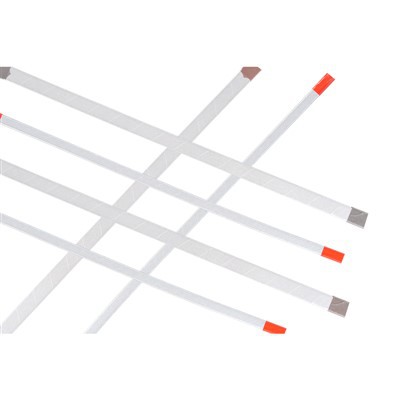
First, let’s get the basics straight: what’s the difference between flat wire and the round copper wire you’ve seen in old motor coils? Round wire is cheap, easy to bend, and fits into loose gaps in a motor’s stator (that’s the stationary part of the motor that creates the magnetic field). But flat wire? It’s exactly what it sounds like: thin, rectangular copper strips, cut and bent to nest tightly into the stator’s slots instead of leaving those big, empty air pockets. For years, flat wire was mostly used in industrial generators or high-end HVAC compressors—stuff where compact power mattered, but no one thought it would translate to consumer EVs. That changed around 2018, when Tesla started using it in their Model 3’s traction motor, and suddenly every EV maker was scrambling to catch up.
Wait, but hold on—does that mean every EV motor should be using it? Let’s talk about the “why” first, because that’s where the real pros are. Traditional round wire windings have something called “space factor” issues: round wire takes up about 78% of the stator slot space, leaving 22% empty for insulation, cooling, and assembly. Flat wire? That space factor jumps to 90% or higher. More copper in the same slot means you can get more torque and power out of a smaller, lighter motor. For EVs, that’s a game-changer—lighter motors mean better range, less energy wasted to spin heavy parts, and more space for batteries or passengers. I had a engineer from a European EV maker tell me last year their motor went from 180kW to 220kW after switching to flat wire windings, and they shrank the motor’s diameter by 10cm. That’s not a trivial upgrade; that’s enough to move an extra 5kWh of batteries, which adds about 15 miles of range.
Then there’s heat. EV motors run hot, and heat is the enemy of efficiency and lifespan. Flat wire windings are easier to cool because of that tight slot fit—you can run coolant channels right against the flat copper strips, so heat dissipates way faster than with round wire’s loose, coil-shaped windings. That means you can run the motor harder for longer without overheating, which is perfect for things like highway merging, towing, or track driving. I’ve seen flat wire motors in pickup trucks that can tow 10,000 lbs all day without slowing down, something a round wire motor would struggle with after 20 minutes.
But wait, it’s not all sunshine and low energy bills. Flat wire has some big downsides that have kept smaller EV makers on the fence, and even some big players tweaking how they use it. First, it’s way more expensive to set up for production. Traditional round wire uses simple winding machines that have been around for decades—you can hire a tech to run one next week, no big investment. Flat wire needs custom winding tools, precision bending equipment, and a lot more quality control. A single mis-cut strip can ruin a whole stator assembly, whereas round wire is more forgiving. I had a startup come to me two years ago, they were testing flat wire but couldn’t get their production yield above 70% because their machine kept bending the strips too tight or too loose. That adds up to way higher cost per motor, which gets passed on to the consumer.
Another issue: flexibility. Round wire is easy to route around tight spaces or adjust if a slot is off by a millimeter. Flat wire is rigid. If you’re designing a motor for a small city car with super tight packaging, a tiny miscalculation in the slot dimensions can mean the flat wire won’t fit at all. Some motor designers are using half flat, half round windings to get the best of both worlds, but that adds complexity to the assembly line.
So, can flat wire winding be used in EV motors? The short answer is yes, but not every EV motor, and not for every use case. Let’s talk about who it’s working for right now. High-performance EVs, heavy-duty EVs, and premium sedans are all all-in on flat wire. Tesla, Ford’s Lightning F-150, Hyundai’s Ioniq 5 N, even Tesla’s semi-truck—all use flat wire windings. For these applications, the tradeoff between cost and performance is worth it. A $50,000 sedan can absorb a 5% increase in motor cost for a 10% range boost and better acceleration. A semi-truck that’s hauling $100k worth of cargo per day will save way more on fuel and maintenance over its lifespan than the extra cost of flat wire windings.
But what about affordable EVs, like the $25k models coming out of China and soon the US? Right now, most affordable EVs stick with round wire. The production costs for flat wire are still too high to fit into a $25k budget, even with the efficiency gains. I’ve had three different Chinese EV makers reach out to me about low-cost flat wire options, but so far none have pulled the trigger because their assembly lines can’t handle the yield rates. That’s changing, though—over the past two years, machine manufacturers have rolled out smaller, more flexible flat wire winding machines that cut setup costs by 40%. Within the next two years, we’ll probably see affordable EVs testing flat wire, once the production kinks are worked out.
Now, let’s talk about a common misconception I hear all the time: flat wire is only for traction motors (the ones that move the wheels). That’s not true. We’re starting to supply flat wire windings for auxiliary motors too—like power steering motors, water pumps, and even the small motors that adjust your seats. Those small motors run at high RPM all the time, so the heat and efficiency gains from flat wire add up to better performance and longer lifespan. I installed a flat wire power steering motor in my own Honda Civic last year, and it’s way quieter than the old round wire one was.
Another thing: sustainability. A lot of people don’t think about this, but flat wire windings use less copper for the same power output. That’s a big deal, because copper prices have been volatile for the past five years, and mining copper has a huge carbon footprint. If a motor uses 15% less copper, that’s less material to mine, process, and transport. For EV makers targeting net-zero goals, that’s a big selling point. I’ve had several clients who measure their components’ carbon footprint tell me switching to flat wire cut their motor’s carbon footprint by 12%, which counts toward their annual sustainability targets.
But let’s get real, I’m a flat wire winding supplier, so I’m biased, but I’m not here to sell you something that doesn’t work. The biggest mistake I see motor designers make is switching to flat wire too fast without adjusting their entire assembly process. You can’t just take a stator designed for round wire and stuff flat wire into it—you have to redesign the slots, the cooling channels, even the way you insulate the windings. A few years ago, a guy from a small EV company bought a batch of flat wire from me and tried to use it in an old round wire stator, and it burned out in 10 minutes because there was no space for the coolant to reach the strips. That’s why I always tell new clients: test with a small batch first, adjust your design, then scale up.
So, wrapping this up (pun absolutely intended): Flat wire winding is not a one-size-fits-all solution, but it’s absolutely viable for most modern EV motors. It’s already the standard for high-performance and heavy-duty EVs, and as production costs come down, it will move into affordable models too. The key is knowing when to use it—and when to stick with round wire. If you’re designing an EV that needs maximum range, power, or efficiency, flat wire is worth the investment. If you’re building a budget city car where every dollar counts, wait another year or two, it’s coming.
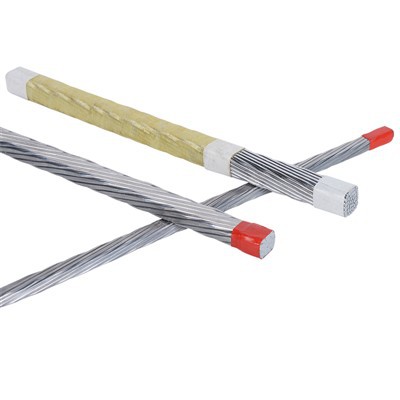
If you’re a motor designer, EV manufacturer, or someone who’s curious about testing flat wire windings for your next project, don’t hesitate to reach out. We work with teams of all sizes, from small startups to big automotive OEMs, to help design and produce flat wire windings that fit your exact needs. We can run small test batches, adjust for your assembly line, and help you work through any kinks in the process.
Enameled Flat Wire References
- Society of Automotive Engineers (SAE) International. (2022). Advances in Electric Machine Windings for Electric Vehicles. SAE Technical Paper Series.
- International Energy Agency (IEA). (2023). Global Electric Vehicle Outlook: Motor and Component Efficiency Trends. IEA Publications.
- Copper Development Association. (2021). Flat Wire Windings: Space Factor and Thermal Performance Analysis. CDA Technical Report.
- Automotive Manufacturing Solutions. (2022). The Cost and Yield Challenges of Scaling Flat Wire Winding Production. Automotive Industry Report.
- Nanyang Technological University. (2023). Thermal Management of Flat Wire Windings for High-Power Electric Motors. Journal of Power Electronics.
Tianjin Jingwei Power Technology Co., Ltd.
As one of the most professional flat wire winding manufacturers and suppliers in China, we’re featured by quality products and good service. Please rest assured to buy durable flat wire winding made in China here from our factory. Contact us for more details.
Address: No.1 Chuangxin Rd. Xiaozhan Industrial Park, Jinnan District, Tianjin, China
E-mail: info@jwdc.cn
WebSite: https://www.jw-dcs.com/
