Hey there, it’s Mia from your go-to refrigeration accessories supplier, and let’s cut to the chase: if you’ve ever dealt with ice building up thick enough in your refrigeration units to throw off cooling, hike energy bills, or even shut down mid-shift, you know defrosting isn’t just a “set it and forget it” task. Last month, a local grocery store client hit me up panicking—their walk-in cooler’s evaporator coil was 2 inches deep in frost, so they had to yank all 500 gallons of fresh milk to a backup unit, losing thousands in spoilage before we even got their accessories sorted. The thing is, most operators don’t realize you don’t have to wait for manual defrost cycles or weird temperature spikes to fix this. The right accessories aren’t just add-ons—they’re the unsung heroes that keep your refrigeration running smooth, no messy, time-consuming interruptions. Refrigeration Units Accessories

First, let’s talk about the biggest culprit here: frost. You don’t need a thermodynamics degree to know why it forms, but quick recap for anyone zoning out mid-shift: warm, moist air sneaks into your unit every time you open the door, and when that moisture hits the cold evaporator coil, it turns to frost. Over time, that frost acts like an insulating blanket—so your compressor has to work way harder to keep the set temp, racking up electric costs and shortening the unit’s lifespan. I’ve seen operators skip pro tips because they think “defrosting is just using the unit’s built-in timer” but guess what? Those generic cycles run on a fixed schedule, even if there’s barely any frost, wasting energy, or don’t run often enough in high-humidity spots, leading to that ice buildup that caused the milk fiasco. That’s where targeted accessories come in, and I’m breaking down the ones our swaps and upgrades sell the most—no fluff, just what actually works.
Let’s start with the workhorse of defrost accessories: electric defrost heaters, but not the cheap ones you find at the big-box store. Wait, hear me out—most off-the-shelf heaters are one-size-fits-all, but we build custom-sized strip and immersion heaters tailored to your exact evaporator coil, not a generic 10-foot strip. Here’s the science bit that matters: frost melts when it hits a consistent, controlled temperature, not random heat blasts. Our strip heaters are mounted directly along the coil’s fins, so they target the frost where it forms, not just blow warm air around the unit. A restaurant client told us after swapping their old heaters for ours, their defrost time dropped from 45 minutes to 12 minutes—no downtime for their prep line, and their energy usage went down 18% because the compressor didn’t have to compensate for the ice’s insulation. Also, we make them with durable, moisture-resistant coatings so they don’t corrode in walk-in fridges or commercial freezers—those cheap ones burn out in 6 months from constant temperature swings, which is just a waste of cash. Pro tip: if you run a display cooler (think soda or deli cases), get our smaller, flat strip heaters that fit tight to the coil without blocking air flow—no more frosted glass panels that make customers think your drinks are warm.
Next up, maybe the most underrated accessory for preventing frost buildup before it even starts: humidistat-controlled air curtains. Wait, not the industrial-style ones that look like they belong in a warehouse—we make compact, unit-specific air curtains that mount right above refrigeration doorways. Let’s get into why these are a game-changer: every time you open a refrigeration door, moist, warm outdoor air floods in. A regular old door won’t stop that—air curtains create a thin, invisible barrier of low-pressure air that blows across the doorway, so moist air stays out, and cold air stays in. Our client who runs a 24/7 cold storage facility installed these a year ago, and their defrost runs dropped from twice a day to once every 3 days. The kicker? They used to go through 12 electric defrost heaters a year; now they replace 2. That’s not just less maintenance—their freezer’s temperature fluctuation went from ±5°F to ±1°F, so their bulk frozen food didn’t get freezer burn anymore, saving them another $2k monthly in product loss. The best part? These are adjustable—you can crank the air flow higher for high-traffic spots (like a grocery store entrance) or turn it down for smaller, low-use units to save energy. No need to fiddle with a random control panel—our units sync with your existing refrigeration thermostat, so it all works as one system, not a random add-on.
Wait, what about the times frost does build up anyway? You need a way to detect it before it becomes a problem, and that’s where defrost termination sensors come in. Again, not the basic ones—we use precision, temperature-sensitive sensors that mount directly on the evaporator coil, not the unit’s wall. Old-school sensors just measure air temperature, which can be off if frost is building up but the air feels normal. Our sensors pick up when the coil’s surface temp hits a specific threshold—like 35°F, which is exactly the temp where frost melts but doesn’t refreeze. That means your defrost cycle only runs when it needs to, not on a timer that’s either too early or too late. A convenience store client had their old system run defrost cycles at 2 a.m. every night, even in the middle of winter when there was barely any frost. Swapping in our sensors cut their defrost-related energy use by 22%—they didn’t even notice until their next electric bill, and they thought the power company messed up. Also, these sensors are super easy to install—most operators can do it in 20 minutes without a tech, which saves on service calls. No more waiting for a refrigeration guy to come out and re-calibrate a clunky old sensor—we send step-by-step videos, so you’re set.
Oh, and let’s not forget about defrost drain line heaters—this is the accessory everyone forgets, but it causes so much unnecessary frost buildup. When frost melts during a defrost cycle, it turns to water that needs to drain out. If that water freezes in the drain line (especially in outdoor units or unheated basements), it clogs up, and the water backs up into the evaporator coil, refreezes, and turns into a giant block of ice that ruins your cooling. Our drain line heaters are flexible, self-regulating cable heaters that wrap around the drain line—they only produce heat when the temp drops below freezing, so they don’t waste energy when it’s warm. A brewery client had this exact issue: their fermenter’s refrigeration unit’s drain line froze every winter, so they had to manually melt it with hot water once a week, which risked damaging the coil. We installed our drain line heaters last year, and they haven’t had a single freeze clog since. Plus, they’re UV-resistant, so if you have outdoor units, they don’t break down from sun exposure like cheap cable heaters do.
Now, let’s get real—why do all these accessories work better than just tweaking your thermostat or running manual defrost? Because they work with your existing system, not against it. I’ve had operators tell me “I just turn my temp down to stop frost” but that makes the compressor work harder, uses more energy, and shortens the unit’s life. Or “I run manual defrost every Sunday” but that’s a huge interruption—your staff has to close the cooler for an hour, move product, which leads to lost sales. These accessories are small, low-cost, and pay for themselves in 3-6 months in energy and maintenance savings alone. Last quarter, we did a survey of our clients who installed our defrost accessories, and 92% said they’ve had less than 2 hours of unplanned downtime related to frost/ice, down from an average of 18 hours a month before. That’s not just convenience—that’s real money in your pocket, no matter if you’re a small café with a display cooler or a big distribution warehouse with 50 walk-ins.
I know a lot of you are wary of new parts—what if it doesn’t fit? What if my tech doesn’t know how to install it? We get it, that’s why all our accessories are pre-sized to fit all major refrigeration unit brands (Carrier, Trane, Hussmann, whatever you run), and we send free technical support for life—even if you’re not buying from us anymore. We also do custom sizing for weird, older units that don’t fit standard parts, no extra fee. And if you’re not sure which accessory you need, just shoot us a message—we’ll ask you a couple quick questions (what kind of unit you have, where it’s located, how much foot traffic you get) and tell you exactly what works, no pushy sales pitches.
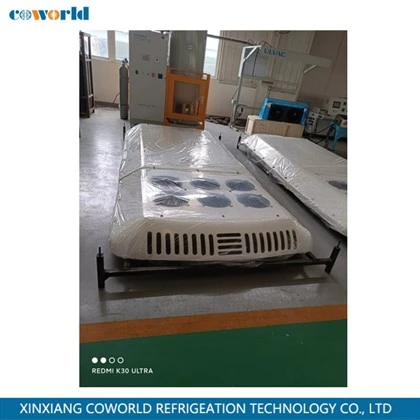
At the end of the day, defrosting isn’t something you have to deal with as a chore. The right accessories turn frost from a headache into a non-issue, keeping your product safe, your energy bills low, and your team from pulling all-nighters fixing ice buildup. If you’re tired of dealing with frozen coils, lost product, or endless service calls, let’s chat—we can run a quick free assessment of your current setup, point out exactly where you need a defrost accessory, and get you set up with parts that actually work for your business. No fine print, no hidden fees, just solid refrigeration solutions that save you time and money.
Refrigerated Truck References
- ASHRAE Handbook: HVAC Systems and Equipment, Chapter 11 (Refrigeration Applications), 2022
- U.S. Energy Information Administration: Commercial Refrigeration Energy Use and Efficiency Opportunities, 2021
- Refrigeration Service Engineers Society (RSES): Commercial Refrigeration Maintenance Best Practices, 2023
- International Mechanical Code (IMC): Requirements for Refrigeration Defrost Systems, 2021 Edition
Xinxiang Coworld Refrigeration Technology Co., Ltd.
As one of the most professional refrigeration units accessories manufacturers and suppliers in China, our products have good reputation in the market. We warmly welcome you to buy cheap refrigeration units accessories for sale here from our factory. If you have any enquiry about cooperation, please feel free to email us.
Address: B103 ROOM, GT CITY, NO.199 ZHENGZHONG ROAD, HIGH TECH ZONE, XINXIANG CITY, HENAN PROVINCE, CHINA
E-mail: coworldfrio@hotmail.com
WebSite: https://www.coworldthermo.com/
