As a supplier of stamped brackets, I’ve often been asked about the electrical conductivity of these components. Electrical conductivity is a critical property, especially when stamped brackets are used in electrical and electronic applications. In this blog post, we’ll delve into what electrical conductivity is, how it relates to stamped brackets, and why it matters in various industries. Stamped Brackets
Understanding Electrical Conductivity
Electrical conductivity is a measure of a material’s ability to conduct an electric current. It is the reciprocal of electrical resistivity, with the SI unit of conductivity being siemens per meter (S/m). Materials with high electrical conductivity allow electrons to flow through them easily, while those with low conductivity impede the flow of electrons.
Metals are generally good conductors of electricity because they have a large number of free electrons that can move freely through the material. For instance, copper and aluminum are widely used in electrical wiring due to their high electrical conductivity. On the other hand, materials like rubber and plastic are insulators, meaning they have very low electrical conductivity and are used to prevent the flow of electricity.
Factors Affecting the Electrical Conductivity of Stamped Brackets
The electrical conductivity of stamped brackets is influenced by several factors, primarily the material from which they are made. Here are some common materials used for stamped brackets and their electrical conductivity characteristics:
1. Steel
Steel is a commonly used material for stamped brackets due to its strength and durability. However, its electrical conductivity is relatively low compared to pure metals like copper and aluminum. The presence of carbon and other alloying elements in steel can reduce its conductivity. For example, mild steel has an electrical conductivity of around 6.9 × 10⁶ S/m, which is much lower than that of copper (5.96 × 10⁷ S/m).
2. Copper
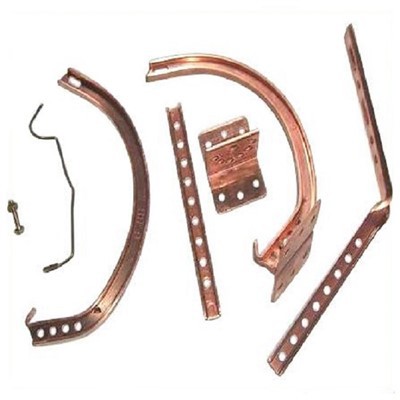
Copper is an excellent conductor of electricity, making it a popular choice for stamped brackets in electrical applications. It has high electrical and thermal conductivity, as well as good corrosion resistance. The high conductivity of copper ensures that there is minimal loss of electrical energy as heat when current flows through the bracket. Stamped copper brackets are often used in power distribution systems, electrical appliances, and printed circuit boards.
3. Aluminum
Aluminum is another metal with good electrical conductivity, approximately 61% that of copper. It is also lightweight and has good corrosion resistance. Stamped aluminum brackets are often used in applications where weight is a concern, such as in the aerospace and automotive industries. Aluminum is also more cost – effective than copper in large – scale applications.
4. Surface Treatment
The surface treatment of stamped brackets can also affect their electrical conductivity. For example, if a bracket is coated with a non – conductive material such as paint or a polymer coating, the electrical conductivity will be significantly reduced. However, in some cases, a thin layer of conductive coating can be applied to improve the contact and conductivity between the bracket and other electrical components.
Importance of Electrical Conductivity in Different Industries
The electrical conductivity of stamped brackets plays a crucial role in various industries:
1. Electrical and Electronics
In the electrical and electronics industry, stamped brackets are used to support and connect electrical components. Good electrical conductivity is essential to ensure efficient electrical transfer and minimize power losses. For example, in a power supply unit, stamped copper brackets are used to connect different circuit elements, allowing the smooth flow of electricity.
In printed circuit boards (PCBs), stamped brackets made of conductive materials help in grounding and signal transfer. If the brackets have poor conductivity, it can lead to signal distortion, overheating, and even equipment failure.
2. Automotive
In the automotive industry, stamped brackets are used in a wide range of electrical systems, including the engine management system, lighting system, and entertainment system. The electrical conductivity of these brackets affects the performance and reliability of these systems. For example, in the battery connection, a stamped bracket with high conductivity ensures a stable power supply to the vehicle’s electrical components.
3. Aerospace
In aerospace applications, every gram counts, and weight – saving is crucial. Stamped aluminum brackets with good electrical conductivity are often used in aircraft electrical systems. These brackets need to be able to conduct electricity efficiently while maintaining their structural integrity under extreme conditions such as high temperatures and vibrations.
Testing the Electrical Conductivity of Stamped Brackets
To ensure the quality and performance of stamped brackets, it is important to test their electrical conductivity. There are several methods for testing electrical conductivity, including the four – point probe method and the two – point probe method.
The four – point probe method is more accurate and is often used for materials with relatively high conductivity. It involves passing a known current through the outer two probes and measuring the voltage across the inner two probes. The conductivity can then be calculated using Ohm’s law.
The two – point probe method is simpler and is suitable for rough estimations. It involves applying a voltage across two probes in contact with the sample and measuring the resulting current.
Maintaining Optimal Electrical Conductivity
To maintain the optimal electrical conductivity of stamped brackets, proper storage and handling are essential. Brackets should be stored in a dry environment to prevent corrosion, which can reduce conductivity. During the manufacturing process, care should be taken to avoid surface contaminants that could affect the electrical contact.
When brackets are installed, they should be properly tightened to ensure good electrical contact with other components. Over – tightening can deform the bracket and reduce the contact area, while under – tightening can lead to loose connections and increased resistance.
Conclusion
In conclusion, the electrical conductivity of stamped brackets is a critical property that depends on the material used, surface treatment, and manufacturing processes. Understanding the electrical conductivity requirements of different applications is essential for selecting the right material and ensuring the performance and reliability of electrical systems.

As a supplier of stamped brackets, we are committed to providing high – quality products with the appropriate electrical conductivity for your specific needs. Whether you require stamped copper brackets for high – performance electrical applications or lightweight aluminum brackets for aerospace and automotive use, we have the expertise and resources to meet your requirements.
Metal Stamped Parts If you are in the market for stamped brackets and would like to discuss your procurement needs, please reach out to us. Our team of experts is ready to assist you in finding the best solutions for your electrical conductivity requirements.
References
- "Electrical Engineering Handbook" by Richard C. Dorf
- "Materials Science and Engineering: An Introduction" by William D. Callister Jr.
- "Automotive Electrical and Electronics" by Joseph J. Castro and Howard E. Garber
Hangzhou Zhalihui Import And Export Co., Ltd.
We are one of the most experienced stamped brackets manufacturers and suppliers in China, specialized in providing high quality customized products. Please feel free to buy discount stamped brackets in stock here from our factory. Contact us for quotation.
Address: Room 2801, Building 2, Taifu Plaza, No.17, Tonghui Middle Road, Chengxiang Street, Xiaoshan, Hangzhou, Zhejiang
E-mail: Chars_1979@hotmail.com
WebSite: https://www.zhalihui.com/
