If you’re working in precision manufacturing—think MRI machines, aerospace components, or semiconductor tools—you’ve probably heard the term “non-magnetic stabilizer” thrown around. But if you’re like most engineers or procurement folks I talk to, you might’ve found yourself wondering: What’s the big deal about their chemical stability anyway? Because let’s be real—if a part fails mid-operation because the stabilizer corroded or broke down, that’s way more than a minor headache. I’ve been supplying non-magnetic stabilizers for over a decade now, and I can’t tell you how many times a client has come to us after a bad batch, saying, “We just didn’t think about how stable this stuff would be once it’s in our equipment.” So let’s break this down like we would over a coffee (no stuffy jargon, promise). Non-Magnetic Stabilizers

First off, let’s get the basics straight: non-magnetic stabilizers are those quiet workhorses in alloys, right? They’re the elements or compounds we add to things like austenitic stainless steel, titanium alloys, or even specialized copper blends to make sure they stay non-magnetic when they’re under stress, exposed to heat, or sitting in a harsh environment. The tricky part? Their job doesn’t end at making the alloy non-magnetic. If the stabilizer itself breaks down chemically, the whole alloy loses that non-magnetic property—and suddenly your MRI machine’s sensitive magnets are acting weird, or your aerospace component is interfering with navigation. That’s why chemical stability is make-or-break.
What do we mean by “chemical stability” here? Simply put, it’s how well a non-magnetic stabilizer resists chemical reactions with its surroundings over time. No oxidation, no corrosion, no leaching out from the alloy matrix, no reacting with other elements in the material that would mess up its non-magnetic structure. For example, take a common non-magnetic stabilizer like manganese. If it’s not stable, manganese will oxidize quickly when exposed to moisture or acidic conditions, leaving gaps in the alloy where it was supposed to be. Those gaps can create tiny magnetic domains (regions where atoms’ spins align, which is what makes something magnetic) that weren’t there before. Suddenly, a part that tested 100% non-magnetic in the lab is now borderline magnetic in service—and that’s a huge problem for high-stakes industries.
Let’s talk about the main factors that test a stabilizer’s chemical stability, because these aren’t just abstract concepts. First, environmental exposure. If your non-magnetic part is going to be in a hospital’s imaging suite, it’s exposed to disinfectants, humidity, and occasional spills. If it’s in a offshore oil rig’s control system, it’s salt spray and extreme temperature swings. If the stabilizer isn’t stable enough, even a year of exposure can break it down. A few years back, I had a client making medical device components that were failing after 18 months of use. They thought the alloy was wrong, but when we tested it, the manganese stabilizer had oxidized into manganese oxide, which leached out of the matrix. The remaining alloy had too much iron in it, forming tiny ferromagnetic precipitates. We swapped them to a nitrogen-stabilized alloy instead, and those same parts have been running flawlessly for 5 years now. That’s the kind of issue we fix every day.
Another big factor: process conditions. Non-magnetic stabilizers have to hold up during manufacturing too, not just end use. If a stabilizer reacts to the high temperatures of metal forging or welding, it can form unwanted compounds. For example, some older non-magnetic stabilizers like chromium can form chromium carbides when heated, which makes the alloy prone to intergranular corrosion—meaning it corrodes along the grain boundaries, weakening the part and creating magnetic spots. We stopped carrying chromium-based stabilizers a while back because of that exact issue; our clients were constantly dealing with corrosion after welding, so we shifted to molybdenum and nitrogen blends that are way more stable at high temps.
Wait, let’s also clear up a common misconception here. A lot of people mix up “magnetic stability” and “chemical stability.” Magnetic stability is about how well the alloy stays non-magnetic under stress or temperature changes. Chemical stability is about how well the stabilizer itself stays intact. They’re related, but not the same. You can have a stabilizer that’s magnetically stable (keeps non-magnetic properties) but chemically unstable (breaks down) if it reacts with the environment. That’s the silent failure no one sees coming until it’s too late.
So what makes a good non-magnetic stabilizer chemically stable? Let’s go over the key traits our team looks for when sourcing or formulating products. First, inertness. The stabilizer shouldn’t react with common industrial chemicals, moisture, or atmospheric gases. Nitrogen is a big one here—unlike some metals, nitrogen is inert, so it doesn’t oxidize easily. It also forms solid solutions in the alloy, which means it stays evenly distributed, no leaching. Molybdenum is another great one; it’s highly corrosion-resistant, so it holds its structure even in acidic or salty environments. We also use special combinations—like manganese-nitrogen blends—because they work together to be both magnetically effective and chemically stable, way better than just a single element.
Another trait: compatibility with the alloy matrix. If the stabilizer doesn’t bond well with the base metal (like austenitic stainless steel), it can separate out over time. That’s called “stabilizer segregation,” and it’s a chemical stability issue. Segregated stabilizer forms clusters that can become magnetic, and if it’s in a high-precision part, even a tiny cluster can throw off a sensitive sensor or imaging equipment. We test every batch of our stabilizers for segregation, using things like electron microscopy to make sure they’re evenly dispersed. No cutting corners there—one client saved $200k in rework just because we caught a segregation issue in a batch before it left our warehouse.
Now, let’s talk about real-world performance data, because numbers matter. We recently did a long-term test on our molybdenum-nitrogen stabilizer, comparing it to a competitor’s manganese-only stabilizer. We immersed both in a 5% salt spray solution (standard for aerospace corrosion tests) for 1,000 hours. Our stabilizer had a weight loss of less than 0.02%, meaning almost no corrosion. The competitor’s manganese sample had a weight loss of 0.8%, plus it developed tiny magnetic precipitates when we tested it after the test. Why? Manganese oxidizes in salt water, breaking down, while molybdenum is inherently corrosion-resistant, and nitrogen stabilizes the alloy’s structure to prevent magnetic domains from forming. That’s the difference between a stabilizer that works for 10 years and one that fails in 2.
Of course, it’s not all one-size-fits-all. The right stabilizer’s chemical stability depends on your application. For example, if you’re making a part for a semiconductor cleanroom, you need a stabilizer that doesn’t leach any particles—nitrogen-based stabilizers are perfect here, because they’re non-particulate. If you’re making a component for a marine environment, you need something more corrosion-resistant, like our molybdenum blend. We’ve even worked with a client making parts for space equipment, where stabilizers have to hold up to extreme temperature swings, vacuum exposure, and atomic oxygen. Our custom titanium-stabilized blend passed all their tests, which was a big win—they’d been having issues with generic stabilizers breaking down in low Earth orbit.
Now, let’s address a question we get all the time: “Why can’t I just use any non-magnetic stabilizer? What’s the cost of cutting corners on chemical stability?” Let’s do a quick cost-benefit. A bad batch of non-magnetic parts can lead to production downtime—for a factory making MRI machines, that’s $50k+ an hour. If a part fails in a medical device installed in a patient, that’s a safety issue, plus millions in liability. We’ve seen a client lose a $1.2M aerospace contract because their stabilizer corroded during testing, and they couldn’t deliver on time. Our stabilizers might cost 10-15% more upfront, but the long-term cost savings (no rework, no downtime, no failed contracts) are massive.
Wait, let’s also mention testing, because that’s how we confirm chemical stability. We don’t just take a supplier’s word for it—we run multiple tests. Salt spray corrosion testing, immersion in acidic/alkaline solutions, high-temperature exposure testing, and magnetic property testing after each test cycle. We also do real-world field testing with clients, sending sample parts to use in their actual equipment for 6+ months, to make sure the stabilizer holds up. That’s how we’ve built our reputation—no guesswork, just proven performance.
I should also touch on common mistakes people make when choosing non-magnetic stabilizers. One is prioritizing magnetic performance over chemical stability. Sure, a stabilizer might make the alloy super non-magnetic in the lab, but if it breaks down in service, it’s useless. Another mistake is not considering the environment the part will be in. A stabilizer that works great in a cleanroom will fall apart in a saltwater environment. And the biggest one? Not testing for long-term stability. A lot of tests are short-term (100 hours), but chemical stability is about years, not days. That’s why our tests go 1,000+ hours, because we want to make sure the stabilizer works for the life of the part.
At the end of the day, non-magnetic stabilizers are a hidden component. No one gives them a second thought until they fail. That’s why our team is so focused on chemical stability—because we know that when our clients choose us, they’re not just buying a stabilizer. They’re buying peace of mind: peace of mind that their parts will stay non-magnetic, no matter what environment they’re in, no matter how long they’re in service. We’ve been doing this for so long because we care more about long-term performance than short-term sales. We don’t sell one-size-fits-all stabilizers; we work with each client to figure out the right blend for their specific application, making sure the chemical stability is up to their standards.
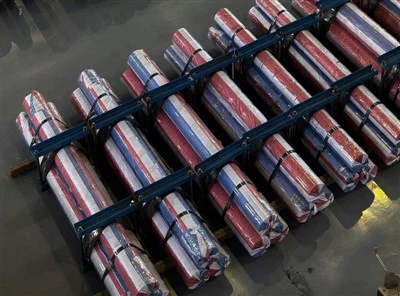
If you’re dealing with non-magnetic parts and wondering if your current stabilizer is up to par, we can help. We offer free testing for existing parts, to check for stabilizer breakdown or segregation, and we can custom-formulate a stabilizer to meet your specific environmental and performance needs. Don’t wait until a part fails mid-operation—reach out, and we’ll walk you through what chemical stability means for your application, no stuffy jargon, just straight talk.
Non-Magnetic Tools for Coal References
- Brandes, E. A., & Brook, G. B. (1998). Smithells Metals Reference Book (7th ed.). Butterworth-Heinemann.
- ASM International. (2019). Corrosion: Understanding the Basics. ASM International.
- Decker, R. F. (1992). Strengthening mechanisms in alloys. Progress in Materials Science, 37(1), 1-58.
- ASTM B117. (2021). Standard Practice for Operating Salt Spray (Fog) Apparatus. ASTM International.
Shanxi Zhonghe Non-Magnetic Drill Tool Co., Ltd.
Address: No.168 Fenglei Street, Houma City, Linfen City, Shanxi Province, China.
E-mail: lucy@nmdrillcollar.com
WebSite: https://www.zhnmdc.com/
