When I first started working as a slitting lines supplier 12 years ago, I’d get a lot of calls from fabricators, metal service centers, and small manufacturing shops asking one very specific, practical question: “What’s the right installation height for my new slitting line?” At the time, I’d give a general answer—something like “around waist level, maybe 36 to 40 inches”—but over the years, I’ve learned that there’s no one-size-fits-all number. The correct height depends on more than just comfort; it ties into worker safety, production speed, material damage, and even the long-term lifespan of the machine. Today, I want to break down why installation height matters, the key factors that shift that number, and how we help our customers find the sweet spot that works for their shop. Slitting Lines

Let’s start with the basics: what is a slitting line? For anyone new to the space, a slitting line takes a large, heavy coil of metal (or sometimes paper, plastic, or fabric) and cuts it into narrower, consistent strips, which are then rewound into smaller coils for use in things like automotive parts, roofing, appliances, or packaging. The line has several moving parts: the uncoiler that holds the big main coil, the straightener that flattens out any kinks from shipping, the slitter head itself that makes the cuts, and the rewinder that winds the new narrow strips. Each of these parts plays a role in setting the overall installation height, but the most critical part is the operator’s station—because that’s where most hands-on adjustments, problem-solving, and quality checks happen.
If you’ve ever stood at a workbench that’s too low or too high, you know how quickly fatigue sets in. For slitting line operators, who often work 8 to 12 hour shifts, a poorly adjusted height doesn’t just cause sore backs or shoulders—it increases the risk of repetitive stress injuries (RSIs) like carpal tunnel syndrome. I remember a customer in Ohio, a small metal service center with 3 operators, who installed their first slitting line at 28 inches (roughly 71 cm) because they thought “lower is sturdier.” Within 6 months, two of their operators had to take medical leave for wrist pain, and their production output had dropped by almost 15% because workers were slowing down to adjust their posture. We went out to their shop, measured their average worker height (most were between 5’4” and 5’9”), and adjusted the line to 38 inches (96.5 cm). Within three months, their absenteeism dropped to zero, and their output went back up and even exceeded their pre-adjustment numbers by 8%. That story stuck with me, because it drove home that installation height isn’t a minor detail—it’s a core part of productivity and safety.
So what’s the science behind that number? The standard baseline many of our engineers reference is the “elbow height” of the average worker. The Occupational Safety and Health Administration (OSHA) has guidelines for ergonomic workstations, and for tasks that involve standing, manipulating materials, and making fine adjustments, the ideal work surface height is between 2 and 4 inches below the operator’s elbow height when their arms are relaxed at their sides and elbows are bent at 90 degrees. For the average adult male, elbow height is around 40 inches; for the average adult female, it’s around 36 inches. That’s where the common range of 32 to 40 inches (81 to 102 cm) comes from. But that’s just the starting point, not the rule.
Let’s talk about the first big factor that changes this: the type of material you’re slitting. If you’re slitting light-gauge material, like thin aluminum foil or paper, you can get away with a slightly lower height—around 32 to 34 inches (81 to 86 cm)—because the material is lightweight, so there’s less strain on the operator when they guide it. But if you’re working with heavy-gauge steel, like 1/4-inch thick stainless steel, that material is not only heavier but also stiffer, so it takes more effort to feed and guide it through the slitter. For heavy-gauge applications, we recommend a slightly higher height, 36 to 40 inches (91 to 102 cm), to reduce the strain on wrists and shoulders when handling the material. We had another customer in Texas that slits 1/2-inch thick carbon steel for construction beams; they initially set their line at 35 inches to save on installation costs, but their operators were struggling to lift the heavy material onto the feed table, leading to several minor pinch injuries in the first month. Once they raised it to 38 inches, those injuries stopped, and they reported that feeding the material was 20% faster because they didn’t have to hunch over to align it.
Another key factor: the size and weight of the coils being processed. Uncoilers can hold coils that weigh anywhere from a few hundred pounds to 50,000 pounds or more. The height of the uncoiler’s feed table (the part that holds the coil as it unwinds) ties directly into the main work height of the line. If your incoming coils are very large or heavy, a lower feed table means you need to lift more material to align it with the slitter head, which is unsafe and inefficient. For coils over 20,000 pounds, we almost always recommend a feed table height of 36 to 42 inches (91 to 107 cm) to match the ergonomic needs of the operator and reduce the strain of lifting heavy materials. We also add adjustable coil lifter guides to these setups, but even with that, the height of the line itself is critical. On the flip side, if you’re working with small, light coils (under 2,000 pounds) for things like jewelry or small electronic parts, you can lower the feed table and work surface to 30 to 34 inches (76 to 86 cm) to make it easier to handle the smaller coils without having to reach up too high.
Then there’s the role of safety standards. OSHA doesn’t have a specific rule for slitting line installation height, but their general ergonomic guidelines apply to all industrial workstations. The American National Standards Institute (ANSI) has more specific guidelines for material handling equipment, including slitting lines, that emphasize work surfaces that reduce bending, reaching, and lifting. One thing that’s often overlooked is the space around the line: if your shop has low ceilings, or if the slitting line is near walls or other equipment, you might have to adjust the height to avoid clearance issues. For example, a customer in a old industrial building in Detroit had a 10-foot ceiling (120 inches), which is average, but their slitting line was going near a support beam that jutted down 10 inches. We had to adjust their installation height by 6 inches, going from 38 inches to 32 inches, to make sure there was enough clearance above the rewinder without sacrificing ergonomics. We also installed a movable operator station that can be adjusted on the fly for different tasks, which solved their problem without hurting productivity.
Wait a second—what about older slitting lines? I get a lot of questions from customers who already have a line installed but want to upgrade or adjust it because their operators are complaining about fatigue. A lot of older lines were built to a fixed height, often around 30 inches, that was standard in the 1970s and 80s, when ergonomics weren’t as high a priority. We’ve found that many of these older lines can be modified to adjust height with adjustable legs or modified feed tables, which is a fraction of the cost of buying a new line. I helped a customer in Chicago with a 15-year-old slitting line that had a fixed 30-inch height; we installed hydraulic adjustable legs that let the operator raise the line from 30 to 40 inches with the flip of a switch. They reported that their operator turnover dropped by 40% after the adjustment, which is a huge win for a small business—turnover in manufacturing is costly, so small adjustments that make workers happier pay off quickly.
There’s also a less obvious factor: the type of slitting operation you’re doing. If you’re doing precision slitting for parts that require very tight tolerances (like aerospace components or medical devices), the operator needs to be able to see the cuts clearly and make small adjustments to the slitter head. A line that’s too low can cause glare from overhead lights, making it hard to see the narrow strips; a line that’s too high can make it hard to reach the adjustment knobs on the slitter head. For precision operations, we recommend a height that puts the operator’s line of sight at the center of the slitter head—usually 34 to 38 inches (86 to 97 cm)—so they can easily see the cuts and reach the adjustment points without straining. One customer in California that slits aluminum for aerospace parts had their line at 42 inches, which made it hard to reach the fine adjustment screws on the slitter head. They lowered it to 36 inches, and their error rate (parts that were cut outside tolerance) dropped by 12% because their operators could make adjustments faster and more accurately.
I know what some of you are thinking: “What about production speed? If the line is higher, will it slow things down?” I get that—no one wants to sacrifice speed for ergonomics. But in our experience, the opposite is true: when operators are comfortable and not in pain, they work faster and make fewer mistakes. A study by the Fabricators & Manufacturers Association (FMA) found that ergonomic adjustments to industrial equipment can increase productivity by 10 to 25% by reducing fatigue and errors. That’s a huge number, and it’s why we spend so much time talking about installation height with our customers, not just selling them a machine. We don’t just drop off a slitting line and leave—we work with each customer to measure their shop space, their average operator height, the type of materials they’re working with, and their production goals to find the right height. For example, if a customer has a mix of light and heavy gauge materials, we can build a line with adjustable height that lets them switch between heights with a few adjustments, so they’re always working in the ideal range for the material they’re running that day.
One thing I always stress to new customers is not to guess at the height. I’ve seen so many people install their line based on what their neighbor did, or what the sales rep told them was “standard,” only to end up with a machine that’s causing problems for their workers and their production. Take the time to watch your operators work, talk to them about what feels comfortable, and work with a supplier that understands ergonomics and material needs. We even offer on-site consultations for our customers where we measure their shop, talk to their team, and help them plan the installation height to fit their specific setup. It’s a service that’s worth every penny—investing in the right height for your slitting line pays off in less turnover, fewer injuries, higher productivity, and better quality parts.
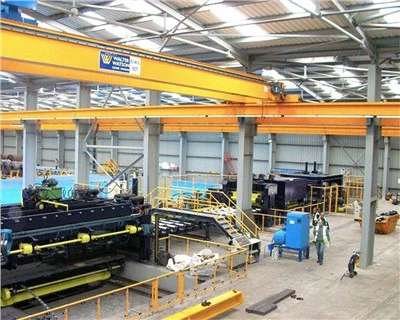
At the end of the day, the installation height of a slitting line isn’t a random number. It’s a balance between human factors, material needs, safety standards, and shop space. It’s not something you can pull out of a manual and plug in without considering your specific operation. Whether you’re a small shop running light-gauge materials or a large service center handling heavy steel coils, taking the time to get that height right will make a huge difference for your business.
Cut To Length Line If you’re in the market for a slitting line, or you have an existing line that’s not performing as well as it could because of height issues, I’m here to help. We’ve worked with hundreds of customers across different industries and material types to find the right installation height for their needs, and we can help you do the same. There’s no one-size-fits-all answer, but there is an answer that works for your shop, your team, and your production goals. Reach out to our team to discuss your needs and get a personalized consultation tailored to your operation.
References
- Occupational Safety and Health Administration. Ergonomic Guidelines for Manual Material Handling. U.S. Department of Labor, 2000.
- American National Standards Institute (ANSI). B11.07-2018: Safety Standards for Slitting Lines. ANSI, 2018.
- Fabricators & Manufacturers Association International. Ergonomics in Metal Fabrication: Best Practices for Productivity and Safety. FMA, 2021.
- National Institute for Occupational Safety and Health (NIOSH). Work-Related Musculoskeletal Disorders Prevention. NIOSH, 2020.
Shanghai HOYO Industries Co., Ltd.
Shanghai HOYO Industries Co., Ltd. is one of the most professional slitting lines manufacturers and suppliers in China, featured by quality products and competitive price. Please rest assured to buy cheap slitting lines for sale here from our factory. Contact us for customized service.
Address: No.8, Jianding Road, Fengjing Town, Jinshan District, Shanghai, China
E-mail: info@hoyomachinery.com
WebSite: https://www.hoyomachinery.com/
