Hey there, if you’ve ever shopped around for big milling machinery—specifically planer type boring and milling machines (PTBMs, let’s just use that shorthand from now on)—you’ve probably run into two terms that sound super similar at first: fixed table planer mill and moving table planer mill. I see this all the time from first-time buyers, and honestly, I used to mix ‘em up too back when I was troubleshooting for a local fabrication shop. So today, let’s cut through the jargon, talk real-world use cases, and break down exactly how these two work—plus when you’d pick one over the other, especially if you’re after something that fits your shop’s flow (and budget, let’s be real). Planer Type Boring and Milling Machines
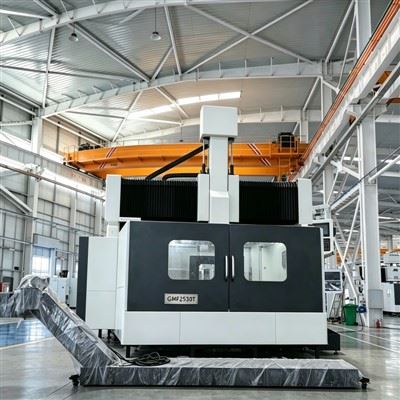
First, let’s start with the basics of what a planer mill even is, because if you’re in the market for one, you probably know, but it doesn’t hurt to ground this. A PTBM is for machining huge, heavy parts—think ship hull sections, wind turbine housings, heavy equipment frames, even big aerospace components that are too bulky to fit on a standard vertical mill. The core idea is moving a big cutting head around a stationary work area, right? But that’s where the two table types split: fixed table vs. moving table. Let’s dive into each.
Fixed Table Planer Mills: The Workhorse for Consistent, Repetitive Jobs
Let’s kick off with fixed table plans. From what our team sees day to day, these are the most common go-to for shops that do a lot of medium-to-large, repetitive work. The key thing here? The table never moves. All the heavy lifting for positioning the part falls on the cross rails and the cutter head, which glide along the length and width of the machine’s gantry. Wait, let’s make that concrete: say you’re machining a 10-foot-long gear housing that weighs like 2,000 lbs. You clamp it down on that fixed steel table, and that’s it—no yanking a 2-ton piece back and forth to align it. Instead, the main carriage (the big beam holding the drill/mill head) slides along the machine’s vertical columns, and the head itself moves left-right across the carriage. It’s a way more stable setup for super heavy workpieces, because you’re not stressing a big moving table with tons of weight.
What’s the catch here? Well, fixed table mills top out at around 20-25 feet of table length, usually. Any bigger than that, and the gantry that moves the head has to get so long and heavy that it starts flexing mid-cut, which kills precision. So if you’re machining a part that’s longer than that? Fixed table’s not your guy. Also, because the table is fixed, you’ve got to work around access—some shops hate that you can’t roll parts off easily, but our customers work around that with custom clamping fixtures that are easier to bolt on rather than load and unload all the time.
Wait, let’s talk numbers to make this real: our most popular fixed table PTBM model has a 16-foot table, 8-foot cross travel, and a 12-foot vertical travel. That’s perfect for a fabrication shop that’s cranking out 10 identical 12-foot industrial pump housings every month. You program the cutter head once, load the part, and it cranks out the same exact piece over and over—zero alignment drift, because the table’s not moving under the weight of the part. No messing with level checks every time you load a new one, which saves tons of downtime.
Moving Table Planer Mills: The Flex Player for Custom, Over-Sized Parts
Now, moving table mills—these are the ones where the entire work table slides back and forth along the machine’s length, while the gantry and cutter head stay stationary (or only move in small cross directions). This is the setup we recommend for shops that do a mix of custom, one-off jobs and over-sized parts. Let’s be honest, not every big part is 20 feet or less. If you’re machining a 35-foot-long train bogie frame or a massive hydro turbine casing, the fixed table’s max length is way too small—you can’t build a gantry long enough to reach across that. So you need the table to move, so the cutter head can stay put while the part is positioned under it.
The big pro here is size: moving table mills can handle parts that are 50+ feet long, no problem. Also, loading and unloading is way easier, because you can roll the table out to the end of the machine, use a crane to wheel the part on, then slide it back under the cutter for machining. That’s a huge win for shops that don’t have a team of 4 guys to muscle a 10,000 lbs part into place. That said, there’s a trade-off: the moving table has to support that heavy weight, so you have to make sure it’s built on super robust linear rails or ways, otherwise you get deflection when it’s holding a massive part. Also, because the table is moving, you have to account for alignment between the table’s movement and the cutter’s path—so you need good precision scales and a rigid machine frame, otherwise you’ll get tapered cuts or misaligned holes.
I’ll give you a recent example: we sold a moving table PTBM last quarter to a custom engineering shop that builds 40-foot-long industrial press frames. They were using a old fixed table mill that was only 18 feet, so they had to machine the frame in two pieces and weld it together—super time-consuming, and the welds introduced weak points. With the moving table, they machine the whole thing as a single piece in one setup, cutting their production time by 30% and eliminating that weld step. That’s the kind of win that makes our job worth it.
The Real Talk: Which One Should You Pick?
Okay, let’s stop with the specs and get to the stuff that actually matters for your shop. I can’t tell you how many times a customer comes in saying “I need the biggest mill possible” and ends up wasting money on a moving table when a fixed one would’ve suited them better. Let’s break down the key questions to ask:
- What’s the max length of the parts you’ll be machining? If you’re never going over 20 feet, fixed table is almost always better. It’s more stable, cheaper, and faster for repetitive work. If you’re regularly doing parts over 25 feet, moving table is non-negotiable.
- How much variety do you have? If it’s all one type of part, fixed table wins. If you do a mix of custom jobs, repair work, and over-sized projects, moving table gives you flexibility without needing two separate machines.
- Budget? Fixed table mills are 15-25% cheaper than same-size moving table models, just because the moving mechanism is extra hardware to maintain. If you’re on a tight budget and don’t need that extra length, fixed table is the call.
- Loading/unloading time? If you’re machining parts that weigh 5k lbs or more, moving table is way easier because you can slide it out to the bay door and use a crane to move parts on without fighting the machine’s length. Fixed tables require precision clamping, which is better for consistent parts but slower if you’re switching parts every day.
Wait, let’s add a common mistake we see: some buyers buy a moving table because they think it’s “better,” but end up paying for features they’ll never use. We had a customer last year who bought a moving table mill for their small farm equipment shop—their biggest part was a 12-foot tractor frame, so the moving table just added extra maintenance they didn’t need, and cost them $20k more than a fixed table would’ve. So don’t fall for the shiny new toy hype; match the machine to your actual work.
Pro Tips From the Trenches (Our Team’s 10+ Years of PTBM Experience)
Let’s wrap this up with a few things most spec sheets won’t tell you, because we work with these machines every day:
- Fixed table mills need more frequent clamp maintenance, because the table is stationary—clamps can get stuck or wear out faster if you’re bolting/unbolting parts on the same spot all the time.
- Moving table mills have longer lead times for parts, because that sliding mechanism is precision-built, so if you need replacements, it’s not like swapping a standard bolt.
- If you’re doing heavy boring (not just milling)—like drilling 6-inch diameter holes through 3 feet of steel—fixed table is more stable, because the gantry isn’t bouncing from moving the table. We see less tool wear and better hole concentricity with fixed tables for heavy boring.

At the end of the day, both fixed and moving table planer mills are designed for handling big, tough jobs that smaller machines can’t touch. The difference comes down to your shop’s specific needs: how big your parts get, how much variety you have, and how much you value stability vs. flexibility.
CNC Gantry Boring Mill If you’re in the market for a planer type boring and milling machine and you’re not sure which setup fits, our team is here to help. We don’t push the most expensive model or the one with the fanciest features—we’ll walk through your current projects, your growth plans, and what you actually need to get the job done without wasting money on extra stuff you’ll never use. Whether you’re going the fixed table route for consistent production or the moving table route for over-sized custom work, we can help you find the right fit.
References
- American Machine Tool Distributors’ Association. (2021). Planer Type Boring and Milling Machine Specifications: Operational and Structural Design Variations. Industry Technical Bulletin 47-21.
- Manufacturing Engineering Society International (MESi). (2022). Case Studies in Large Part Machining: Fixed vs. Moving Table Performance. Journal of Machining and Processes, Vol. 24, No. 3, 112-119.
- Gardner, J. (2020). Large Machine Tool Selection Guide: Matching Equipment to Production Needs. Modern Machine Shop, 28(5), 44-48.
5Axis (Shandong) CNC Equipment Co., Ltd.
As one of the most professional planer type boring and milling machines manufacturers and suppliers in China, we also accept customized orders. Please feel free to buy cheap planer type boring and milling machines for sale here from our factory. For price consultation, contact us.
Address: No.2000, Beixin West Road, Jinghe Street, Tengzhou City, Zaozhuang City, Shandong Province
E-mail: summer@good5axis.com
WebSite: https://www.china5axis.com/
