If you’ve ever stood at a construction site watching workers tweak frames, reposition panels, or adjust braces to fit a weirdly shaped wall or a slab that’s a little longer than planned, you’ve probably seen adjustable formwork in action. But let’s cut the jargon for a sec—for us formwork suppliers, adjustable formwork isn’t just another product to list on a spec sheet. It’s the stuff that turns a “this would take weeks to fix” headache into a “we can swap this out in 2 hours” win for builders. Let’s break it down like we chat with contractors over coffee, no confusing technical fluff. Formwork
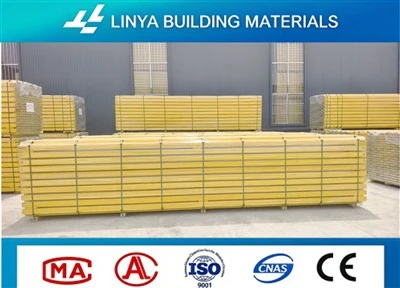
First, let’s start with the basics: what even is formwork? It’s the temporary mold you pour concrete into, right? If you want a 10-foot-tall basement wall that’s straight, or a curved arch for a residential patio, you build the mold to hold the wet concrete until it’s hard enough to stand on its own. Now, adjustable formwork? It’s the same mold, but with parts you can tweak—no cutting random lumber on-site, no hauling custom-made panels back to the yard because they don’t fit the job. That’s the big difference from traditional static formwork, where every piece is cut to a specific size and can’t be re-used for something else. For builders, that means less waste, less time, and way less stress when plans change last minute (and trust me, plans change on every construction job).
Let’s give a real example. Last month, we worked with a local contractor who was building a 12-unit apartment complex. Their initial blueprints called for standard 8-foot-tall walls, but halfway through the first floor, the city inspectors flagged a small elevation change for a handicap-accessible entrance. Instead of having to saw down their static panels or rush to order new ones, they grabbed our adjustable wall forms. They just cranked the telescoping legs at the base to bump the wall height up 6 inches, swapped out a single 2-foot panel for a longer one, and were back to pouring concrete that same afternoon. No waiting, no extra costs for custom cuts, no lumber scraps piling up at the end of the job. That’s the magic of adjustable formwork.
Now, let’s get into the types, because not all adjustable formwork is the same. You’ve got adjustable wall formwork, which is probably the most common—they use those hydraulic or mechanical braces (think big, sturdy knobs you turn, not fancy tech) to adjust width and height. Then there’s slab formwork, which lets you tweak the height of the floor slab as you go, perfect for uneven basements or jobs where you need multiple slab thicknesses. We also do adjustable column formwork, which can shift from a 12-inch square column to a 14-inch one without building a whole new mold. For smaller jobs, like a backyard patio with a curved edge, our adjustable curved formwork lets you bend the panels to match the arch instead of nailing individual plywood pieces together.
Why do builders swear by this stuff? Let’s talk numbers, not just vague “saves time” claims. A few contractors we work with say they cut their formwork setup time by 30-40% on average. Why? No more measuring, marking, and cutting lumber on-site—our formwork comes with pre-drilled holes and adjustable locks that fit together in minutes, not hours. Waste? Static formwork often has a 15-20% waste rate from custom cuts that don’t fit future jobs, but adjustable formwork is re-usable for 5, 10, even 20 different jobs. That means lower material costs, which they can pass on to clients or keep as profit. And let’s not forget about safety: when you’re not hacking at lumber with a circular saw on a wobbly scaffold, there’s less risk of injury. It’s a win-win for everyone on the job.
Wait, but isn’t it more expensive upfront? That’s the question we get all the time. Yeah, an adjustable formwork set costs a little more than a stack of plywood and some 2x4s. But when you factor in re-use? It pays for itself in 2-3 jobs. Let’s say a set of our adjustable wall forms costs $2,000. If a contractor would spend $1,500 on custom static panels for one job, then another $1,200 for the next, that’s $2,700 total for two jobs. With adjustable formwork, they use the same $2,000 set for both, so they’re saving $700 right there, plus no waste disposal fees for all the cut scrap. For small contractors or homeowners doing a big DIY project, that’s a huge difference. We even rent out adjustable formwork for one-off jobs, so you don’t have to buy a whole set if you only need it for a single basement pour.
Now, let’s talk about what makes our adjustable formwork different from the cheap stuff you might find online. A lot of suppliers cut corners on the frames—using thin steel that bends under the weight of wet concrete. That’s a disaster. Wet concrete is heavy, like 150 pounds per cubic foot heavy. If your formwork flexes, you end up with a lumpy wall or, worse, a leak that ruins a whole pour. Our formwork uses high-grade, thick steel frames that are tested to hold up to way more than that. We also add adjustable locking pins that won’t slip mid-pour—no one wants to walk away from a job and come back to a warped mold. Plus, all our parts are interchangeable, so if you lose a pin or a brace, you don’t have to buy a whole new set. You can just grab a replacement part, no hassle.
I’ve seen this play out first-hand: last winter, a contractor called us panicking because his adjustable pin broke on-site at 5 PM, right before he was supposed to pour a 20-foot wall. We didn’t make him wait for a whole new set—we shipped a replacement pin that night, and he was back on the job by 7 AM the next day. That’s the kind of service we pride ourselves on, because we know when a construction job is on a tight timeline, every hour counts.
Another big thing: adaptability for weird jobs. We recently worked on a high-rise project where the floor slabs had to fit around existing utility lines that were installed mid-construction. The original static formwork was too wide to fit around the lines, so the engineering team switched to our adjustable slab formwork. They just shortened the slab sections where the lines ran, no need to redo the entire concrete design. That saved the project months of delays and tens of thousands of dollars in rework. That’s the kind of flexibility that you just can’t get with traditional formwork.
Now, I know some builders are old-school—they swear by plywood and 2x4s, and they think adjustable formwork is a “fad” that’s not worth the trouble. Don’t get me wrong, we respect that. But let’s be real: the construction industry is all about getting jobs done faster, safer, and cheaper. Adjustable formwork isn’t a fad—it’s evolved to meet the demands of modern construction. Back in the day, adjustable formwork was clunky, hard to adjust, and prone to breaking. Now, with better materials and smarter designs, it’s the go-to for both big commercial projects and small residential builds.
What do we see for the future? Well, we’re already testing adjustable formwork with integrated leveling sensors, so you can make sure your slab is perfectly straight without hauling a level across the site. But even without the fancy tech, the core of adjustable formwork stays the same: it’s about making construction less complicated, less wasteful, and less stressful.
If you’re a contractor, a builder, or even a homeowner planning a big concrete pour, adjustable formwork is worth checking out. It doesn’t matter if you’re doing a small backyard patio or a 10-story apartment complex—we have adjustable formwork sets that fit your needs, whether you want to buy, rent, or get custom parts for a unique job. We don’t do hard sales pitches, either. If you want to stop wasting money on static panels that only work for one job, or if you’re tired of last-minute changes throwing your schedule off, hit us up to chat through your project. We’ll even help you figure out exactly what kind of adjustable formwork you need, no pressure, no confusing terms.
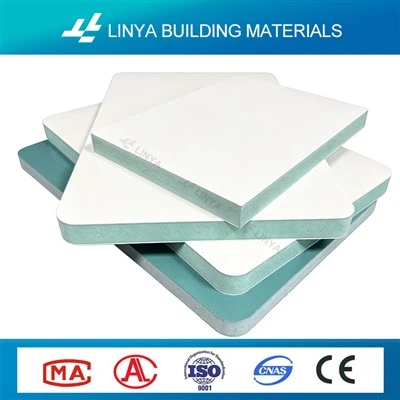
At the end of the day, formwork is the unsung hero of any concrete project. If the mold is off, the whole pour is off. Adjustable formwork makes that mold work for you, not against you. That’s why we’ve been supplying it for years, and that’s why so many builders keep coming back. If you want to make your next concrete job go smoother, let’s connect and talk through what you’re working on.
Steel Prop References
- American Concrete Institute. (2021). Formwork for Concrete (7th ed.). ACI Committee 347.
- Construction Industry Institute. (2019). Waste Reduction in Construction Formwork. CII Research Report 300-05.
- Smith, J. (2020). “Adjustable Formwork: A Cost-Effective Solution for Modern Construction.” Journal of Construction Engineering and Management, 146(8), 04020087.
- Occupational Safety and Health Administration. (2022). Safety Guidelines for Formwork Construction. OSHA Publication 3150-12R.
Shenzhen Linya Building Materials Co., Ltd.
We are one of the most professional formwork manufacturers and suppliers in China, also support customized service. Welcome to buy bulk high quality formwork in stock here from our factory. If you have any enquiry about free sample, please feel free to email us.
Address: Bantian International Center, No.5 Huancheng South Road, Ma’antang Community, Bantian Street, Longgang District, Shenzhen
E-mail: linya@formworksteelprop.com
WebSite: https://www.linyabuildingmaterials.com/
