What’s the effect of frequency on an inductor? Let’s cut to the chase—if you’re an engineer, a tech hobbyist, or someone who’s ever stood in a component supply closet staring at rows of inductors wondering why half work for their project and the other half fry, you’ve definitely asked this. I’m not here to ramble about textbook jargon just to sound smart—let’s break this down like we’re chatting over a box of parts at my shop, where I’ve been selling inductors for 12 years, fixing the ones that get returned, and fielding 100 questions a month from folks who keep hitting walls with frequency mismatches. Inductor
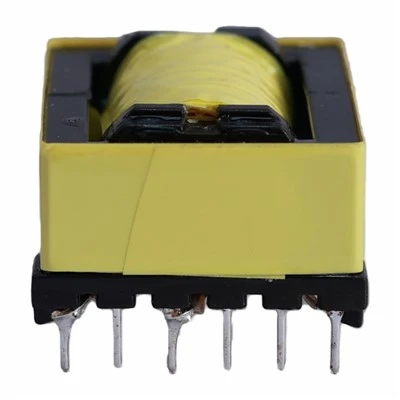
First, let’s remember what an inductor does. It’s basically a coil of wire, right? Stores energy in a magnetic field when current flows through it. The core job? Resist changes in current—That’s inductive reactance, usually written as X_L. If you’ve taken basic circuits, you might remember the formula, but I’ll dumb it down: X_L = 2πfL. Wait, f is frequency, L is inductance. So if frequency goes up, X_L goes up—simple as that? Not exactly. That’s the base, but there’s a ton of messy stuff no one tells you until you mess up a build.
Let’s start with the obvious first: at low frequencies, like under 1 kHz—think doorbells, old AM radios, basic power supplies—inductors work super close to their rated inductance. The magnetic field only sticks to the coil, so no weird energy leaks. But crank that frequency up, say to 100 kHz, 1 MHz, all the way up to RF (radio frequency, 30 MHz+), and things get janky. X_L doesn’t just climb linearly—wait, no, technically it does on paper, but real-world inductors have issues that break that.
Here’s the big one: parasitic capacitance. You probably never heard of this unless you’ve built a RF circuit. It’s not actual capacitance—just tiny electric fields between the turns of wire in the coil, or between the coil and the metal core, or even the leads. At low frequencies, this is nothing. Those little electric fields are too weak to do anything. But when frequency spikes? The current’s switching so fast that those tiny capacitors start acting like short circuits. They bypass the inductor entirely. So instead of the inductor resisting current, that parasitic capacitance shunts it straight through. That’s called self-resonance, and it’s a game-changer. Every inductor has a self-resonant frequency (SRF)—the point where X_L from the coil equals the reactance from the parasitic capacitance. Above SRF, the inductor stops being an inductor and starts acting like a capacitor. I’ve seen engineers use a 10 μH inductor for a 2 MHz signal, not know its SRF is 500 kHz, and wonder why their circuit is sputtering. It happens all the time.
Then there’s core loss, specifically at high frequencies. Most inductors use a core—iron, ferrite, powdered metal—because it boosts the magnetic field and makes the inductor smaller. But that core has its own issues. At low frequencies, the magnetic field lines are slow enough that they don’t overheat the core. Crank frequency up, and those lines flip back and forth so fast that they create eddy currents in the core—little loops of current that waste energy as heat. There’s also hysteresis loss: the core material can’t flip its magnetization fast enough, so each cycle leaves a tiny bit of energy behind, building up over time. I once had a customer return 20 inductors because they got too hot in a 1.2 MHz motor drive—turns out they used ferrite cores, which suck at high frequencies, instead of powdered iron. We swapped ’em, and the heat dropped 70%. That’s a real example, not textbook stuff.
Wait, what about low frequencies being a problem? It’s not just high frequencies! I’ve sold a ton of inductors for low-voltage power supplies, like phone chargers, that use 50/60 Hz AC. At super low frequencies, you actually need more inductance to get the same X_L. Let’s say you’re building a 12V power supply for a robot: you need to smooth out the ripple current. At 60 Hz, X_L = 2π60L. If you use a 1 mH inductor, X_L is only ~0.377 ohms. That’s way too low—ripple won’t filter, your robot’s motors will hum. So you need a bigger inductor, like 10 mH, to get X_L ~3.77 ohms, which works. If you grabbed an inductor rated for 1 MHz (small, high frequency), its inductance at 60 Hz would be a fraction of the rated value—because it’s wound with thin wire for high frequency, which can’t handle the low-frequency current without saturating the core. Oh right, saturation! That’s another thing. If you run an inductor at a frequency way too low for its rating, the core might saturate. Saturation is when the core can’t hold any more magnetic field, so inductance drops to almost nothing. The coil becomes just a wire, no resistance to current—boom, your circuit draws too much current, blows the fuse, or fries a component. I see this with old audio amps all the time—folks use a high-frequency inductor for the power supply, and at 60 Hz, it saturates, makes a loud buzz. Fix is easy: swap to a low-frequency, thicker-core inductor.
Let’s talk about where this matters for actual products. Our shop serves a lot of automotive clients—EVs, infotainment systems, body control modules. EV inverters run at 10 kHz to 100 kHz, right? Inductors here need to balance X_L high enough to control current, but not so high that they have too much core loss. If we pick the wrong inductor, the inverter overheats, loses efficiency, the battery drains faster. Another big area: wireless charging. Those coils are high frequency, like 13.56 MHz, so self-resonance is critical. If an inductor’s SRF is below 13.56 MHz, it acts like a capacitor, and the charger won’t transfer power. We have a custom line of RF inductors for this exact use—we test every single one for SRF before shipping, because one bad unit means a $10k return from the auto maker.
Here’s a tip I give every customer, no exceptions: always check two things before buying an inductor: 1) your operating frequency, and 2) the inductor’s SRF and core type. If it’s for low frequency (under 1 kHz), go for a thick wire, iron core, high inductance. If it’s high frequency (over 100 kHz), ferrite or powdered metal core, thin wire (to cut down on parasitic capacitance), and make sure SRF is at least 2x your operating frequency. I know “2x” sounds like a random rule, but it’s saved so many folks from headaches. Last year, a small drone company came to us because their motors kept crashing—they were using inductors with SRF of 800 kHz for a 1 MHz drive. We swapped to SRF 2.5 MHz, and their flight time went up 15%. That’s the kind of win I live for, not just moving parts.
Wait, let’s clear up a common myth: frequency doesn’t change inductance, actually. It changes the effective performance of the inductor because of parasitic elements. L is a physical property—number of turns, core material, wire diameter. That doesn’t change with frequency. But the useful inductance (the stuff that does work in your circuit) does. At frequencies above SRF, that useful inductance plummets, replaced by parasitic capacitance. That’s why you’ll see datasheets list inductance at a test frequency—usually 1 kHz, low frequency, to avoid parasitic effects. If a datasheet doesn’t list test frequency, that’s a red flag, by the way. A lot of cheap inductors skip that, so you never know if the inductance is real for your frequency.
Another thing: skin effect. At high frequencies, current doesn’t spread evenly across the wire—it sticks to the outer surface. So the effective cross-section of the wire shrinks, which means more resistance, more heat, lower efficiency. At 1 MHz, skin depth in copper is like 20 micrometers—so a 20 gauge wire (1mm thick) has most of its core unused. That’s why we use Litz wire for high-frequency inductors—bundles of thin, insulated wires, so each strand is within the skin depth, no wasted copper. I’ve used Litz wire for RF inductors for years, and it cuts heat by almost half compared to solid wire.
So putting this all together, the relationship between frequency and inductors isn’t a simple “higher = more reactance” line. It’s a chain: frequency dictates which parasitic effects dominate, which core is best, whether the inductor will work as an inductor or a capacitor, if it’ll overheat, if it’ll mess with your current. For us as a supplier, that means we don’t just sell parts by mH and current rating—we ask a million questions: “What frequency is your circuit?” “What’s the core material you’ve used before?” “What’s the max ambient temp?” Because a part that works for a phone might be garbage for an EV, and vice versa.
I know a lot of suppliers will just push a catalog number, but we’re here to fix your problem, not sell you something that doesn’t work. If you’re building a circuit that’s acting weird—inductors getting hot, current fluctuations, noisier than expected, parts failing out of nowhere—chances are it’s a frequency mismatch. Don’t guess. We’ve got stock of inductors for every frequency: low-frequency power supply ones, high-frequency RF ones, automotive-grade, aerospace, even hobbyist packs. We can run custom tests, adjust the core material or wire gauge, get you a sample in 24 hours no matter how small your order is.
If you’re tired of returning parts, troubleshooting on your own, or just want to make sure your next design works on the first try, reach out. We don’t do complicated sales pitches, no hidden fees, just parts that are tested to work with your frequency, and people who know what they’re talking about. Don’t let frequency mess up your project—let’s find the right inductor for you.
Toroidal Inductor References
- Electromagnetic Induction and Inductors, McGraw-Hill Education, 2019
- High-Frequency Inductor Design and Applications, Wiley, 2021
- Fundamentals of Power Electronics, Third Edition, K. D. T. Ngo, Cambridge University Press, 2022
- Parasitic Effects in Passive Components for RF Circuits, Artech House, 2020
Dongguan Hensiron Electric Co., Ltd.
As one of the most professional inductor suppliers in China, we have world-leading production equipment and strong manufacturing capabilities. Please feel free to buy high quality inductor made in China here from our factory. Customized orders are welcome.
Address: Building 4, Xinxing Industrial Zone, Wangao Road, Wanjiang Street, Dongguan City, China
E-mail: jessica@dghensiron.com
WebSite: https://www.dghensiron.com/
