Microfiber nonwoven fabric has emerged as a versatile material in various industries, from household cleaning to medical applications. One of the key properties that users often consider is its wrinkle resistance. As a supplier of microfiber nonwoven fabric, I have witnessed firsthand the performance of this material in different scenarios. In this blog, I will delve into how microfiber nonwoven fabric performs in terms of wrinkle resistance, exploring the factors that influence it and its practical implications. Microfiber Nonwoven Fabric

Understanding Microfiber Nonwoven Fabric
Before we discuss wrinkle resistance, it’s important to understand what microfiber nonwoven fabric is. Microfiber is a synthetic fiber with a diameter much smaller than that of a human hair. Nonwoven fabric, on the other hand, is made by bonding or interlocking fibers together, rather than weaving or knitting them. This combination results in a fabric that is soft, absorbent, and strong.
Microfiber nonwoven fabric is known for its excellent cleaning properties, as the tiny fibers can trap dirt and dust effectively. It is also used in medical settings due to its high absorbency and low linting. In addition, it is commonly used in the automotive industry for cleaning and detailing.
Factors Affecting Wrinkle Resistance
Several factors can influence the wrinkle resistance of microfiber nonwoven fabric. These include the fiber composition, the manufacturing process, and the finishing treatments.
Fiber Composition
The type of fibers used in the microfiber nonwoven fabric plays a significant role in its wrinkle resistance. Polyester and polyamide are two common types of fibers used in microfiber fabric. Polyester is known for its strength and durability, while polyamide is more flexible and has better moisture absorption. A blend of these two fibers can result in a fabric that combines the best of both worlds, with good wrinkle resistance and other desirable properties.
Manufacturing Process
The manufacturing process also affects the wrinkle resistance of microfiber nonwoven fabric. Different processes, such as spunbonding, meltblowing, and needle punching, can result in fabrics with different structures and properties. For example, spunbonded microfiber nonwoven fabric typically has a more uniform structure, which can contribute to better wrinkle resistance.
Finishing Treatments
Finishing treatments can be applied to microfiber nonwoven fabric to improve its wrinkle resistance. These treatments can include chemical treatments, such as resin finishes, which can help to stiffen the fabric and reduce wrinkling. Heat treatments can also be used to set the fabric and improve its shape retention.
Performance Evaluation of Wrinkle Resistance
To evaluate the wrinkle resistance of microfiber nonwoven fabric, several methods can be used. One common method is the subjective evaluation, where the fabric is visually inspected for wrinkles after being subjected to a certain amount of stress. Another method is the objective evaluation, which involves measuring the wrinkle recovery angle or the wrinkle recovery time.
In my experience, microfiber nonwoven fabric generally performs well in terms of wrinkle resistance. The combination of the fiber composition, manufacturing process, and finishing treatments can result in a fabric that is resistant to wrinkling and maintains its shape even after repeated use.
Practical Implications of Wrinkle Resistance
The wrinkle resistance of microfiber nonwoven fabric has several practical implications. In the household cleaning industry, for example, a wrinkle-resistant fabric is easier to store and use. It can be folded and stored without getting wrinkled, which makes it more convenient for users. In the medical industry, a wrinkle-resistant fabric is important for maintaining a clean and professional appearance. It can also help to prevent the accumulation of dirt and bacteria in the wrinkles.
In the automotive industry, a wrinkle-resistant fabric is ideal for cleaning and detailing. It can be used to wipe surfaces without leaving behind wrinkles or streaks, which can improve the overall appearance of the vehicle.
Conclusion
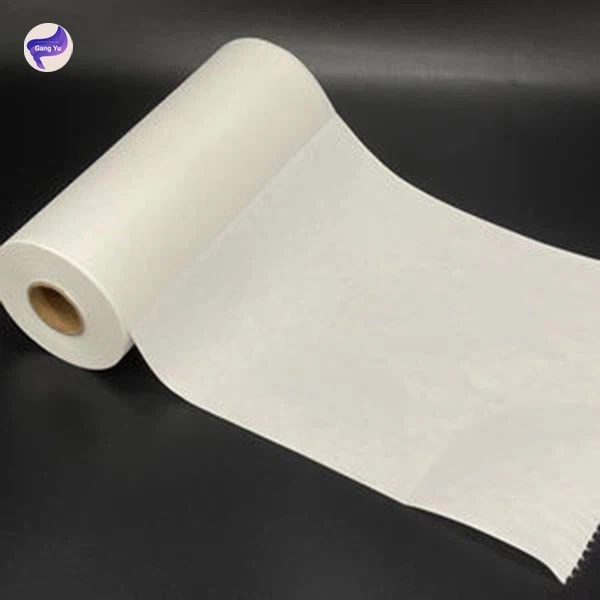
In conclusion, microfiber nonwoven fabric performs well in terms of wrinkle resistance. The fiber composition, manufacturing process, and finishing treatments all play a role in determining the fabric’s wrinkle resistance. The practical implications of wrinkle resistance make microfiber nonwoven fabric a popular choice in various industries.
Household Wipes If you are interested in purchasing microfiber nonwoven fabric for your specific needs, I encourage you to contact me for further discussion. We can explore the different options available and find the best solution for your requirements.
References
- ASTM D1295 – Standard Test Method for Wrinkle Recovery of Fabrics: Appearance Method
- ISO 2313 – Textiles – Determination of the wrinkle recovery of fabrics: Recovery angle method
- “Nonwoven Fabric Technology and Applications” by S. Das
Hangzhou Gang Yu Health Products Co., Ltd.
Hangzhou Gang Yu Health Products Co., Ltd. is well-known as one of the leading microfiber nonwoven fabric manufacturers or suppliers in China, also supports customized service. Please feel free to wholesale cheap microfiber nonwoven fabric made in China here and get quotation from our factory. Quality products and low price are available.
Address: No.1 Yumin Road, Dangwan Town,311221, Xiaoshan District, Hangzhou City, Zhejiang Province, China (Mainland)
E-mail: sales@gynonwovens.com
WebSite: https://www.gynonwovens.com/
