Hey there! I’m a supplier of Schottky diodes, and today I wanna chat about how the junction area affects the performance of these little electronic wonders. Schottky Diodes
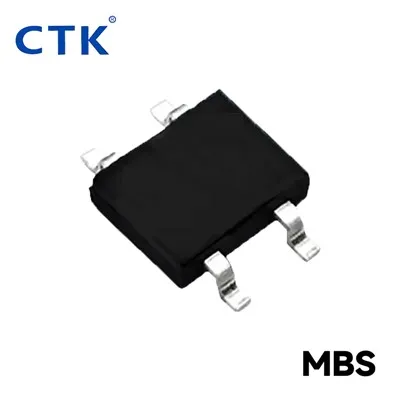
First off, let’s get a basic understanding of what a Schottky diode is. It’s a semiconductor device that has a metal – semiconductor junction instead of the typical P – N junction found in regular diodes. This unique structure gives it some cool properties like fast switching speeds and low forward voltage drop.
Now, let’s dig into how the junction area comes into play. The junction area is basically the area where the metal and the semiconductor meet. It’s a crucial factor that can significantly impact the performance of the Schottky diode.
Forward Current and Junction Area
One of the most obvious effects of the junction area is on the forward current. The forward current is the current that flows through the diode when it’s forward – biased. A larger junction area means more space for the current to flow. Think of it like a highway. A wider highway can handle more traffic, right? Similarly, a larger junction area can handle a higher forward current.
When we design Schottky diodes, we can adjust the junction area based on the application requirements. If the application needs a high – current diode, we’ll increase the junction area. For example, in power supplies where large amounts of current need to be rectified, diodes with larger junction areas are used. On the other hand, if the application only requires a small amount of current, we can use a diode with a smaller junction area. This not only saves space on the circuit board but also reduces the cost.
Forward Voltage Drop
The forward voltage drop is another important performance parameter of Schottky diodes. It’s the voltage across the diode when it’s forward – biased. The junction area has an inverse relationship with the forward voltage drop. A larger junction area generally results in a lower forward voltage drop.
This is because a larger junction area provides more paths for the current to flow. With more paths, the resistance to the current flow is reduced, and as a result, the voltage drop across the diode is also reduced. A lower forward voltage drop is beneficial in many applications. For instance, in battery – powered devices, a lower forward voltage drop means less power is wasted as heat. This can extend the battery life and improve the overall efficiency of the device.
Reverse Leakage Current
Reverse leakage current is the small amount of current that flows through the diode when it’s reverse – biased. The junction area also has an impact on the reverse leakage current. A larger junction area typically leads to a higher reverse leakage current.
The reason behind this is that a larger junction area has more surface area where the carriers can leak. In a Schottky diode, the reverse leakage current is mainly due to the thermally generated carriers. With a larger junction area, there are more carriers available to leak, resulting in a higher reverse leakage current.
In some applications, a low reverse leakage current is crucial. For example, in high – impedance circuits or in applications where power consumption needs to be minimized, a diode with a smaller junction area is preferred to keep the reverse leakage current low.
Switching Speed
Switching speed is another aspect of Schottky diode performance that’s affected by the junction area. A smaller junction area generally results in a faster switching speed.
The reason for this is related to the capacitance of the junction. The junction capacitance is directly proportional to the junction area. A larger junction area means a larger junction capacitance. When the diode is switching between the forward – biased and reverse – biased states, the junction capacitance needs to be charged and discharged. A larger capacitance takes more time to charge and discharge, which slows down the switching speed.
In applications where fast switching is required, such as in high – frequency circuits or in switching power supplies, diodes with smaller junction areas are used to achieve faster switching speeds.
Thermal Performance
The junction area also plays a role in the thermal performance of Schottky diodes. A larger junction area can dissipate heat more effectively. This is because a larger area provides more surface area for heat transfer.
In high – power applications, where a lot of heat is generated, diodes with larger junction areas are often used. The increased surface area allows the heat to be transferred to the surrounding environment more efficiently, preventing the diode from overheating. Overheating can degrade the performance of the diode and even cause it to fail.
Design Considerations
As a Schottky diode supplier, we need to consider all these factors when designing and manufacturing diodes. We have to balance the requirements of different applications. For example, if an application requires a high – current diode with low forward voltage drop, we’ll increase the junction area. But we also need to be aware of the potential increase in reverse leakage current and the decrease in switching speed.
On the other hand, if an application needs a fast – switching diode with low reverse leakage current, we’ll use a smaller junction area. However, we have to make sure that the forward current and thermal performance are still within the acceptable range.
Real – World Applications
Let’s take a look at some real – world applications to see how the junction area affects the performance of Schottky diodes.
In solar panels, Schottky diodes are used to prevent reverse current flow. In this application, a low forward voltage drop is crucial to maximize the power output of the solar panel. So, diodes with larger junction areas are often used to achieve a lower forward voltage drop.
In high – frequency communication circuits, fast switching speeds are required. Diodes with smaller junction areas are used to ensure that the diodes can switch quickly between the on and off states, allowing for high – speed data transmission.
In automotive electronics, where reliability and thermal performance are important, Schottky diodes with larger junction areas are used. These diodes can handle high currents and dissipate heat effectively, ensuring the stable operation of the automotive electrical system.
Conclusion
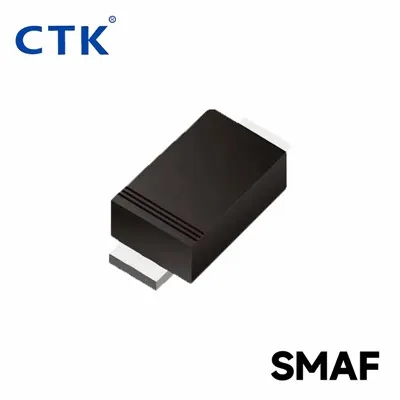
In conclusion, the junction area has a significant impact on the performance of Schottky diodes. It affects the forward current, forward voltage drop, reverse leakage current, switching speed, and thermal performance. As a Schottky diode supplier, we need to carefully consider these factors when designing and manufacturing diodes to meet the specific requirements of different applications.
Zener Diode If you’re in the market for Schottky diodes and want to discuss your specific needs, feel free to reach out. We’re here to help you find the right diodes for your application. Whether you need high – current diodes, fast – switching diodes, or diodes with low forward voltage drop, we’ve got you covered. Let’s have a chat and see how we can work together to meet your requirements.
References
- Sze, S. M., & Ng, K. K. (2007). Physics of Semiconductor Devices. Wiley.
- Pierret, R. F. (1996). Semiconductor Device Fundamentals. Addison – Wesley.
Tongke Electronic Co., Ltd
Tongke Electronic Co., Ltd. is one of the most experienced schottky diodes manufacturers and suppliers in China, featured by quality products and low price. Please rest assured to wholesale advanced schottky diodes made in China here from our factory. Contact us for pricelist.
Address: No.3,Chayuan Rd, Street 3, AilingKan, Dalingshan, Dongguan, Guangdong, China.
E-mail: jack@ctk-elec.com
WebSite: https://www.ctkchip.com/
