As a passionate supplier of axial fans, I often encounter inquiries from various customers, ranging from engineers involved in ventilation system design to facility managers concerned about air circulation efficiency. One question that frequently arises is, "What is the dynamic pressure of an axial fan?" In this blog post, I’ll delve into the concept of dynamic pressure, its significance in the context of axial fans, and how it influences the performance of these essential devices. Axial Fan

Understanding Dynamic Pressure
To grasp the concept of dynamic pressure in an axial fan, we first need to understand what pressure means in fluid mechanics. Pressure is the force exerted by a fluid (in this case, air) per unit area. In the operation of an axial fan, there are two main types of pressure: static pressure and dynamic pressure.
Static pressure is the pressure exerted by the air when it is at rest or moving at a very low velocity. It is the pressure that can be measured by a pressure gauge when the air is not flowing. Static pressure is responsible for overcoming the resistance in the ductwork, such as friction loss, filter resistance, and the pressure drop across any dampers or other components in the system.
Dynamic pressure, on the other hand, is the pressure associated with the motion of the air. It is a measure of the kinetic energy of the moving air. When an axial fan accelerates the air, it imparts kinetic energy to the air molecules, and this energy is manifested as dynamic pressure. The formula for calculating dynamic pressure ($q$) is given by:
$q = \frac{1}{2} \rho v^2$
where $\rho$ is the density of the air and $v$ is the velocity of the air. From this formula, we can see that dynamic pressure is proportional to the square of the air velocity. This means that even a small increase in air velocity can result in a significant increase in dynamic pressure.
The Role of Dynamic Pressure in Axial Fans
In the operation of an axial fan, dynamic pressure plays a crucial role in several aspects.
Air Movement
Dynamic pressure is directly related to the ability of the axial fan to move air. The higher the dynamic pressure, the greater the velocity of the air being discharged from the fan. This is important in applications where a high volume of air needs to be moved over a long distance or through a system with high resistance. For example, in a large industrial ventilation system, a high dynamic pressure is required to ensure that the fresh air can reach all corners of the facility and the stale air can be effectively removed.
Mixing and Distribution
Dynamic pressure also affects the mixing and distribution of air within a space. When the air is discharged from the axial fan with a high dynamic pressure, it creates a strong jet of air that can penetrate into the surrounding air and cause better mixing. This is beneficial in applications such as air conditioning systems, where uniform temperature and air quality distribution are required.
System Performance
The dynamic pressure of an axial fan has a direct impact on the overall performance of the ventilation or air handling system. A fan with a higher dynamic pressure can overcome a greater amount of resistance in the system, allowing for a more efficient operation. However, it’s important to note that the design of the system, including the ductwork layout, the type and size of the components, and the operating conditions, also plays a significant role in determining the actual performance of the system.
Factors Affecting the Dynamic Pressure of Axial Fans
Several factors can affect the dynamic pressure of an axial fan.
Fan Design
The design of the axial fan, including the blade shape, pitch angle, and number of blades, has a significant impact on the dynamic pressure. A well – designed fan blade can efficiently convert the mechanical energy of the motor into kinetic energy of the air, resulting in a higher dynamic pressure. For example, a fan with a larger blade pitch angle can accelerate the air to a higher velocity, thereby increasing the dynamic pressure.
Fan Speed
The speed of the axial fan is directly related to the air velocity. As the fan speed increases, the air velocity also increases, and according to the dynamic pressure formula, the dynamic pressure increases as the square of the air velocity. However, increasing the fan speed also increases the power consumption and may generate more noise. Therefore, a balance needs to be struck between the desired dynamic pressure and the energy efficiency and noise levels of the fan.
Air Density
The density of the air also affects the dynamic pressure. Air density is influenced by factors such as temperature, altitude, and humidity. At higher altitudes, the air density is lower, which means that for a given air velocity, the dynamic pressure will be lower compared to at sea level. Similarly, at higher temperatures, the air density decreases, resulting in a lower dynamic pressure.
Measuring the Dynamic Pressure of Axial Fans
Measuring the dynamic pressure of an axial fan is an important step in evaluating its performance. There are several methods for measuring dynamic pressure.
Pitot Tube
A pitot tube is a commonly used device for measuring dynamic pressure. It consists of two tubes: a static tube that measures the static pressure and a total pressure tube that measures the sum of the static and dynamic pressures. By subtracting the static pressure from the total pressure, the dynamic pressure can be obtained. The pitot tube is inserted into the air stream at the outlet of the axial fan, and the pressure readings are taken using a pressure gauge or a differential pressure sensor.
Anemometer
An anemometer is a device used for measuring the air velocity. Once the air velocity is measured, the dynamic pressure can be calculated using the dynamic pressure formula mentioned earlier. There are different types of anemometers, such as vane anemometers, thermal anemometers, and ultrasonic anemometers, each with its own advantages and limitations.
Practical Applications and Considerations
In practical applications, understanding the dynamic pressure of an axial fan is essential for proper system design and operation.
Ventilation Systems
In ventilation systems, the dynamic pressure needs to be carefully considered to ensure that the fan can deliver the required air volume to all parts of the facility. For example, in a long ductwork system, the dynamic pressure should be sufficient to overcome the frictional losses and other resistances in the duct. Otherwise, the air flow may be restricted, leading to poor ventilation and air quality.
Cooling Systems
In cooling systems, such as those used in electronic equipment or industrial processes, the dynamic pressure of the axial fan is crucial for efficient heat transfer. A high dynamic pressure can ensure that the cooling air can effectively flow through the heat exchangers or around the heat – generating components, removing the heat and maintaining the appropriate operating temperature.
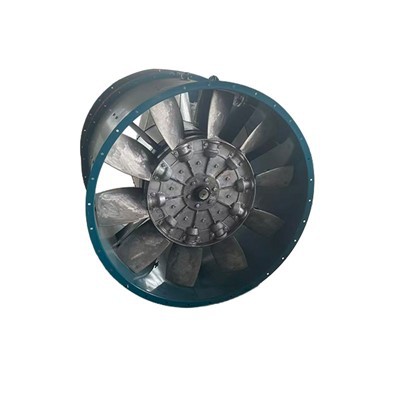
When selecting an axial fan for a specific application, it’s important to consider the dynamic pressure requirements along with other factors such as the required air volume, static pressure, power consumption, and noise level. Our company offers a wide range of axial fans with different specifications to meet the diverse needs of our customers. We understand that each application is unique, and we are committed to providing customized solutions to ensure the optimal performance of your ventilation or air handling system.
Axial Fan If you are in the market for high – quality axial fans and have questions about dynamic pressure or any other fan – related issues, we encourage you to contact us for a detailed discussion. Our team of experienced engineers and sales representatives is ready to assist you in selecting the most suitable fan for your application. We can provide technical support, performance data, and cost – effective solutions to help you achieve your goals.
References
- Munson, B. R., Young, D. F., & Okiishi, T. H. (2009). Fundamentals of Fluid Mechanics. John Wiley & Sons.
- ASHRAE Handbook – HVAC Systems and Equipment. American Society of Heating, Refrigerating and Air – Conditioning Engineers.
Anhui Zhongxin Sanyuan Ventilation Equipment Co., Ltd.
We are one of the most professional axial fan manufacturers and suppliers in China, featured by quality products and good price. Please rest assured to buy customized axial fan made in China here from our factory. Also, pricelist is available.
Address: No. 1 Yuanxing Road, North District of Guangde Economic Development Zone, Guangde City, Xuancheng City, Anhui Province, China
E-mail: newsanyan@gmail.com
WebSite: https://www.newsanyan.com/
