Hey there, fellow engineers, hobbyists, and industry folks, Brushless Motor
I’m Jake, and for the past 8 years, I’ve been the lead application engineer at a brushless motor supply company—let’s just say our team’s spent countless hours troubleshooting motor failures in the field, and one question comes up at least twice a week: Can a brushless motor actually hold up in wet environments?
To be fair, it’s not a silly question. Think about all the real-world use cases people are asking about: marine trolling motors that submerge in saltwater every weekend, agricultural pivot motors that get hosed down daily, construction equipment exposed to monsoons, even commercial kitchen mixers that deal with spills of oil and water. I’ve seen first-hand what happens when someone slaps a standard motor in a wet space: corrosion eats through windings, water seizes bearings, and you’re left with a dead unit in a month. But here’s the thing—brushless motors aren’t a one-size-fits-all product. The answer isn’t a flat “yes” or “no” — it’s about how you engineer them for moisture, and as someone who works with these motors every single day, I want to break down what you need to know.
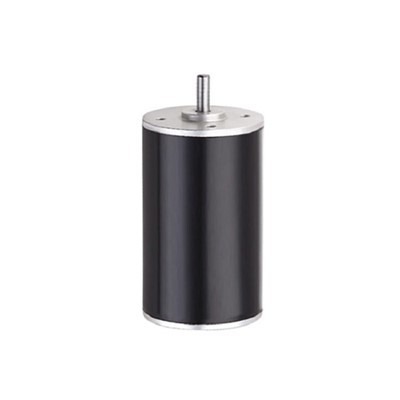
First, let’s get the basics of a standard brushless motor out of the way, because that’s where most people go wrong when assuming they can’t handle water. A basic inrunner or outrunner brushless motor has three core parts: the stator with copper windings, the permanent magnet rotor, and the bearings that hold the rotor spinning. Standard off-the-shelf motors are built for dry, controlled conditions. They usually have unsealed bearings, windings coated in basic enamel, and a simple plastic or aluminum housing with gaps for wiring. If you blast that with a garden hose, or submerge it in lake water, or even leave it in a high-humidity space where condensation builds up, the moisture will find its way in. The winding enamel isn’t waterproof—water breaks down the insulation over time, leading to short circuits. Bearings, if unsealed, get contaminated with water and rust, which causes friction spikes and eventual bearing failure. Even the magnets can corrode if exposed to saltwater, especially neodymium magnets that lose their pull when rusted. So a generic brushless motor? That’s not going to last long in wet conditions. But that’s not the full story—our team has modified and purpose-built brushless motors for wet environments for years, and they work extremely well when done right.
Let’s talk about the engineering work that makes a wet-rated brushless motor work, because this is where the real science kicks in. The first line of defense is sealing, but not just any sealing—we test every seal for both static and dynamic water exposure, because motors spin, so seals can’t just be a one-time barrier. For low-pressure water exposure, like a motor that gets splashed with rain or sprayed during regular cleaning, we use IP65-rated seals. IP65 means it’s totally dust-tight, and can withstand low-pressure water jets from any direction—perfect for agricultural equipment or construction tools. For motors that need to be fully submersible, like trolling motors or underwater ROVs, we go with IP68. That means it can be submerged in water at a specific pressure (we usually test ours at 10 meters for 72 hours, per industry standards) without any water intrusion. But sealing the motor isn’t just about the housing—you have to seal the wiring too. We use overmolded cable exits with waterproof connectors, not just stripped wires crimped and taped. That taping fails over time, especially when exposed to temperature changes that make it crack. Overmolding creates a continuous, waterproof barrier between the motor and the power source.
Next, the windings. Standard wire enamel is rated for humidity, but not continuous water exposure. So for wet environment motors, we upgrade to a thicker, water-resistant enamel—often polyurethane-imide, which has better chemical resistance to water, salt, and even mild cleaning solvents. Some of our heavy-duty motors also use potted stators—we fill the space around the windings in the stator with a high-grade epoxy resin. That does two things: it completely encapsulates the copper windings, so moisture can’t reach the insulation, and it also helps dissipate heat better, which is a bonus for performance. The only thing we have to watch with potted stators is making sure they’re mounted correctly—no air gaps that could trap heat, but as long as that’s done, they’re rock solid in wet spaces.
Then there’s the bearings. Standard ball bearings for dry motors are unsealed or have a light metal shield that keeps out dust, but not water. For wet-rated motors, we use double-sealed, stainless steel ball bearings. Stainless steel doesn’t corrode nearly as easily as standard steel, and the double seal creates a tight barrier that keeps water, dirt, and contaminants out. We also pre-lubricate these bearings with a water-resistant grease—usually a lithium-complex or synthetic grease that won’t wash away when submerged, unlike the standard grease used in dry motors. For even harsher applications, like motors that see heavy vibration or constant submersion in saltwater, we’ll use ceramic ball bearings instead of steel. Ceramic is non-corrosive, so saltwater doesn’t cause it to rust or wear down, and it also lasts longer under high loads.
And let’s not forget the magnets. Most of our motors for wet environments use neodymium magnets, but we coat them with a nickel-copper-nickel plating that’s resistant to corrosion. For the harshest saltwater applications, like commercial fishing equipment, we’ll use a epoxy coating over the magnets as an extra layer of protection, so even if the seal fails a tiny bit, the magnets stay good.
But here’s a critical point I harp on with every client: wet-rated motors aren’t invincible. You have to match the motor’s rating to the actual environment it’s going to be in. I had a client last year who bought an IP68 motor for a farm pivot, and kept complaining it failed after six months. When we looked at it, he was pressure-washing the pivot with a 1,000 PSI hose pointed directly at the motor’s seal. IP68 is for static submersion, not high-pressure jets above a certain PSI. That’s not a failure of the motor—that’s misuse. Another client put a motor in a hot tub, where it was exposed to chlorine. Chlorine is a harsh chemical, and even a good seal can break down over time in constant chlorine exposure. We adjusted their design to include a chlorine-resistant seal, and that motor’s been running for 18 months no issues. So it’s not about making a motor that can handle any wet condition—it’s about building a motor that fits your specific application.
Now, let’s get real about performance. A lot of people assume that sealing a brushless motor will make it less efficient or more powerful. That’s not true, when done right. The potted stators I mentioned earlier actually improve heat dissipation, which means the motor can run at higher loads without overheating, so efficiency goes up, not down. The stainless steel bearings add a tiny bit of friction, but we calibrate the motor’s winding resistance and magnet strength to offset that, so you get the same torque and speed as a dry motor. I’ve got trolling motors we supplied that have been submerged in freshwater for 2 years, and they still get the same run time per charge as when they were new. The only trade-off is maybe a bit of extra weight—seals and stainless steel parts add a few ounces, but for most applications, that’s negligible.
I also want to address a common alternative some people use: coating a standard motor themselves with sealant or spray. Let’s save you the hassle—don’t do it. I’ve seen hobbyists spray their tiny brushless motors with clear coat to use them on RC boats, and it works for a month, but after that, the coating cracks when the motor heats up, water seeps in, and the motor dies. Commercial sealant sprays aren’t designed for the constant thermal expansion and contraction that motors go through, or for vibration from spinning. Our manufacturing process is done in a controlled facility, with precision seals and quality tested for thousands of cycles, so you don’t have to worry about it failing unexpectedly.
So, going back to the original question: Can a brushless motor be used in a wet environment? The answer is a resounding yes—if you pick the right purpose-built motor, and match its rating to your actual application. Generic off-the-shelf motors? They’re a gamble, and you’ll probably end up replacing them. But wet-rated brushless motors? They’re reliable, durable, and perform just as well as dry motors when engineered correctly.
At our company, we work with clients across every industry that deals with moisture—agriculture, marine, construction, commercial food service, even outdoor robotics. We don’t just sell motors—we help you pick the right one for your exact use case. Whether you need a motor that splashes occasionally from rain, one that gets hosed down daily for sanitation, or one that’s fully submersible for underwater equipment, we can custom engineer it to meet your needs.
If you’re tired of motors failing prematurely in wet environments, or you’re designing a new product that needs to stand up to moisture, don’t hesitate to reach out to connect for a no-obligation consultation. We’ll walk through your application, answer any questions you have, and help you find a motor that works for you—no sales pitch, just real advice from someone who’s been doing this for years.
At the end of the day, wet environments don’t have to mean motor failure. With the right engineering, brushless motors can outlast older, less efficient motor types in wet conditions, saving you time, money, and downtime. Don’t settle for a motor that can’t keep up—reach out today, and let’s build the right solution for your needs.
DC Motor References
- International Electrotechnical Commission (IEC) 60529: Degrees of Protection Provided by Enclosures (IP Code)
- Brushless Motor Design and Application for Wet Environments, IEEE Transactions on Industrial Electronics, Vol. 62, No. 10, 2015
- Corrosion Resistance of Permanent Magnet Materials in Aquatic Environments, Journal of Magnetism and Magnetic Materials, Vol. 421, 2017
- Motor Sealing Technology for High-Moisture Applications, Motion System Design Magazine, 2020 Edition
Zibo Auric Mechanical and Electrical Technology Co., Ltd.
As one of the leading brushless motor manufacturers and suppliers in China, we warmly welcome you to buy advanced brushless motor for sale here from our factory. All customized motors are with high quality and competitive price.
Address: B419, High-tech Entrepreneurship Park, High-tech Zone, Zibo City
E-mail: cui@auricmotor.com
WebSite: https://www.auricmotor.com/
