As the owner of a small, family-run bathtub supply business, I get asked one question more than any other when homeowners or contractors first reach out: “What’s the average length of a bathtub?” It sounds simple on the surface, right? But anyone who’s ever stood in a bathroom showroom or tried to fit a tub into a half-finished renovation knows that the answer isn’t just a number. It’s tied to how people actually use their tubs, the space they have to work with, and even the quiet little preferences that make a daily bath feel worth carving out time for. I’ve spent 12 years working with everything from tiny city powder room tubs to sprawling garden tubs for custom builds, so let’s break this down like I would for a customer leaning against my shop counter, not a textbook. Bathtub

First, let’s ground this in real data, not just guesses. The most commonly cited average comes from the National Kitchen and Bath Association (NKBA), which does annual surveys of bathroom design professionals and product manufacturers. Their 2023 report puts the average length of a standard alcove bathtub—the most popular style, which fits into a three-wall nook—at 60 inches. That’s 5 feet, for anyone who thinks in feet and inches. But here’s the thing: that number is just a baseline. It doesn’t account for the people who buy freestanding tubs, drop-in tubs for oversized primary bathrooms, or compact tubs for small apartments. If you expand the pool to include all tub styles sold in North America, the average shifts a little, but not by much. Another industry group, the Plumbing-Heating-Cooling Contractors Association (PHCC), crunched sales data from 2022 and found that the overall average across all tub types is around 58 inches—just 2 inches shorter than the standard alcove. Why the difference? Because compact tubs, typically made for small bathrooms, make up a bigger share of sales in dense urban areas, pulling the average down slightly.
Now, why is 60 inches the sweet spot for standard alcove tubs? Let’s talk about use cases, because that’s what matters most. Most people who buy a standard alcove tub aren’t looking for a luxury soak—they’re buying a reliable, functional tub for a main bathroom that gets daily use. If you’ve ever tried to stretch out in a 54-inch tub, you know the problem: your knees bump the front wall, and you can’t lie all the way back without curling up like a pretzel. I’ve had customers tell me their old 54-inch tub felt like sitting in a big bucket, not a bath. The 60-inch length gives enough space for the average adult (which, for U.S. adults, is about 5’9” for men and 5’4” for women, per CDC data) to stretch out fully. You can submerge up to your chest if you want, rest your head on the tub’s backrest without it feeling cramped, and even leave a little space for a bath caddy with a glass of wine or a book. That’s the sweet spot for the average household.
But don’t let the “average” label fool you—there are plenty of people whose ideal tub is way shorter or longer than that. Let’s start with the shorter end. For small apartments, guest bathrooms, or even kids’ bathrooms, compact tubs (often called “short alcove tubs”) are a staple. These usually come in 48-inch or 54-inch lengths. I installed a 48-inch tub in a studio apartment in Brooklyn last year, and the customer, a 5’2” elementary school teacher, told me it was perfect for her. She doesn’t do long soaks—she uses it for quick baths in the evening, and it fits perfectly in her 6-foot-wide bathroom nook. The key here is that compact tubs aren’t for everyone, but they fill a specific need. The PHCC data I mentioned earlier says these shorter tubs make up about 28% of all tub sales, mostly in cities like New York, Chicago, and San Francisco where square footage comes at a premium.
On the flip side, if you’ve got a big primary bathroom, you might be looking for something way longer than 60 inches. Freestanding tubs, which are super popular for luxury builds, often come in 66-inch, 72-inch, or even 75-inch lengths. I worked on a custom home in Austin a few years back where the homeowner wanted a tub she could fully stretch out in, even at 6’2”. We installed a 72-inch freestanding cast iron tub, and she said it felt like having her own personal hot spring. These longer tubs aren’t the average, of course—they make up less than 10% of sales, mostly for primary bathrooms or vacation homes. They require more space, too: a 72-inch tub needs at least 3 feet of clear space around it, so you’re looking at a bathroom that’s 10×12 or bigger. That’s not typical for the average home, which is why the overall average stays around 58 inches.
Wait, but what about the tub’s internal length, not the overall outer length? That’s a question I get all the time, and it’s a common mistake people make when measuring for a new tub. When manufacturers list a tub’s length, they’re talking about the outer dimension, from the top edge at one end to the top edge at the other. But the internal length—the space you actually sit in—can be a couple inches shorter, depending on the tub’s design. Alcove tubs, for example, have a raised rim that sits against the walls, so the internal length is usually 2 to 3 inches less than the listed outer length. So a 60-inch outer alcove tub has about 57 inches of usable space inside. That’s an important detail if you’re trying to fit a tub into an existing nook—always measure the internal space, not just the outer dimensions of the old tub, to make sure your new one will fit comfortably.
I also want to talk about how these average lengths have changed over time, because that’s a good indicator of what homeowners actually want. Ten years ago, the average alcove tub was around 58 inches, so we’ve added 2 inches in a decade. Why? Because more people are using bathtubs for self-care, not just as a place to bathe kids or wash pets. The rise of bath caddles, bath bombs, and the whole “self-care Sunday” trend has made people want a tub that’s comfortable enough to spend 30 or 40 minutes in, not just 10. That 2-inch increase might not sound like much, but it’s enough to make a big difference in how the tub feels. I’ve noticed that customers now often tell me they’d rather have a slightly longer tub than extra vanity space in a main bathroom, which is a shift from 10 years ago when vanity size was the top priority.
Another factor that affects tub length is material. Not all tub materials are made the same, and that can change their overall size. For example, acrylic tubs are lightweight and easy to mold, so they often come in standard sizes, with minimal variation in length between brands. Cast iron tubs, on the other hand, are heavy and rigid, so their lengths are more consistent across manufacturers, but they’re usually a little deeper than acrylic tubs, which can make them feel smaller for sitting. Fiberglass tubs, which are the most affordable option, often come in the same standard lengths as acrylic, but they can flex a bit when you sit in them, so a 60-inch fiberglass tub might feel a few inches shorter than a cast iron one. That’s something to keep in mind when you’re comparing options—don’t just go by the length number on the box, think about how the material will feel in use.
Let’s also clear up a common myth: there’s no “standard” length that’s required by building codes. The only code-related rules for bathtubs have to do with safety, like grab bar placement and water depth, not the overall length of the tub. So you don’t have to worry about buying a tub that’s “too long” or “too short” for code, as long as it fits safely in your bathroom nook or layout. That said, the NKBA does recommend a minimum internal length of 50 inches for any tub, because anything shorter becomes uncomfortable for most adults. I’ve had customers try to fit a 40-inch tub into a tiny guest bathroom, and even a 5’0” adult told me it felt too cramped to soak in. So while codes don’t mandate a specific length, common sense and comfort do.
Now, I want to get to the part that matters most for people reading this: how to pick the right tub length for your home. Forget the average number—start with your bathroom’s space. Measure the exact dimensions of your nook (if it’s an alcove tub) or the space you have for a freestanding or drop-in tub. Leave at least 2 inches of clearance on each side so you can clean around the tub and move comfortably. If you have a small bathroom, stick to a 48 or 54-inch tub—you don’t need extra length if you don’t have the space. If you have a primary bathroom that’s 10×10 or bigger, you can go for a 60-inch tub easily, and if you want a luxury soak, even a 66-inch. The key is to match the tub’s length to your space and how you use it, not just the average number you read online.
At our supply business, we get customers who come in with a printout from a blog saying the average is 60 inches, but they have a 55-inch bathroom nook, so they need a 54-inch tub. Or a customer who’s 6’1” and wants a 72-inch freestanding tub even though it’s not the average. That’s why we don’t push “average” tubs on every customer—we walk through their space, their needs, their budget, and help them pick something that works for them. I’ve been in this business long enough to know that “average” is just a number on a chart. The best tub for you is the one that fits your bathroom, your body, and how you want to use it.
If you’re planning a bathroom renovation or replacing an old tub, and you’re still not sure what length is right for you, we can help. We work with contractors, homeowners, and designers to source tubs in every size, style, and material, from standard alcove tubs to custom freestanding models. We don’t just sell tubs—we help you find one that fits your space, your budget, and your needs. Whether you’re renovating a tiny apartment bathroom or building a custom primary suite, we can walk you through all your options.
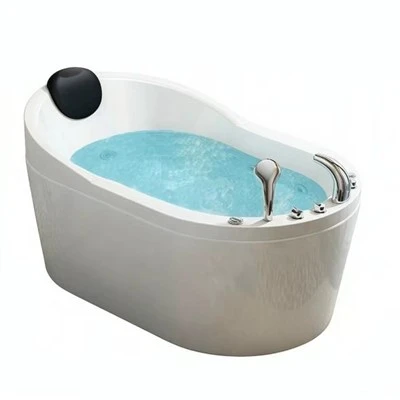
For more guidance on bathtub sizing, style, and installation, reach out to us to discuss your project details and find the perfect bathtub for your home.
Shower Enclosure References:
National Kitchen and Bath Association. 2023 Kitchen and Bath Design Trends Report.
Plumbing-Heating-Cooling Contractors Association. 2022 Residential Bathtub Sales and Usage Survey.
Centers for Disease Control and Prevention. 2022 Anthropometric Reference Data for Adults in the United States.
Hangzhou FJSTONE Industry Ltd.
As one of the most professional bathtub manufacturers and suppliers in China, we offer a wide range of products with superior quality. If you’re going to buy high-end bathtub made in China, welcome to get pricelist from our factory. All customized products are with high quality and competitive price.
Address: Qunyi Industrial Zone, Guali Town, Xiaoshan District, Hangzhou City, Zhejiang Province
E-mail: dora4211@163.com
WebSite: https://www.fjsindustry.com/
