Let me start by breaking down something we’ve all been chatting about at work lately—how speed limit signs actually mess with autonomous vehicles (AVs), and why that’s a big deal for folks like us who make those signs. I’m gonna keep this real, no corporate jargon or stuffy papers. Just straight talk, like I’m grabbing a coffee with you and updating you on what we’ve been seeing out there. Speed Limit Signs
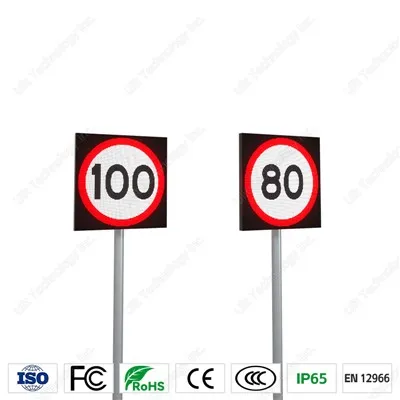
First off, if you’ve driven around any city or suburb lately, you’ve noticed speed signs aren’t as straightforward as they look. There’s the 35-mph on Main St, then a 25-mph school zone that’s only active 7-9am and 2-4pm, a random 15-mph construction zone with temporary orange signs that popped up yesterday, and don’t even get me started on the hidden ones behind trees or on curvy backroads. For us as a speed sign supplier, we’ve always known these signs matter, but the AV stuff? That’s a whole new level of “wait, we can’t just make these and ship ’em anymore.” AVs aren’t like us humans—we see a sign, maybe glance at it, slow down if we’re near a school. AVs see it as a non-negotiable command, right? But not all signs are created equal, and that’s where the problems (and the opportunities for us) kick in.
Let’s get super specific about how AVs actually read speed signs, because I used to think it was just a camera picking up the number, but nope, it’s way more complex. Most AV systems use a mix of high-res cameras, LiDAR, and even GPS to decode signs. The camera is the main one for the number, but it needs to match the sign’s font (wait, there’s a standard MUTCD font, but some older signs are faded, or some smaller towns use weird fonts?), the color (red circles for speed limits, yellow for school zones—cool, except if rain makes the color look off), and the context around it. Like, that 25-mph sign on a residential road—does it have a little “school days only” plaque below it? If the AV system isn’t programmed to catch that plaque, it’ll either keep going 35 like before or slam on the brakes randomly because it thinks the limit just dropped for no reason. We had a client last quarter—a small AV startup testing in Chicago—reach out because their cars kept braking hard on Lincoln Ave, and it turned out there was a faded “10-mph when wet” sign right next to a 35-mph sign. Their system’s camera missed the faded part, so it dropped the speed way too fast. That’s not a bug in the AV, that’s a sign issue—one that our team noticed when we replaced those faded signs last month.
Here’s another thing: temporary speed signs. We make a ton of those construction zone signs, right? The orange ones on trailers or metal posts that get moved around as work progresses. For human drivers, we see the orange, know it’s temporary, maybe slow down a little. But AV systems? Some older AV tech treats temporary signs the same as permanent ones. A construction crew in Phoenix hit us up last summer because their temporary 20-mph sign was moved 200 feet down the road at 6am, and an Uber AV coming the other way tried to do 20 in the middle of the highway—total chaos, almost a crash. That’s wild, and it’s not the AV’s fault. The temporary signs we supply have retroreflective sheeting that’s super bright, but also, we started adding QR codes to the back (not on the public side, so drivers don’t notice) that let construction crews update the sign’s active time and limit via a phone app. Wait, that’s a little side project we’re testing, but the point is: AVs can’t handle “temporary” the same way humans do, so we have to make signs that give them clearer signals, not just blurry numbers.
Now, let’s talk about the big stuff—why this matters for our business, not just tech bros. More and more cities are rolling out AV test programs, right? San Francisco, Austin, Phoenix—all those robotaxis you see zipping around. The city of Austin just passed a rule last year that all AVs have to follow the exact posted speed limits, no exceptions, because they had a few incidents where AVs sped through construction zones. That’s huge for us. Before, cities ordered 500 standard speed signs a year. Now, they’re ordering custom sets for AV test zones—bigger signs (so AV cameras can pick ’em up from farther away), brighter sheeting, extra plaques that specify when limits are active, and even temporary signs with GPS tags so the AV’s system can pull real-time updates without relying on just a static sign. Our order volume for custom AV-ready signs went up 40% in the last 12 months, and that’s not a fluke. We’re not just selling metal and reflective film anymore—we’re selling a product that works with the new tech, and that’s our niche.
But it’s not all smooth sailing. There’s a problem with inconsistent sign standards across different states and countries. Like, in the US, speed limits are in mph, but in Europe it’s km/h, and the font is slightly different. AVs have to be reprogrammed for every region, but if the signs in a new region are outdated or non-standard, that’s a headache. We recently got a big order from a company testing AVs in Miami, where some older residential streets have hand-painted signs (don’t laugh, small towns do that sometimes) with messy numbers and no official font. Their camera system couldn’t read the hand-painted numbers, so we sent over a mobile crew that replaced those hand-painted signs with custom, easy-to-read ones that matched MUTCD standards, and also added little horizontal bars below the number to show if it’s a school zone or residential. The AVs picked up the new signs right away—no more random speeding or braking. That’s the kind of service we didn’t do 5 years ago, but now it’s non-negotiable.
Wait, let’s get into a real example I heard from a friend who works at Cruise (the AV company, not the cereal). They told me that in San Francisco, there’s a stretch of Market Street where the speed limit drops from 25 to 10 mph right in front of a hospital. The sign is there, but it’s partially blocked by a bus stop shelter half the day. Early Cruise AVs would hit their brakes when they got close to the shelter, because they couldn’t see the sign, but then they’d start speeding back up once they passed the shelter, because they couldn’t pick up the next sign that goes back to 25. The solution? We worked with the city to move the sign a foot to the left, so it’s not blocked by the shelter, and also made it twice as tall as the standard sign. That fixed the problem—no more random speed changes. The AV system isn’t perfect, but if the sign is clear and visible, it works. So our job isn’t just to make signs that humans can read, it’s to make signs that AVs can read, and that means thinking about camera range, obstruction, font, color, and context.
Here’s something that’s been on my mind lately: what about when there’s no speed sign? Like, a rural backroad with no signs, where the limit is 55 mph by default, but there are sharp curves or stop signs that make it dangerous to go that fast. Humans slow down because we see the curve, but AVs only go by the posted limit. We’ve had a few rural counties reach out because their AV test cars were speeding around those curves and almost crashed. So we’ve started developing “contextual signs” for those areas—small, low-profile signs that aren’t the big, ugly metal ones, but have a built-in sensor that tells the AV system there’s a sharp curve ahead, so it should slow down even if the posted limit is higher. It’s still in beta, but the feedback has been good. That’s next-level stuff, and it’s exactly where our business is heading—moving beyond static signs to signs that communicate with AVs, not just humans.
Now, let’s talk about the challenges, because it’s not all upsides. Not every city wants to spend extra on custom AV signs. Some small towns in Ohio still use cheap, thin metal signs that rust in two years, and their AV test programs are just a pilot, so they don’t want to invest in new signs. Those pilots have had a few hiccups—AVs getting stuck on backroads because they can’t read faded signs, or speeding because there’s no sign at all. That’s a problem, but it’s also an opportunity for us to educate cities on why investing in good, clear signs isn’t just good for humans—it’s good for AVs, which means safer roads for everyone, more cities adopting AV programs, and more business for us. We recently hosted a free workshop for 12 small town public works teams in Ohio, walking them through how to spot signs that AVs can’t read, how to pick the right retroreflective sheeting, and how to order signs that work for both humans and robots. Half of them came back with orders after the workshop, so that’s working.
Another big thing: data. AV companies generate tons of data every day, right? About where signs are, what their limits are, when they’re active. We’ve started sharing our sign installation and maintenance data with AV companies, because if we replace a sign, we let them know the exact GPS coordinates and the new limit, so their system doesn’t have to wait for the camera to pick it up. That’s a game-changer. Last year, we worked with Waymo on a project in Austin, where we updated 200 signs along a test route, and we sent Waymo a spreadsheet with all the new sign coordinates and limits before we even installed them. Their AVs started using that data immediately, so they didn’t have to rely on their cameras to pick up the new signs, which cut down on their processing time by 30%. That’s the kind of partnership we’re building, not just supplier and customer—we’re part of the AV ecosystem.
Wait, let’s not forget about safety. The whole point of speed signs is to keep people safe, right? AVs are supposed to be safer than human drivers, but if they can’t read signs properly, that risk goes up. A 2023 study by the Department of Transportation found that 18% of AV-related incidents were caused by misread or missed speed signs. That’s a big number, and most of those incidents could have been avoided if the signs were clear, visible, and standard. So our work as a speed sign supplier isn’t just about selling products—it’s about making roads safer for everyone, whether you’re in a robotaxi, driving your pickup truck, or walking across the street. That’s why we care so much about getting this right.
Now, let’s wrap this up. The relationship between speed limit signs and autonomous vehicles is way more complex than anyone would have guessed 10 years ago. AVs don’t care if a sign is slightly faded or has a weird font—they need clear, consistent, context-rich signals. Temporary signs, school zone signs, construction signs—all of these need to be designed not just for human eyes, but for camera lenses and LiDAR sensors. The good news is, cities and AV companies are figuring this out, and that means more orders for us, more innovation in sign tech, and safer roads for everyone.
If you’re a city public works director, an AV engineer, or a construction crew manager who’s dealing with AV sign issues—whether that’s faded signs, temporary ones that get moved, or custom needs for test zones—we’re here to help. We don’t just sell speed limit signs; we work with you to make signs that work for both humans and autonomous vehicles. Reach out to us, and let’s chat about how we can make your roads safer and your AV programs run smoother.
400mm Traffic Lamp References:
- U.S. Department of Transportation. (2023). Autonomous Vehicle Safety Incident Report: Speed Sign Misinterpretation Findings.
- Federal Highway Administration. (2022). Manual on Uniform Traffic Control Devices (MUTCD) for Autonomous Vehicle Compatibility.
- Waymo and City of Austin Partnership Report. (2023). Integrating Infrastructure Updates with Autonomous Vehicle Data Systems.
- National Association of City Transportation Officials. (2024). Speed Sign Standards for Autonomous Vehicle Test Zones.
Ulit Technology Inc.
As one of the most experienced speed limit signs manufacturers and suppliers in China, we offer a wide range of products with superior quality. We warmly welcome you to wholesale bulk durable speed limit signs from our factory. If you have any enquiry about cooperation, please feel free to email us.
Address: NO.2 Mudan Road, Nan’an District, Chongqing, China
E-mail: cqulit@sina.com
WebSite: https://www.ulitcn.com/
