Hey there, if you’re working on a power grid project and sourcing transmission towers, you’ve probably wondered: what actually goes into building those towers? It’s not just picking a metal pole and sticking it in the ground—there are a ton of regulations we have to follow, and as a power transmission tower supplier, I’ve navigated these rules every single day for years. Let me break this down like I would over a coffee, no stuffy legal jargon, just real, practical stuff that matters. Power Transmission Towers
First, let’s start with the basics: why do these rules exist? Power transmission towers carry high-voltage lines, so if one fails, you’re looking at massive outages, safety risks to people nearby, even environmental messes if lines come down near wildlife or sensitive areas. Regulations aren’t just red tape—they’re there to keep grids reliable, communities safe, and contractors from cutting corners. The rules vary a bit by country, but most places align with a few key global standards we follow at our company.
Let’s dive into the core regulatory buckets. First up, structural design standards. When we engineer a tower, we can’t just guess how strong it needs to be. We have to account for loads—think wind, ice, even earthquakes depending on where the tower is going. For example, in places like the Great Plains in the US, wind speeds are way higher than in Florida, so the towers need thicker steel, bracing that’s more robust. In parts of Japan or the Pacific Northwest, seismic activity means we have to build towers that can sway a little without collapsing, right? The main standards here are from bodies like the International Electrotechnical Commission (IEC) and the National Electrical Manufacturers Association (NEMA) in the US. IEC 60865 is the big one for tower loads, and NEMA SG6 covers structural requirements for transmission structures. We don’t cut corners here—every tower leaves our factory with a design stamped by a licensed engineer, because if a inspector finds a flaw, the project stops cold.
Next, material specs. The steel we use isn’t just any steel. It has to meet corrosion resistance standards, especially if the tower’s going near the coast, where salt air eats metal alive. A lot of suppliers try to use lower-grade steel to save cash, but that’s a quick way to get a tower that rusts through in 10 years. We use hot-dip galvanized steel for most of our towers, and that has to meet ASTM A123 standards in the US, or ISO 1461 globally. That galvanization process is non-negotiable—we dip every part in molten zinc, so even tiny scratches get covered. If a project’s in a really harsh environment, like a mining area with acidic soil, we’ll even add a powder coating on top of the galvanization for extra protection. No one wants to replace a tower 5 years after it’s installed, so material rules are strict.
Then there’s siting and environmental regulations. This is a big one that a lot of first-time project managers miss. You can’t just put a tower anywhere. In the US, that means complying with the National Environmental Policy Act (NEPA), which requires assessing how the tower will impact birds (especially migratory birds—those big power lines are a huge hazard), endangered species, wetlands, even cultural sites for Indigenous communities. In the EU, it’s the Habitat and Birds Directives, so we have to map protected areas before we even submit a design. Last year, we had a project in the Netherlands where the initial site was near a heron breeding ground, so we had to redesign the tower route to go around it—added 2 km of line, but it saved the project from getting shut down mid-construction. We work with environmental consultants on every project to make sure we’re checking these boxes before we ship anything, because if you skip this, you’re not just delaying the project—you’re looking at fines that could wipe out your budget.
Foundation requirements are another key part. The tower’s only as strong as its base, right? Regulations specify how deep the foundation has to be, based on soil type. If the ground is soft, like a swamp, you can’t just pour a concrete slab and call it done. We use drilled piers or even helical piles in those cases, and the depth has to meet local building codes—for example, in Canada, per CSA standards, foundations have to go below the frost line, otherwise frost heave will push the tower up and tilt it. I’ve seen a project in Minnesota where a contractor skipped that, and 2 years later, half the towers were leaning so bad the lines were at risk of snapping. We make sure our foundation designs are site-specific, not one-size-fits-all, because that’s what the regulators demand.
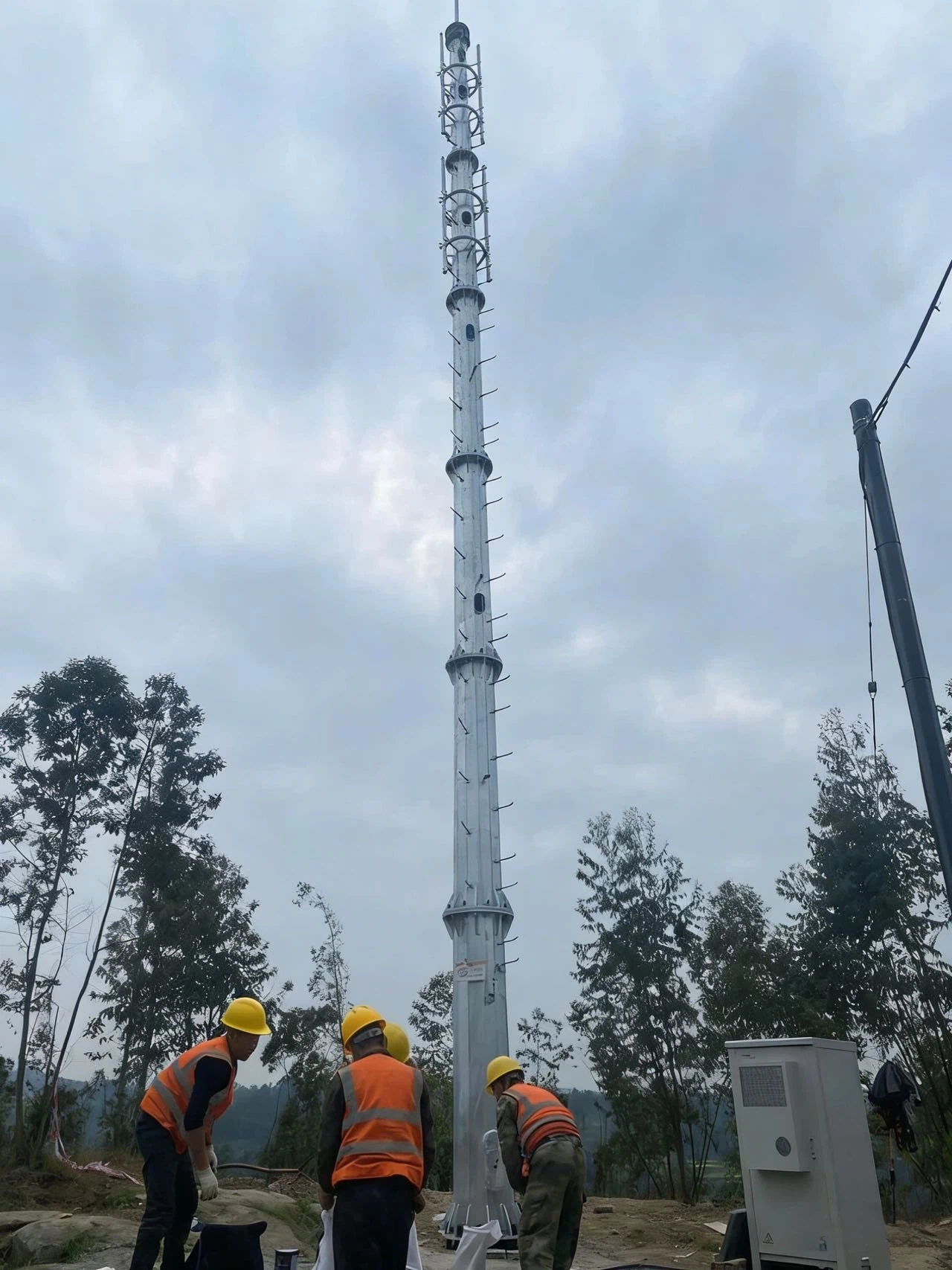
Construction and installation rules on site. Once the tower parts get delivered, there are rules for how you put them together. A lot of people think towers are pre-assembled, but most are shipped in pieces because they’re too big to transport on roads. So on-site crews have to follow OSHA standards in the US, or ISO 45001 globally for worker safety—fall protection for guys climbing towers, proper lifting equipment to hoist heavy steel parts. Also, during installation, you have to keep clearances from other power lines, roads, buildings—those clearance distances are regulated too. For high-voltage lines over 220 kV, the minimum distance from the ground has to be 25 feet in rural areas, more in urban places. If a crew sets a line too low, they can get cited, and that’s a huge safety hazard for people walking under it. We provide installation guides with our towers that outline all these specs, so the on-site team doesn’t have to guess.
Testing and inspections. No tower leaves our facility without passing tests. We do load tests on prototype towers—we attach weights until the tower bends to the point where it’s safe, not until it breaks. That’s required by most regulators to make sure the design is solid. Then, once the tower is on site, third-party inspectors will come out to check the galvanization thickness, the foundation depth, how the parts are bolted together. Bolts are a big one—you can’t just tighten them with a wrench; you have to use a torque wrench and make sure they meet ASTM A325 or A490 specs. Loose bolts are one of the top causes of tower failures in bad weather, so inspectors will mark any that aren’t tight, and we have to send a crew out to fix them before power is turned on.
Wait, let’s talk about regional differences because that’s where a lot of suppliers mess up. For example, in Australia, they have AS 3600 for concrete and AS 4100 for steel structures, and they also have strict rules about bushfire zones—so towers in areas prone to wildfires have to be made of non-combustible materials, no wood parts (obviously, but some suppliers try to use composite materials that aren’t fire-resistant). In India, the Central Electricity Authority (CEA) has its own standards, and they prioritize towers that can handle high temperatures and monsoon rains—so we add extra rust protection and thicker bracing for those projects. As a supplier, we don’t just have a catalog of towers; we tailor them to meet the specific regulations of where they’re going. That’s why a lot of big grid projects come back to us—we don’t just sell a product, we make sure it checks all the regulatory boxes before it even leaves the factory.
Also, let’s touch on new rules that are popping up, because the industry is changing. More and more regulations are focusing on renewable energy integration—since wind and solar farms need transmission lines to get power to cities, regulators are updating rules to make towers compatible with larger, higher-capacity lines. There’s also a big push for circular economy rules, which means we have to use more recycled steel in our towers, and at the end of a tower’s life (which is usually 30-40 years), it has to be recyclable. We already source 40% of our steel from recycled materials, and we design all our towers to be easy to disassemble, so they don’t end up in landfills. That’s not just good for the planet—it’s a regulatory requirement in the EU now, and more countries will follow soon.
I know this sounds like a lot, and if you’re new to sourcing transmission towers, it can feel overwhelming. But here’s the thing: following these regulations isn’t just about avoiding fines. It’s about building a grid that works, that doesn’t have outages when a storm hits, that doesn’t put people at risk. As a supplier, we’ve spent years refining our process to make sure we’re aligned with all these rules, so you don’t have to. We handle the engineering, the material testing, the environmental checks, so you can focus on getting your project done on time.
If you’re working on a new power transmission project, whether it’s a small line for a regional grid or a big cross-country transmission corridor, we can walk you through what regulations apply to your specific location. We’ll share our design specs, talk about how we meet all the local standards, and answer any questions you have about making sure your tower project stays compliant. Drop us a line to connect, and let’s make sure your project goes smoothly—no regulatory hiccups, just reliable towers that stand the test of time.
Communication Towers References
International Electrotechnical Commission. (2020). IEC 60865: Loads for electrical installations – Overhead conductors and earth wires.
National Electrical Manufacturers Association. (2021). NEMA SG6: Structural Standards for Electric Power Transmission Structures.
ASTM International. (2022). ASTM A123/A123M: Standard Specification for Zinc (Hot-Dip Galvanized) Coatings on Iron and Steel Products.
U.S. Environmental Protection Agency. (2023). National Environmental Policy Act (NEPA) Regulations.
International Organization for Standardization. (2022). ISO 45001: Occupational health and safety management systems.
Hebei Yifeng Steel Structure Co., Ltd.
As one of the most professional power transmission towers manufacturers and suppliers in China, we offer a wide range of products with superior quality. Please feel free to buy cost-efficient power transmission towers for sale here from our factory. Contact us for more details.
Address: Guangchuan Town Industrial Zone, Jing County, Hengshui City, Hebei Province
E-mail: hbyfgjg@163.com
WebSite: https://www.yf-powertowers.com/
