Hey everyone, and welcome back to the breaker blog! Today I’m tackling a question that pops up a lot from electricians, facility managers, and even folks just starting out in electrical work: “Are air circuit breakers (ACBs) actually suitable for DC circuits?” As a supplier of air circuit breakers, I get this query weekly—sometimes daily—so I wanted to break this down straight, no fancy jargon, and give you the real deal, not just the sales pitch. Air Circuit Breakers
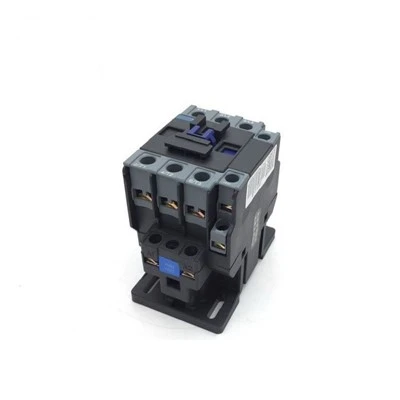
First, let’s keep it simple: ACBs are the big, robust breakers you see in industrial switchgear, data centers, large commercial buildings—places where AC power is king and you need to switch huge amounts of current. DC is different, right? It’s that steady, straight-line current that powers solar panels, battery banks, electric vehicles, and some older industrial systems. So why does it matter if an AC breaker works for DC?
Let’s start with how ACBs work with AC vs. DC. When you switch AC, the current slams back and forth 50 or 60 times a second, so it naturally passes through zero voltage 100 or 120 times a second. That zero point is super helpful because it gives you a tiny window where the arc between the breaker’s contacts goes out—no extra effort needed. DC? It’s steady, no zeros. The arc you get when you open a DC circuit keeps going until you force it to stop. That’s a big problem for breakers not designed for DC.
Here’s where I see a lot of confusion: some people think, “Hey, my AC breaker has a high interrupting rating, it can handle 1000A at 480V AC—so why not 1000A at 480V DC?” Spoiler: it’s not that simple. AC interrupting ratings don’t translate directly to DC because of that arc issue. Let’s say you’ve got a 2000A ACB rated for 600V AC. If you try using it for DC at 600V, the arc might not go out. The breaker could weld the contacts shut, or even fail catastrophically. That’s a risk no one wants, especially in a place like a data center where a DC fault could take down servers and cost thousands an hour.
But wait—before you go tossing all your ACBs in the trash, there’s a middle ground. Modern ACBs? Some are actually line-rated for DC use. I’m not talking about the basic $500 model you grab for a small panel—we’re talking about the heavy-duty industrial ACBs we supply, built with arc-quenching chambers specifically modified for DC. Those chambers use things like magnetic blowout coils to pull the DC arc away from the contacts and stretch it, so it can break even without a zero-crossing. That’s a game-changer. I’ve seen customers use our DC-rated ACBs on solar array combiner boxes and large UPS battery banks, and they’ve had zero issues so far.
What makes a DC-rated ACB different? Let’s break down the key design tweaks. First, the contact material. DC arcs are hotter and more corrosive, so DC-rated ACBs use better contact alloys—like silver-tungsten instead of plain copper—to prevent pitting and wear. Then there’s the magnetic blowout system. On AC breakers, the blowout is calibrated for the sinusoidal current, but on DC models, it’s adjusted to handle steady current, so it can snuff that arc every time. Also, the interrupting rating: for DC, it’s usually lower than the AC rating for the same breaker. A 25kA AC rating might be 15kA DC for the same voltage. You can’t just swap those numbers—you have to match the DC interrupting rating to your system’s fault current.
Now, when would you NOT use an ACB for DC? If you’re dealing with low-voltage, small-scale DC, like a small off-grid setup with 12V or 24V, a regular ACB is overkill, and actually not the safest bet. DC breakers made for low-voltage systems are cheaper and lighter, so there’s no reason to use a heavy ACB there. Also, if your DC voltage is way higher than the AC breaker’s DC rating. Let’s say you have an ACB rated for 600V DC—you can’t use it on a 1000V DC battery bank, no matter how big the breaker is. The voltage is too high, the arc will reignite, and you’re looking at a fire hazard.
I’ve had a few customers make mistakes here, so let me share a quick story. Last year, a guy from a small manufacturing shop reached out saying his ACB kept tripping on their 48V DC conveyor system. Turns out he’d grabbed a 100A AC breaker from a surplus bin, didn’t realize it wasn’t rated for DC. The arc kept reigniting every time he reset it, so it was essentially useless. We swapped him out for a 100A DC-rated ACB, and he’s been running smoothly ever since. That’s why checking the DC rating is non-negotiable.
Another point: compliance. A lot of places have codes now that require DC-specific overcurrent protection. The NEC (National Electrical Code) in the US has specific sections for DC systems, and they don’t allow unrated breakers. So even if you think it works, using an unrated AC breaker on DC is a code violation and a safety risk. We make sure all our DC-rated ACBs are tested and certified to meet those standards, so our customers don’t have to worry about that.
Wait, but let’s talk about pros and cons of using ACBs for DC, when it works. The big pro is robustness. ACBs are built to handle massive currents, so if you’ve got a large DC system—like a 1MW solar farm or a commercial EV charging station—ACBs are way more durable than mini DC breakers. They can take repeated operations, handle high fault currents, and have long lifespans. Also, most ACBs have integrated accessories—shunt trips, undervoltage releases, communication modules—that make them easy to integrate into a smart system. That’s a huge plus for facilities that want to monitor and control their power remotely.
The cons? Like I said before, they’re bigger and heavier than small DC breakers, so overkill for low-power setups. Also, they’re more expensive. A DC-rated ACB for 2000A DC will cost a lot more than a 200A DC breaker, so it doesn’t make sense for small jobs. Another con: you have to get the rating right. If you mismatch the DC interrupting rating, it can fail. That’s why I always tell customers to give us their system specs—voltage, fault current, amperage—and we can help pick the right breaker. We’re not just here to sell a product, we’re here to make sure it works for their application.
Let’s clear up another myth: some people say DC always requires its own breakers, no exceptions. That’s not true. I’ve installed our DC-rated ACBs on 480V DC battery banks for data centers, and they’ve been flawless. The key is the modification to handle the arc. Regular AC breakers can’t do that, but the right ACB can. It’s not about the type of breaker—it’s about whether it’s been tested for DC.
So, to answer the original question: Are air circuit breakers suitable for DC circuits? The short answer is, if they’re DC-rated, absolutely. If they’re not, never use them. That’s the line you have to draw. There’s no gray area here. Using a regular AC breaker on DC is a recipe for disaster—failed interruptions, arc flashes, potential fires. But a properly rated, modified ACB? It’s a great option for large DC systems where you need that heavy-duty power handling.
Now, let’s talk about when to reach out. If you’re working on a DC project—solar, battery storage, EV chargers, industrial DC systems—and you’re not sure which breaker to use, don’t guess. We’ve been supplying air circuit breakers for over a decade, and we’ve helped hundreds of customers pick the right DC-rated models for their exact needs. We can walk you through the specs, help you confirm the interrupting rating, and even offer custom configurations if you need something specific. No pushy sales stuff, just solid advice from people who know breakers inside and out.
At the end of the day, safety shouldn’t be an afterthought. Whether you’re an electrician, a facility manager, or a DIYer (though I’d advise leaving large DC systems to the pros), choosing the right breaker is make-or-break. Skip the surplus AC breakers for DC, don’t take chances with unrated equipment, and if you’re unsure, hit us up to connect for a procurement chat. We’re here to make sure your DC system is as safe and reliable as your AC systems.
Thanks for hanging out. Drop a comment if you’ve got more questions—next time we’re diving into arc flash safety for both AC and DC, so stay tuned. Catch you later.
Distribution Panelboards References
- National Electrical Code (NEC), Article 240 for Overcurrent Protection, Section 690 for Solar Photovoltaic Systems, National Fire Protection Association, 2023.
- Industrial Air Circuit Breaker Design and Testing for DC Applications, IEEE Transactions on Industrial Electronics, Vol. 68, No. 12, 2021.
- Arc Interruption Fundamentals for AC and DC Circuits, Schneider Electric Technical Guide, 2022.
- Solar Array Overcurrent Protection: Best Practices, International Association of Electrical Inspectors (IAEI), 2023.
Wenzhou Lanen Electrical Co., Ltd.
Wenzhou Lanen Electrical Co., Ltd. is one of the most professional air circuit breakers manufacturers and suppliers in China, also supports customized service with low price. Please feel free to buy CE approved air circuit breakers made in China here from our factory. Contact us for more discount information.
Address: Zhiguang Liushi Town Yueqing City Wenzhou City Zhejiang Province
E-mail: lanen@luyele.cn
WebSite: https://www.lanenelectrical.com/
