If you’ve ever held a door that shuts quietly instead of slamming, ridden a bike whose tires absorb road bumps, or even launched a stress ball across your desk, you’ve interacted with springs. Few parts are so ubiquitous, but far fewer people stop to think about how those springs are made—especially the tools that turn wire into the precise, reliable components we rely on every day. As a coil tooling supplier who’s worked directly with spring manufacturers for over 12 years, I can tell you: coil tooling isn’t just a set of metal parts. It’s the backbone of every spring, and even the smallest flaw in it can derail an entire product line. Coil Tooling
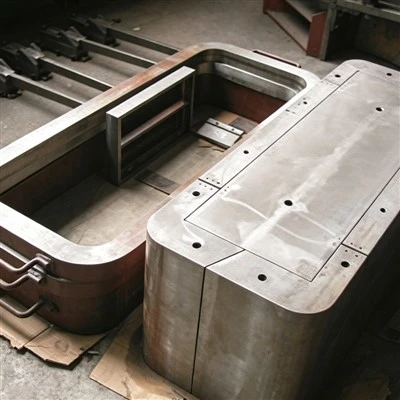
Let’s start with the basics. A spring’s function depends entirely on its shape, size, tension, and flexibility—all of which are dictated during the manufacturing process by a machine called a coiler. Coil tooling is the set of specialized, custom-engineered components that attach to that coiler to shape wire into a spring. Unlike generic machine parts, these tools are tailored to the exact specifications of each spring order. Think of it this way: if a coiler is the baker’s oven and mixing bowl, coil tooling is the cookie cutter that turns dough into the specific shape you need. No two spring applications are identical, so no two sets of coil tooling are identical either.
Let’s break down the key parts that make up a typical coil tooling set, because understanding these helps explain why precision matters so much. First is the mandrel: a solid, cylindrical rod that sits at the center of the spring as it’s coiled, determining the spring’s inner diameter. Too small, and the spring will be too tight around the core; too large, and it won’t fit its intended housing—both lead to waste and delays. Next, the guide blocks: these hold the wire in place as it wraps around the mandrel, preventing it from shifting during the winding process. Then there’s the cut-off tool, which cleanly snips the wire once the spring reaches the correct number of coils, and the pitch cutter, which sets the distance between each coil (pitch) to control tension. For more specialized springs—like torsion springs, which twist instead of compress—you’ll add legs and end coils to the tooling, while conical springs need tapered mandrels to create that narrow-to-wide shape.
Now, why does a spring manufacturer need a reliable coil tooling supplier? Let’s walk through a common scenario. Last year, a small automotive parts maker reached out to me in a panic. They’d recently landed a contract to make 50,000 suspension springs for a new electric car model, but their existing tooling was wearing out faster than expected. Every 10,000 springs, the mandrel had a slight bend, which threw off the inner diameter of the coils. By the time they caught it, they’d wasted 12,000 feet of high-tensile steel wire and missed a critical production deadline. The problem? Their previous tooling supplier was using low-grade carbon steel with a thin surface coating, not heat-treated to handle the repetitive force of winding steel wire. That’s where a good supplier comes in: we didn’t just rush a new mandrel to them—we worked with their engineering team to adjust the tooling’s heat treatment process and added a wear-resistant chrome plating, so their tooling could handle 100,000 coils without failure. By aligning tooling design with the material the manufacturer uses, we cut their waste by 60% right away.
A common misconception I hear from new spring makers is that all coil tooling is the same, or that they can save money by buying cheap, generic tooling instead of custom sets. But here’s the truth: cheap tooling costs you more in the long run. I’ve seen shops spend half the upfront cost on generic tooling, only to deal with constant downtime, defective springs, and premature replacement. For example, a medical device maker I worked with last quarter wanted to cut costs on coil tooling for implantable pacemaker springs. They opted for a generic set, and within a week, the guide blocks were scratching the wire’s surface. Those scratches weakened the spring, and in medical devices, even a 0.1-millimeter flaw can lead to device failure. They had to scrap 20,000 springs and rework their entire process—costing them five times what they would have spent on a custom, precision tooling set from the start.
So what goes into making high-quality coil tooling? It’s not just machining a rod out of metal. The process starts with deep collaboration. A reputable supplier will first work with your engineering team to get every spec: wire diameter, inner/outer spring diameter, pitch, number of coils, and even the material of the wire you’re using (stainless steel, music wire, titanium, each requires different tooling hardness and surface finish). Next, the supplier selects the right material for the tooling itself. Most industrial coil tooling uses high-speed steel (HSS) or tool steel, because these materials can withstand thousands of repeated bends and cuts without wearing out. For wire that’s extra hard—like the titanium used in aerospace springs—we use powdered metal tooling, which has a finer grain that resists chipping.
Once the material is chosen, the machining begins. We use CNC (computer numerical control) machines to mill, grind, and finish each component to tolerances as tight as ±0.001 inches. That’s thinner than a human hair. Even a 0.002-inch difference in a mandrel’s diameter can throw off a spring’s fit, which is why we use coordinate measuring machines (CMM) to inspect every part at multiple stages of production. Finally, the tooling goes through surface treatment: heat treatment to harden it, and sometimes coatings like chrome or titanium nitride to reduce friction and prevent the wire from sticking. We also test every set on our own coiler before shipping it, to make sure it produces consistent, defect-free springs right out of the gate.
Another service that sets a good coil tooling supplier apart is support beyond just selling tools. A lot of suppliers will drop off a set and disappear, but we offer on-site training for manufacturers’ teams, plus emergency replacement parts if a tool breaks mid-production. Last year, a spring maker in Illinois had a cut-off tool break on their main coiler during a production run for lawn mower springs—they needed a replacement in 24 hours to avoid a $10,000 late fee. Our team worked through the night to machine a custom cut-off tool and shipped it via overnight courier, so they got back to production the next morning. That kind of responsiveness isn’t just nice to have; it’s critical for small and medium-sized manufacturers who can’t afford to shut down their lines.
As spring technology evolves, coil tooling has to keep up. The rise of electric vehicles, for example, has created a demand for lightweight, high-performance springs that absorb heavy vibration. Those springs require tooling that can shape thinner, stronger wires with even tighter tolerances. Meanwhile, the medical device industry is pushing for smaller and smaller springs, some with inner diameters less than a tenth of an inch—tooling for these needs to be micro-sized, millimeters across, with precision that’s almost impossible to achieve without advanced machining. We’ve invested in 5-axis CNC machines and laser inspection tools to meet these growing demands, because if our tooling can’t make these new springs, someone else will.
Let’s circle back to why this matters beyond the factory floor. Every spring that works as intended, that keeps a car safe, a medical device functional, or a household appliance working smoothly, starts with a good set of coil tooling. It’s easy to overlook a small metal rod, but that rod is the reason a door closes quietly, a bike handlebar stays stable, and a pacemaker works inside someone’s body. For 12 years, I’ve watched manufacturers cut corners on tooling and regret it, and I’ve seen the difference that a reliable, custom-built set can make for a business’s bottom line and reputation.
If you’re a spring manufacturer looking to reduce waste, speed up production, and make higher-quality springs, or if you’re new to the industry and need guidance on coil tooling, don’t settle for generic parts. Reach out to discuss your specific needs, and let’s work together to build tooling that fits your process, your materials, and your goals.
Motor Coils References
- “Spring Manufacturing: Process & Equipment,” Spring Manufacturers Institute (SMI), 2022.
- “Tooling Materials for High-Volume Spring Production,” Journal of Precision Engineering and Manufacturing, Vol. 18, No. 3, 2021.
- “The Impact of Coil Tooling Tolerances on Spring Performance,” International Journal of Advanced Manufacturing Technology, Vol. 112, No. 7, 2021.
- “Custom vs. Generic Tooling: Cost Analysis for Spring Manufacturers,” Manufacturing Engineering Association, 2023.
Hangzhou Purun Science & Technology Co., Ltd.
As one of the most professional coil tooling manufacturers and suppliers in China, we have world-leading production equipment and strong manufacturing capabilities. Please rest assured to wholesale customized coil tooling made in China here from our factory. Welcome to contact us for pricelist.
Address:
E-mail: Purun_sci_tech@163.com
WebSite: https://www.puruncoil.com/
