If you’ve ever watched an industrial robot on a factory floor, you might have wondered how a single machine that welds car chassis on Monday could be packaging cereal boxes on Friday. For years, the common narrative around industrial robots was that they were rigid, one-trick workhorses—bolted down, programmed for a specific task, and not much use once that task ended. But as an industrial robot supplier who’s worked with manufacturers across automotive, consumer goods, and electronics industries for the past 12 years, I can tell you that this idea couldn’t be further from the truth. Reconfiguring industrial robots for different tasks isn’t just possible—it’s become the backbone of flexible manufacturing, a shift that’s cut costs, reduced downtime, and let companies adapt to market changes faster than ever before. Industrial Robot
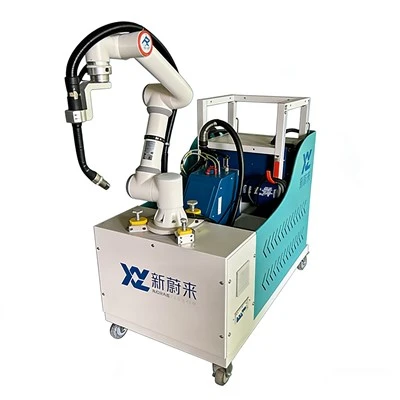
Let’s start with the basics: what does reconfiguration actually mean here? It’s not just reprogramming a robot to move to a new set of coordinates (though that’s part of it). True reconfigurability means changing both the robot’s end-of-arm tooling (EOAT)—the part that actually interacts with the workpiece—and adjusting its software to handle new payloads, reach requirements, and process types. Back in the 1990s, when my company first started supplying robots to small appliance factories, reconfiguring meant halting a production line for three days, bringing in a technician to swap out a robot’s entire arm assembly, and rewriting code from scratch. Today? We’ve streamlined that process so most of our mid-range robots can switch between three or four tasks in under an hour, with a 10-minute pre-calibration check to make sure precision stays on target.
Take a recent example from a client of ours: a mid-sized electronics manufacturer that makes both wireless headphones and smartwatches. A year ago, they had two separate production lines—one for headphones, one for watches—each with its own dedicated robot. They were using 12 robots total, with each line running at 70% capacity because product demand fluctuated seasonally. Last quarter, they reconfigured six of their robots to switch between assembling headphone casings and applying watch bezels, depending on which product needed more throughput that week. The result? They cut their robot count in half, reduced line changeover time from 4 hours to 22 minutes, and saved over $180,000 in annual operational costs. That’s not a rare success story—it’s the kind of thing we see every time a manufacturer embraces reconfigurable robots, and it’s why so many of our clients now build flexible lines instead of fixed, single-task setups.
Of course, reconfiguring a robot isn’t without its challenges, and that’s where our team’s expertise as a supplier comes in. The biggest hurdle for small to mid-sized manufacturers used to be the complexity of software and tooling compatibility. A robot that works with a vacuum gripper for handling flat panels won’t automatically work with a welding torch for metal parts, and without the right integration, reconfiguration can lead to errors, damaged parts, or even safety issues. That’s why we don’t just sell robots—we provide modular tooling kits and pre-built software libraries tailored to each industry. For automotive clients, that means a toolkit with quick-change grippers for sheet metal, plasma cutters, and assembly sockets, all designed to lock into our robots’ end connectors in seconds. For food and beverage clients, we offer washable, food-safe tooling that can switch between picking bottles, wrapping confectionery, and labeling jars without cross-contamination risks.
Another common misconception is that reconfigurable robots are only useful for high-volume production. The opposite is true: they’re especially valuable for low-volume, high-mix manufacturing, which is the fastest-growing segment in industries like custom aerospace parts and medical devices. A few months ago, we worked with a medical device startup that makes custom orthopedic implants for individual patients. They needed a robot that could mill titanium alloy one day, polish plastic components the next, and handle small parts assembly the following week. Before they approached us, they’d tried using standard industrial robots, but every time they switched tasks, they had to hire a third-party engineer to calibrate the tooling, costing them $5,000 per changeover and weeks of downtime. Our solution was a robot with a modular EOAT system and a cloud-based software platform that lets their in-house technicians download task-specific programs in minutes. Now, they can reconfigure their robot in under 30 minutes, and their changeover costs are down by 85%.
We’ve also seen advancements in artificial intelligence and machine learning that have made reconfiguration even more seamless. Modern robots don’t just follow pre-written code—they can learn new tasks through demonstration. A technician can show a robot how to pick a new type of workpiece, adjust its force to handle fragile parts, and adapt its path to avoid obstacles, all in a few repetitions, no advanced coding skills required. A few of our newer models even have built-in vision systems that can identify different parts on a conveyor belt and automatically adjust their settings to handle whatever comes their way. That’s a game-changer for manufacturers that mix multiple products on the same line, because they don’t have to stop production to reconfigure the robot at all.
But let’s be clear: reconfiguring isn’t the right choice for every application. For high-volume, single-task operations—like a large factory making the same car model for 10 years—dedicated, fixed robots are still more cost-effective. The tooling and programming for a single welding task will always be simpler and more reliable than a modular system designed to handle multiple jobs. But for the vast majority of manufacturers today, especially those dealing with volatile consumer demand, supply chain changes, or custom orders, reconfigurable robots are a no-brainer.
What’s also exciting is how this technology is evolving beyond just individual robots. We’re now working on collaborative robot cells—small, safe workcells that can be reconfigured to handle entire sub-assemblies, not just single tasks. A customer can take a workcell that’s currently packaging toothbrushes, swap out the robot’s base to adjust its reach, change the tooling to handle tubes of toothpaste, and reprogram the cell’s conveyor and inspection sensors, all in a single shift. This kind of end-to-end reconfigurability is turning factories into flexible, adaptive systems that can respond to market changes in real time.
I’ve spent 12 years in this industry, and I’ve seen so many manufacturers get stuck in the mindset that industrial robots are inflexible investments that lock them into outdated processes. But over the past five years, that mindset has shifted dramatically. More and more clients are coming to us not just to buy a robot, but to build a flexible line that can adapt to their future needs, not just their current ones. That’s the value of reconfigurability: it’s not just about saving money today—it’s about building a manufacturing operation that can grow and change as your business does.
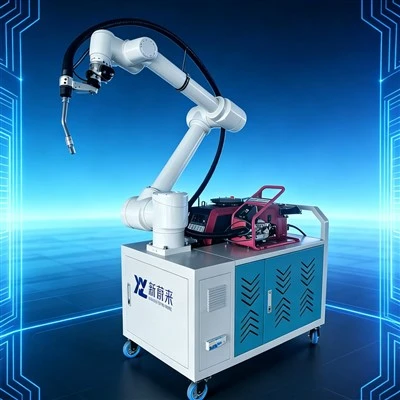
If you’re still using dedicated, single-task robots on your production line, or if you’re facing the challenge of fluctuating demand or long changeover times, reconfigurable industrial robots might be the solution you’re looking for. Our team has worked with hundreds of manufacturers across industries to design and implement reconfigurable robot systems tailored to their specific needs, and we can help you assess whether this technology is right for your operation. Reach out to our team to schedule a consultation and learn more about how reconfigurable robots can improve your productivity, reduce costs, and make your manufacturing process more flexible and resilient.
Collaborative Robot References:
- International Federation of Robotics. (2023). World Robotics Report: Industrial Robots.
- VDI/VDE Society for Measurement and Automatic Control. (2022). Modular Robot Systems for Reconfigurable Manufacturing.
- McKinsey & Company. (2023). The Future of Flexible Manufacturing: Adapting to Market Volatility.
- Robotic Industries Association. (2022). End-of-Arm Tooling Best Practices for Reconfigurable Robots.
- University of Michigan College of Engineering. (2021). Collaborative Reconfigurable Robots for Small-Batch Manufacturing.
Xinweilai Intelligent Technology (Shandong) Co., Ltd.
As one of the most professional industrial robot manufacturers and suppliers in China, we’re featured by quality products and good service. Please rest assured to wholesale bulk customized industrial robot from our factory. For pricelist and quotation, contact us now.
Address: Jinghua Road, Economic and Technical Development Zone, Dezhou City, Shandong Province
E-mail: liujiqing@xinweilaiznkj.com
WebSite: https://www.xinweilaiznkj.com/
