If you’ve ever held a smartphone, flipped on a car’s infotainment system, or charged an electric vehicle battery, chances are you’ve interacted with a MOSFET—even if you don’t know the acronym. For years, I’ve worked as a MOSFET supplier, and one of the most common questions I get from design engineers, hobbyists, and even small business owners is: Why choose a MOSFET over other transistors? It’s a fair question. Bipolar Junction Transistors (BJTs) and IGBTs also have their place in the semiconductor world, but MOSFETs have carved out an unbeatable niche for most modern electronics. Let’s break down why that matters, and why I keep telling customers to lean into MOSFETs for their next project. MOSFETs
First, let’s start with the basics, in plain terms: Transistors are the building blocks of almost all electronic devices, acting as switches or amplifiers for electrical signals. MOSFET stands for Metal-Oxide-Semiconductor Field-Effect Transistor, and its core design difference from older transistors like BJTs is what makes it stand out. BJTs are current-controlled, meaning they need a steady flow of current to stay on—wasting power just to keep the switch active. MOSFETs, on the other hand, are voltage-controlled. They only use a small voltage to toggle between on and off, which translates to way less energy lost in the process. That’s a game-changer for devices where battery life is non-negotiable.
Take a smartphone, for example. A BJT-based switch would draw constant current to power the device’s screen or cellular modem, draining the battery in hours. A MOSFET uses almost no standby current, so your phone can sit idle for days without needing a charge. I’ve heard from customers who design wearables—fitness trackers, smart watches—this is why MOSFETs are the only option for them. The extra battery life isn’t a nice-to-have; it’s the reason their product sells. That’s not a trivial advantage.
Another big win: simplicity in drive circuits. If you’re a small business engineering a new power tool or a hobbyist building a custom robot, you don’t want to overcomplicate your design with extra parts. BJTs require additional components to regulate the base current they need, which adds cost, space, and potential points of failure. MOSFETs only need a low-power voltage signal to operate, so you can use a standard microcontroller pin to drive dozens of them without adding extra circuitry. I worked with a startup last year that was prototyping a portable solar charger; they switched from BJTs to MOSFETs, and cut the size of their circuit board by 20% while reducing component count by three parts. That’s money in their pocket and a faster time to market.
Heat management is another area where MOSFETs outshine the competition, especially in medium-power applications. BJTs have something called a “second breakdown” issue—when they’re pushed to higher power levels, they can overheat unevenly and fail suddenly. IGBTs, which are used in high-voltage applications like electric vehicle inverters, are great for very high power, but they’re less efficient at lower voltages. MOSFETs have a much more linear power handling curve, so they run cooler across a wider range of use cases. For example, in a home appliance like a refrigerator’s compressor control, MOSFETs run at 10-15°C cooler than equivalent BJTs, which means less strain on the unit’s internal parts and a longer overall lifespan. That’s a big selling point for appliance brands looking to reduce warranty claims.
Wait, I know what you’re thinking: What about power efficiency at high currents? Isn’t that where BJTs or IGBTs are better? It’s true that for very high-power applications (like 100kW+ in industrial motors or EV drivetrains), IGBTs are still dominant. But MOSFET technology has come a long way in the last decade. Newer silicon carbide (SiC) MOSFETs, which we supply, handle far higher currents with less resistance than traditional silicon BJTs. They also switch much faster—meaning they can turn on and off in nanoseconds, instead of microseconds. That speed is critical for applications like DC-DC converters in data centers, where thousands of converters work in parallel to power servers. Faster switching means less energy lost as heat, which cuts cooling costs for data center operators by tens of thousands of dollars a year. I had a data center engineer reach out last quarter; they were using BJTs that wasted 8% of their power as heat. Switching to our SiC MOSFETs cut that waste to 1.2%—a 85% reduction in energy loss. That’s not just a small improvement; it’s a huge operational savings.
Another often-overlooked advantage: MOSFETs’ inherent robustness against overcurrent and overvoltage spikes. Wait, let’s clarify: All transistors can fail if pushed beyond their limits, but MOSFETs have a built-in safety margin that other transistors don’t. Their oxide layer insulates the gate from the channel, so current only flows when the gate is properly biased. That means a sudden voltage spike from a power surge won’t accidentally trigger the transistor or damage it, as easily as it would a BJT, which relies on a continuous current flow. For consumer devices, that translates to fewer returns from customers who accidentally plug their device into an unstable power outlet or have a power surge in their home. For industrial equipment, that means less downtime—something factory managers would pay a premium to avoid.
I should also mention cost, especially for low to medium volume applications. When you factor in the total bill of materials (BOM) and the cost of assembly, MOSFETs are often cheaper than alternatives. Because they don’t need extra drive circuits, you save on parts and labor to solder them. And for mass-produced goods—like headphones, power banks, or LED lighting—MOSFETs are standardized, so you can source them easily without waiting for custom parts. I supply MOSFETs to a lighting brand that makes 10 million LED bulbs a year; switching from BJTs to MOSFETs cut their per-unit component cost by $0.03. Multiply that by 10 million units, and that’s $300,000 in annual savings. That’s a difference that can make a product profitable when it would have otherwise been a loss.
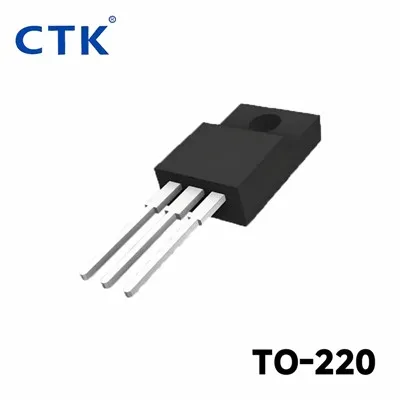
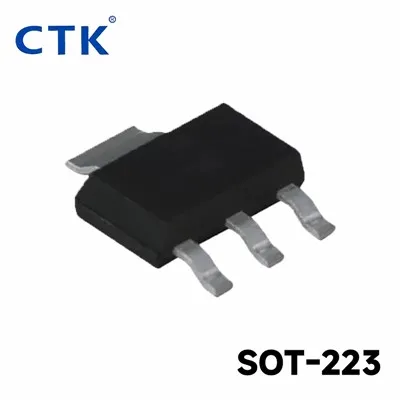
Of course, MOSFETs aren’t perfect. There are use cases where BJTs or IGBTs make more sense. For very high-power DC applications over 500kW, IGBTs are still the best choice, and for some analog amplification tasks, BJTs may deliver better linearity. But 90% of the applications I see coming through my supply line—consumer electronics, automotive ADAS, solar power systems, industrial automation—are perfect for MOSFETs. That’s why I focus on stocking a wide range of MOSFETs, from low-power surface-mount types for wearables to high-power through-hole types for industrial inverters.
Let’s talk about a real-world example that hit close to home last year. A customer was building a line of electric scooters, and they were using BJTs for their motor controllers. Their beta units were dying after just 6 months of use—way below their 2-year warranty target. We walked through their design, showed them how switching to our MOSFETs would reduce heat generation by 25% and cut power loss in the motor by 10%. They ran a beta test with 100 scooters using MOSFETs, and after 12 months, not a single unit had failed. They placed an order for 50,000 MOSFETs, and that’s now our largest customer for small-format power devices. That’s the kind of impact MOSFETs can have—turning a product that was a warranty liability into a reliable, market-leading good.
What I’ve learned over 15 years as a MOSFET supplier is that the best engineers and product managers don’t just pick a transistor because it’s familiar—they pick one that solves their specific problem. If you’re designing a product where battery life matters, where space is tight, where cost is a factor, or where reliability is non-negotiable, MOSFETs almost always check those boxes. They’re not a one-size-fits-all solution, but for the vast majority of modern electronics, they’re the clear choice.
If you’re working on a project and weighing your transistor options, don’t just go with what you’ve always used. Reach out to our team to discuss your needs—whether you’re a small startup prototyping your first product, a large manufacturer scaling production, or an engineer troubleshooting a failing design. We can help you select the right MOSFET for your application, no matter the power level or use case.
Cool-MOSFETs References
Neamen, D. A. (2015). Semiconductor Physics and Devices: Basic Principles (4th ed.). McGraw-Hill.
Rabaey, J. M., Chandrakasan, A., & Nikolic, B. (2003). Digital Integrated Circuits: A Design Perspective (2nd ed.). Pearson Prentice Hall.
Singh, J. (2017). Power MOSFETs: Design, Technology, and Applications. Wiley-IEEE Press.
Tongke Electronic Co., Ltd.
Tongke Electronic Co., Ltd. is one of the most experienced mosfets manufacturers and suppliers in China, featured by quality products and low price. Please rest assured to wholesale advanced mosfets made in China here from our factory. Contact us for pricelist.
Address: No.3,Chayuan Rd, Street 3, AilingKan, Dalingshan, Dongguan, Guangdong, China.
E-mail: tina@ctk-elec.com
WebSite: https://www.ctkchip.com/
