If you’ve ever stood in a field at dawn, watching a light mist of pest control spray settle evenly on corn leaves, or wrestled with a sprayer that clogs mid-application, you know that the sprayer itself is only half the battle. Over the last eight years as a sprayer accessories supplier, I’ve talked to hundreds of farmers, pest control technicians, and commercial landscape managers who swear by their sprayer’s add-ons—because the right accessory turns a messy, ineffective job into something precise, cost-efficient, and safe. This isn’t just about random parts you can grab at a hardware store; these accessories are engineered to solve specific pain points, reduce waste, and keep people safe. Let’s break down the ones that actually move the needle for pest control spraying. Sprayer Accessories
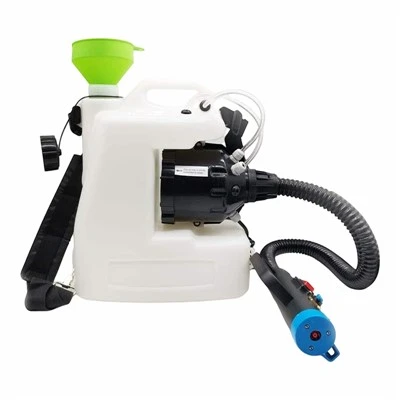
First, and probably the most underrated, is the spray tip. Most people think all spray tips are the same, but nothing could be further from the truth. I had a farmer reach out to me three years ago, frustrated that he was using the same flat-fan tip for his tomato rows as he was for his orchard, and ending up with half his spray drifting into the next county, and the other half pooling on leaves. Flat-fan tips, which produce a wide, even sheet of spray, are ideal for row crops like soybeans or vegetables where you need full coverage across a narrow strip. But for trees and shrubs, you need a cone (or “hollow cone”) tip, which creates tiny, dispersed droplets that cling to leaves instead of rolling off. There’s also the air-inclusion tip, which injects air into the spray stream to make larger, heavier droplets that cut down on drift—game-changer for when you’re spraying near a neighbor’s property or on a windy day. The right tip doesn’t just improve coverage; it cuts down on chemical waste by up to 20%, according to a 2022 study from the University of California Extension. I’ve seen this firsthand: switch a standard tip for a matching air-inclusion one, and you’ll use less product, get better pest knockdown, and save money at the same time.
Next up, drift reduction accessories. Drift isn’t just an annoyance—it’s a regulatory headache, and even a safety hazard if you’re using herbicides that can harm non-target plants, or insecticides that pose risks to pollinators. The most effective drift reduction tool isn’t a tip, though; it’s a spray shield. These clear, curved plastic shields attach to the spray boom, right in front of each tip, and act like a wind block. I talked to a commercial pest control operator in Ohio last month who told me he used to lose 30% of his spray to drift when spraying for mosquito larvae along roadside ditches. After adding spray shields, that number dropped to less than 5%. They’re especially useful for tight spaces, like residential yards or between rows of mature trees, where wind can catch fine droplets and carry them away. Another drift accessory is the boom height adjuster. Keeping the spray boom 18 to 24 inches from the target (not too high, not too low) is critical, but it’s hard to get right if you’re bouncing over uneven fields. A manual or hydraulic boom height adjuster lets you tweak the distance on the fly, so you don’t have to guess—too high, and drift spikes; too low, and you’ll damage plants or cause overlapping spray that wastes product. I’ve had customers tell me these adjusters paid for themselves in a single season by reducing chemical waste alone.
Then there’s filtration equipment, which is the unsung hero of keeping your sprayer running smoothly. Nothing kills a day of spraying faster than a clogged tip, and 90% of clogs come from debris in the tank—dirt, leftover chemical residue, even tiny pieces of plant matter that got washed in during fill-up. The first line of defense is tank filters, which sit inside the tank opening and catch large particles before they even get into the hose. But for finer debris, you need in-line filters, which screw into the hose between the tank and the tip. We stock filters with different mesh sizes, and the rule of thumb is: smaller mesh for finer chemicals, larger mesh for thicker, wettable powders. I once had a customer show up at our warehouse in a panic, his sprayer dead in the middle of a wheat field because he’d skipped the in-line filter to speed up fill-up. He ended up paying a technician $400 to drive out and unclog his tips, and that’s all because he cut a $5 filter corner. There are also tip screens, which are tiny mesh inserts inside the spray tip itself, for extra protection against fine particles. For customers dealing with hard water or chemicals that break down into residue over time, we even carry backflushing filters, which let you clear clogs without removing the tip—saving time mid-job, when every minute counts.
Safety is non-negotiable in pest control spraying, and accessories here go beyond gloves and goggles. First, we have pressure regulators. It’s easy to crank up the spray pressure to get better coverage, but too much pressure creates tiny, drift-prone droplets, and even can damage delicate plant leaves, causing them to tear or curl. A pressure regulator keeps the spray at a consistent, pre-set level—usually between 20 and 60 PSI for most pest control jobs—so you get uniform droplet size every time. I’ve had landscapers tell me that using a pressure regulator cut down on plant damage complaints from homeowners by 70%. Another safety accessory is a chemical induction hopper. This lets you mix dry chemicals (like wettable powders or granules) directly into the spray tank without breathing in toxic dust, or spilling powder on your hands. Before we started stocking induction hoppers, I heard story after story of technicians getting chemical residue on their skin because they were mixing by hand, trying to speed up the process. An induction hopper connects to your water line, so you add the chemical, then flush it into the tank with water—no contact, no mess, no risk of inhalation. We also carry tank agitation systems, which keep the chemical evenly mixed in the tank. If the spray sits for too long, the dense particles settle at the bottom, so the first spray you put out is weak, and the last is concentrated enough to burn plants. A mechanical or hydraulic agitator runs a small paddle or jets water to keep the solution moving, so every drop is the same strength. I had a fruit grower tell me that using an agitator meant he no longer had to spot-spray areas that missed because of uneven mixing, saving him dozens of man-hours per season.
For those working in larger operations, there are accessories designed for efficiency and coverage consistency, like spray booms and extension wands. We carry both rigid and folding booms—folding booms are a game-changer for farmers who need to drive on public roads between fields, because they fold down to a narrow width, instead of dragging a 60-foot boom that can get caught on power lines or fences. Extension wands are perfect for spot-spraying taller trees or hard-to-reach areas, like under house eaves for mosquito control. One of my favorite accessories is the volume control valve. These valves let you adjust the flow of spray from each individual tip, so you can dial back the flow on narrow rows where you don’t need full coverage, or increase it on wider, bushier plants. I had a customer who works with vineyards tell me he uses volume control valves to cut spray use in half on the narrow paths between vines, instead of spraying full blast and wasting half the product. There’s also the anti-drip valve, which stops spray from leaking out of the tip when you turn the sprayer off. Not only does this keep your equipment clean, but it prevents over-spray onto soil or plants when you’re moving between jobs. I’ve seen anti-drip valves save backyard growers from stained patio furniture, and commercial applicators from accidental over-spray that could violate environmental regulations.
Something I don’t think enough people talk about is compatibility. A spray tip that works on one brand of sprayer might not fit another, so it’s important to work with an accessory supplier that can match parts to your exact equipment. Early in my career, I had a customer come to me with a bunch of tips he’d bought online that didn’t fit his older John Deere boom sprayer—turns out he’d ordered a standard thread size, but his sprayer used a unique metric size. That mistake cost him a whole season of work. Now, we keep detailed records of parts for most major sprayer brands, and we always ask for the model number when a customer is ordering, to make sure they get the right fit. For small-scale users, like backyard gardeners or local pest control operators, we also carry universal accessories that work on most sprayers, so you don’t have to stress about compatibility.
Over the years, I’ve learned that the best sprayer accessories aren’t the fanciest, or the most expensive. They’re the ones that solve a real, daily problem. Whether you’re a 10-acre farmer spraying for aphids, or a residential pest control tech spraying for ants along foundation walls, the right tip, filter, or shield will make your job easier, safer, and cheaper. I’ve watched customers switch from generic parts to the accessories we stock and cut their chemical costs by thousands of dollars a year, reduce the time they spend unclogging tips by half, and even avoid regulatory fines for drift.

If you’re tired of wasting product, dealing with constant clogs, or struggling with inconsistent coverage, don’t settle for generic spray parts. Reach out to our team to discuss your specific needs, and we can help you pick the right accessories for your sprayer, your target pests, and your property. Every job is different, and we don’t believe in one-size-fits-all solutions—we work with you to find parts that fit your equipment and your budget. You can trust us for quality parts that are built to last, because we’ve been in this industry long enough to know that reliable accessories make all the difference between a good spray job and a great one.
Manual Sprayer References
University of California Agriculture and Natural Resources. (2022). Drift Reduction Strategies for Agricultural Pest Control Applications.
Pesticide Safety Education Program. (2021). Filtration and Maintenance Best Practices for Sprayer Equipment.
American Society of Agronomy. (2020). Economic Impacts of Spray Efficiency Accessories on Row Crop Production.
Zhejiang Menghua Sprayer Co., Ltd.
As one of the most experienced sprayer accessories manufacturers in China, we have world-leading production equipment and strong manufacturing capabilities. Please feel free to buy advanced sprayer accessories for sale here from our factory. For price consultation, contact us.
Address: No.5, Houshi Road, Beicheng Street, Huangyan District, Taizhou, Zhejiang
E-mail: sales@menghua-sprayer.com
WebSite: https://www.menghua-sprayer.com/
